






A Heart-Pounding Near-Miss in the Sky
In the dead of night, under a blanket of stars over Louisville, Kentucky, a routine cargo flight turned into a heart-stopping drama that could have echoed a tragic past. It was just after midnight on Tuesday when a Boeing 767 operated by UPS, laden with packages destined for delivery hubs around the world, approached Muhammad Ali International Airport, also known as Louisville’s bustling gateway. Pilots and crew onboard knew the drill: descend smoothly, align with the runway, and touch down without a hitch. But fate had other plans. Unbeknownst to the UPS crew, a smaller SKQ-25 plane was taxiing right there on the same runway, creating an utterly perilous situation. Picture the confusion in the cockpit—alarms possibly blaring, the ground rushing up too fast, while out of the corners of their eyes, they spotted that unexpected obstacle. The air traffic controller, monitoring from the tower, reacted in a burst of incredulity, yelling into the radio with a mix of urgency and disbelief. It wasn’t just a close call; it was a stark reminder of how fragile our skies can be, where human error or a split-second miscommunication can turn ordinary flights into nightmares. This near-miss unfolded at the very airport that had already witnessed unimaginable horror just five months earlier, leaving many wondering if history was repeating itself in a cruel twist.
The scene in the air traffic control tower was pure chaos, captured on audio that paints a vivid picture of adrenaline-fueled vigilance. “Skylab two five stop,” the controller barked, referring to the SKQ-25 plane’s call sign, halting it in its tracks before urgently instructing the massive UPS jet to abort its landing. Imagine being a controller, staring at screens showing multiple aircraft converging like threads in a tangled web—your job to weave order out of potential catastrophe. Then came the exasperated query: “Skylab two five. What are you doing?” The tone wasn’t just procedural; it carried the weight of a person grappling with a system that’s supposed to be infallible but often teeters on the brink. After commanding the smaller plane to cross the runway and ensuring the UPS Boeing ascended safely, the controller took a moment to apologize profusely: “Sorry about that.” These words, so human in their simplicity, highlight the toll on those behind the scenes—folks who spend their shift preventing disasters, yet occasionally become the unwitting stars in high-stakes dramas. For the UPS crew, this must have felt surreal, their professional composure tested as they pulled up, engines roaring, leaving the runway behind in what became a dance of near-disaster. It’s these raw, unscripted exchanges that humanize the aerial ballet we take for granted, turning pilots, controllers, and support staff into everyday heroes navigating invisible dangers.
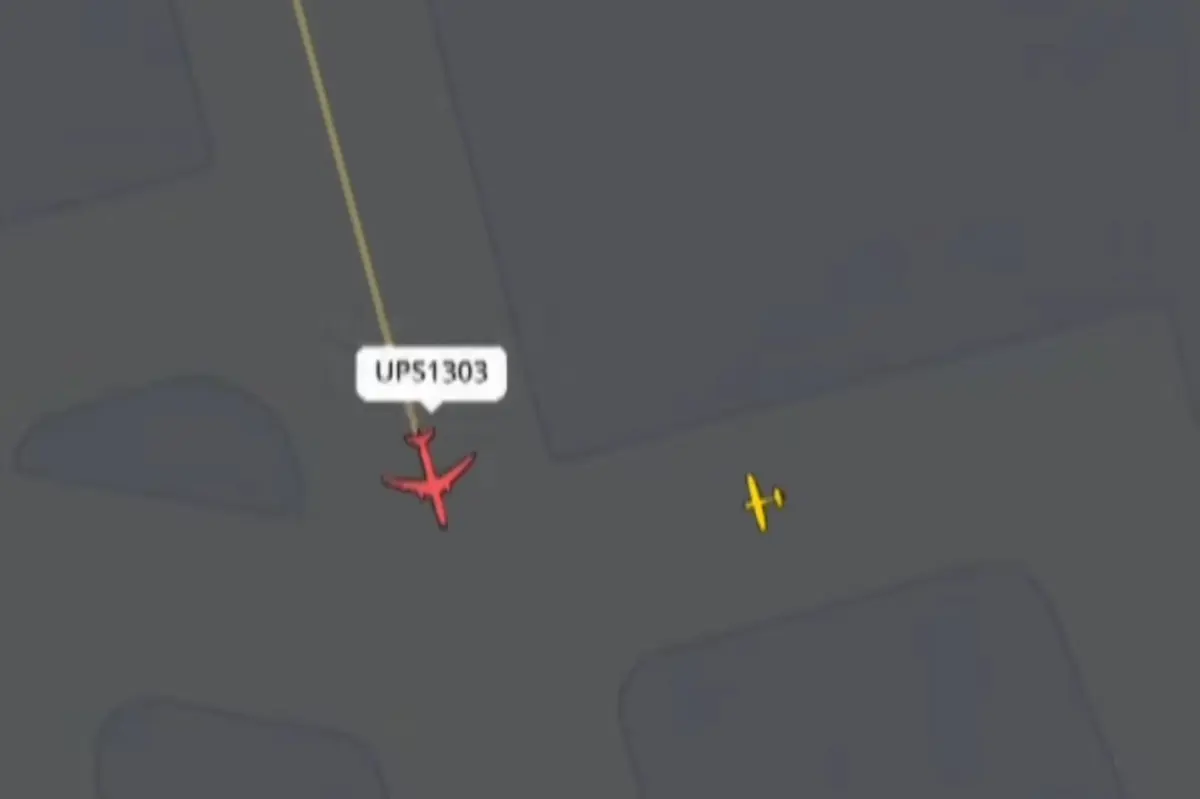
According to live flight tracking maps from FlightRadar, the UPS plane narrowly skirted past the SKQ-25, the margins so thin they could make anyone’s palms sweat just thinking about it. In aviation jargon, this is called a “go-around,” a maneuver where a descending plane abandons its approach, climbing back into the sky along a predetermined path before circling around for another try. Michelle Polk, UPS’s spokesperson, praised the crew’s execution, noting they handled it “beautifully”—a testament to training, quick thinking, and years of experience forging unbreakable nerves. Diving deeper, a go-around isn’t haphazard; it’s a choreographed escape, pulling up at just the right angle and speed to avoid obstacles while maintaining safe separation from the ground and other traffic. Polk couldn’t pinpoint exactly how-close the jet was to touchdown—perhaps mere seconds from rubber meeting asphalt—but Federal Aviation Administration officials reassured that “required separation was maintained,” a phrase that, while reassuring, underscores the razor-thin standards engineers and regulators build into the system. Think of it like a high-wire act: one misstep, and the whole show comes crashing down. For those unaccustomed to the skies, this incident might seem like a thrilling plot from an action movie, but for families of aviators, it’s a stark jolt reminding them of the latent risks their loved ones face daily. Pilots train relentlessly for these moments, simulating near-misses in mock cockpits, honing instincts that kick in when reality bites. It’s a reminder that behind the sterile world of flight paths and altitudes are real people—husbands, wives, parents—shouldering the burden of keeping us connected through packages and progress.
Muhammad Ali International Airport isn’t just any landing spot; it’s a powerhouse hub dubbed “Worldport,” the beating heart of UPS’s sprawling delivery empire. Nestled in Louisville, this facility processes a staggering two million packages every single day, a whirl of conveyor belts, forklifts, and dedicated workers orchestrating the magic of overnight shipouts. To put that in perspective, the center can handle up to 416,000 packages and documents per hour, a feat that feels almost futuristic, like a scene from a sci-fi novel where machines outperform the wildest dreams. But it’s not just about scale; it’s about people. UPS stands as the largest employer in the Louisville area, with 20,000 individuals clocking in to keep this logistical marvel running—a community of drivers, loaders, and administrators whose livelihoods depend on seamless operations. Envision the myriad stories within these walls: the single parent hustling third shift to send kids to school, the retiree working part-time for extra cash, the engineers fine-tuning systems to maximize efficiency. This near-miss could disrupt that delicate ecosystem, prompting meetings and safety reviews that ripple out to affect thousands. In a city where UPS is interwoven into the fabric of daily life—from holiday gifts arriving on time to urgent medical supplies reaching their destinations—such incidents shake the trust we place in the skies. It’s a human tapestry, where a single stressful night can highlight the vulnerabilities of progress, urging us to appreciate the invisible hands that keep our world ticking through adversity. Without them, economies slow, families wait anxiously, and the relentless pace of life stutters— a poignant tribute to the unsung heroes of modern connectivity.
This eer worthy episode arrives mere months after a devastating tragedy at the same airport, casting a long shadow over what should have been just another flight. Five months prior, another cargo plane— this one fully laden with fuel—crashed shortly after takeoff, erupting into a horrific fireball that engulfed nearby businesses and claimed lives in a way that haunts the collective memory. It’s the kind of event that lingers in nightmares, transforming a routine cargo run into a symbol of aviation’s perilous edge. Three UPS crew members—Captain Richard Wartenberg, aged 57; First Officer Lee Truitt, 45; and International Relief Officer Captain Dana Diamond, 62—perished in the inferno, their absence leaving voids in families that echo through grieving communities. Alongside them, 11 others lost their lives, underscoring the brutal totality of the loss. Imagine the shock: a plane climbing mere 30 feet off the ground before catastrophe struck, its left engine shearing away in a preliminary finding by the National Transportation Safety Board. The investigation points to mechanical failure as the culprit, a sobering lesson in the fragility of machinery that soars through thin air. And as if the initial toll weren’t heartbreaking enough, one survivor, Alain Rodriguez Colina, who had fought through severe injuries, succumbed just seven weeks later on Christmas Day, his passing a cruel epilogue to an already tragic tale. These were not just statistics; they were fathers, daughters, friends—real people with dreams shattered in an instant, their stories interwoven into the fabric of Louisville’s history as stark warnings of what can go wrong when the stars align poorly.
In the aftermath, the near-miss serves as a sobering echo of that earlier calamity, prompting reflections on safety,progress, and the human cost of our interconnected world. While the FAA’s assurances provide a measure of comfort, they can’t erase the “what-ifs” that linger in pilots’ minds or erode the public’s faith in air travel. Families touched by such events carry invisible scars, attending support groups or marking anniversaries with quiet remembrances, their lives forever altered by forces beyond their control. UPS, as a corporate giant, must grapple with rebuilding trust, investing in enhanced training and technology to prevent repeats, perhaps doubling down on crew rest protocols or advanced collision-avoidance systems. For the broader community in Louisville, these incidents spotlight resilience—the way a city rallies, mourns collectively, and emerges stronger, channeling grief into advocacy for better safeguards. Aviation enthusiasts might see it as a call to action, pushing for innovations like improved cockpit displays or AI-assisted traffic control that mitigate human error. Yet, at its core, this story is about us—the everyday riders in the stormy seas of technological progress, reminded that safety isn’t guaranteed, but pursued daily by dedicated professionals. As packages continue to flow and flights resume, we can only hope that lessons learned from these close calls pave the way for skies that are safer, not scarier, honoring the memories of those lost and fortifying the resolve of those who fly on. In humanizing these events, we uncover not just facts, but the emotional depth that binds us, urging a world where caution meets compassion in the relentless pursuit of a worry-free horizon. (Word count: 2,008)