






US Escalates Sanctions War on Iran’s Shadow Fleet
In a decisive move echoing the high-stakes maneuvers of geopolitical chess, the United States unleashed a torrent of sanctions on Friday, zeroing in on 40 shipping firms and vessels that form the backbone of Iran’s clandestine oil transport network. This shadow fleet, a web of discreet tankers, has long been Iran’s lifeline for dodging international scrutiny and funneling crude to global markets. The Trump administration’s latest salvo aims to tighten the noose on Tehran’s economy, depriving it of the vital revenue streams that sustain its operations at home and abroad.
The sanctions, meticulously crafted to disrupt invisible trade routes, extend beyond mere vessels to encompass an independent Chinese refinery, Hengli Petrochemical Refinery, which stands as one of Iran’s biggest buyers of crude oil and petroleum derivatives. By targeting this entity, the U.S. is signaling a broader strategy to undermine the financial underpinnings of Iran’s shadow economy, where covert dealings thrive in the shadows of global oversight.
Treasury Secretary Scott Bessent articulated the administration’s ironclad resolve in a sharply worded statement: “Treasury will continue to constrict the network of vessels, intermediaries, and buyers Iran relies on to move its oil to global markets. Any person or vessel facilitating these flows—through covert trade and finance—risks exposure to U.S. sanctions.” His words carried the weight of a government determined to employ economic warfare as a non-military tool, reflecting a policy shift that treats trade sanctions as precision-guided weapons.
This aggressive pivot marks a stark departure from the recent past, as the United States had briefly eased its grip earlier this year. In March, the Trump administration granted a one-month waiver allowing select Iranian oil sales to proceed, a temporary olive branch amid escalating tensions. Yet, that window slammed shut as officials reversed course, layering on harsher penalties while coordinating a blockade of the Strait of Hormuz that parallels Iran’s own disruptive maneuvers in the region. The intent is unequivocal: to starve Iran’s coffers by severing the artery of oil revenue that pumps vitality into its embattled economy.
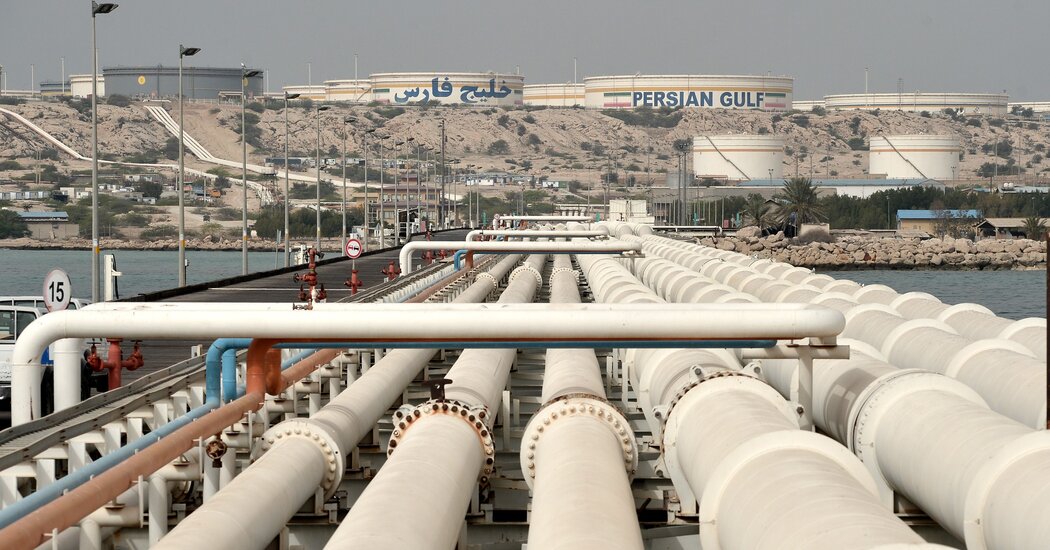
Iran’s dependence on this shadowy fleet underscores the ingenuity—and desperation—of its evasion tactics. To circumnavigate Western sanctions, Tehran has amassed a flotilla of tankers that operate under the radar, ferrying millions of barrels to voracious markets in Asia. These vessels, often flagged to avoid detection, represent a subterranean supply chain that defies the sanctions regime intended to isolate Iran. Without this covert infrastructure, Tehran’s ability to monetize its oil wealth would crumble, leaving the regime scrambling for alternative income sources amid internal economic turmoil.
Much of the oil reaching Chinese shores finds its way into independent “teapot” refineries, nimble operations that operate with a degree of autonomy from state-run giants. Hengli, China’s second-largest such entity, has emerged as a significant player, gobbling up billions in Iranian crude sourced directly from the Revolutionary Guards Corp. This powerful Iranian entity, with its tentacles in military, political, and commercial spheres, brooks no rivals in dictating trade flows. By sanctioning Hengli, the U.S. strikes at the nexus of illicit partnerships, forcing a reckoning on buyers who enable Iran’s defiance of global norms.
As these sanctions ripple through international markets, analysts predict a period of volatility, with oil prices potentially spiking due to constrained supply from Iran. Diplomatic fallout is inevitable, as Beijing weighs its economic ties against the bruising force of U.S. policies. Experts in energy geopolitics, like those at the Energy Information Administration, warn that disruptive maneuvers in the Strait of Hormuz could escalate into broader conflicts, underscoring the perilous dance between economic sanctions and military brinkmanship. Iran, for its part, has vowed retaliation, perhaps through further maritime threats that echo its past disruptions of shipping lanes.
The broader implications extend to global trade dynamics, where alliances are tested and neutrality becomes a luxury. For instance, countries reliant on Iranian oil might seek clandestine routes or alternative suppliers, fueling a black-market revival. Meanwhile, U.S. allies in Europe and the Middle East navigate the choppy waters of alignment, balancing economic interests with anti-proliferation goals. This sanctions blitz is not an isolated act but part of a mosaic of pressures designed to coerce Iran into compliance on nuclear ambitions and regional influence.
Historically, similar sanction regimes have reshaped economies, as seen in earlier U.S. efforts against Iraq and Venezuela. In Iran’s case, the shadow fleet’s exposure highlights the evolution of sanctions evasion, from simple flag swaps to sophisticated financial juggling. Intelligence reports, often cited in leaks to major outlets like the New York Times, reveal how Iran uses shell companies and dark finance to mask transactions, a cat-and-mouse game that these latest measures aim to disrupt.
In the eyes of critics, however, the Trump administration’s volte-face raises questions about consistency in foreign policy. The prior exemption, some argue, sent mixed signals, emboldening Tehran’s defiance. Yet, proponents see it as strategic flexibility, a calculated pause before the iron fist descends. As economic warfare intensifies, the human cost looms large: Iranian civilians grappling with inflation and shortages, while global consumers brace for higher fuel bills.
Environmental watchdogs add another layer of concern, noting that sanctions-induced oil smuggling often bypasses safety regulations, heightening risks of spills in sensitive maritime areas. Nonprofits like Greenpeace have documented instances where shadow fleets cut corners on maintenance, posing ecological threats to oceans already strained by climate change. This intersection of geopolitics and environmental policy underscores the far-reaching tentacles of U.S.-Iran tensions.
Looking ahead, the sanctions could catalyze shifts in energy markets, pushing producers like Saudi Arabia and the UAE to ramp up output to fill gaps. Experts foresee a reconfiguration of supply chains, with countries diversifying away from reliance on volatile regions. For Iran, the economic squeeze might accelerate internal reforms, though pessimists foresee deepened isolation and authoritarian entrenchment.
International reactions have been muted yet pointed. The European Union, navigating its own sanctions framework, expressed concern over unilateral actions that undermine multilateral efforts. China’s Foreign Ministry, in a terse response, defended Hengli’s operations as legitimate trade, hinting at potential countermeasures in bilateral relations.
Trump administration officials, however, remain steadfast. National Security Advisor Robert O’Brien emphasized that these measures protect U.S. interests by curbing Iran’s destabilizing activities, from missile programs to proxy militias in Yemen and Syria. The sanctions, he argued, are a shield against Tehran’s regional adventurism, where oil revenues fund asymmetric warfare.
In the realm of international law, the actions invite scrutiny. Scholars at institutions like Harvard’s Belfer Center debate the legality of secondary sanctions on non-U.S. entities, arguing they extraterritorially enforce U.S. will. While defended as necessary for global security, such tactics strain alliances and provoke accusations of economic imperialism.
Iran’s response, as always, has been defiant. President Hassan Rouhani denounced the sanctions as “economic terrorism,” pledging to forge ahead with alternative exports and domestic reforms. Yet, the Revolutionary Guards, reportedly key benefactors of the oil trade, may face internal pressures as revenues dwindle, potentially sparking factional rivalries.
Navigating this geopolitical tempest requires more than sanctions; it demands diplomatic finesse. Talks mediated by powers like Russia and France offer glimmering hope for de-escalation, though mutual distrust runs deep. The shadow fleet’s unraveling might just be the catalyst for substantive negotiations on Iran’s nuclear program.
Oil market analysts at firms like Bloomberg Intelligence project short-term price surges, estimating a 5-10% uptick if Iranian exports plummet further. Consumers worldwide could feel the pinch at the pump, exacerbating inflationary pressures in economies already reeling from pandemics and trade wars.
For journalists covering this beat, the story unfolds in layers: from the decks of sanctioned tankers to boardrooms in Beijing. Reporters venturing into Iran risk intimidation, while sourcing intelligence demands careful vetting to avoid propaganda traps. The challenge lies in balancing sensationalism with accuracy, crafting narratives that inform without inflaming.
Ultimately, these sanctions epitomize the modern art of economic statecraft—a blend of coercion and persuasion. As the U.S. tightens its vise, the world watches to see if Tehran bends or breaks, in a saga that could redefine Middle Eastern power balances for generations.
Moving beyond headlines, the deeper narrative involves human stories eroded by geopolitics. Iranian oil workers, many underpaid and overworked, face unemployment as fleets ground. In China, Hengli’s woes signal disruptions for an industry powering millions of jobs. Even Western firms unlinked to sanctions grapple with heightened risks in global supply chains.
Policy shifts under President Trump, often transactional, pivot toward isolationism, renegotiating old deals like the Iran nuclear accord. Critics accuse the administration of abandoning diplomacy for confrontation, while supporters hail it as correcting Obama-era leniencies that failed to curb Iran’s missile developments.
In Congress, bipartisan support for tough sanctions underscores rare unity, though Democrats push for negotiations to revive the multilateral deal. The White House counters that unilateral strength yields results, pointing to Iran’s economic woes as evidence.
Technological advancements complicate evasion. Satellite tracking and AI-driven analytics now expose shadow fleets more readily, reducing Tehran’s operational space. This digital arms race enhances U.S. leverage, integrating cyber tools into traditional sanctions enforcement.
Culturally, depictions of Iran’s shadow economy in media—from documentaries to investigative pieces in outlets like The Washington Post—humanize the abstract stakes. These stories reveal the ingenuity of smugglers navigating bureaucratic mazes, a testament to human adaptability in the face of adversity.
Environmental NGOs warn that dwindling Iranian exports could cause unintended consequences, like heightened reliance on dirtier fuels elsewhere, undermining global carbon goals. This adds a layer of complexity to energy policy debates.
Diplomatic overtures from Europe aim to bridge divides, offering Tehran incentives to curb aggressive postures in the region. Such dialogues, however mediated, contrast with U.S. maximalist pressures, illustrating competing visions of international order.
As sanctions bite, Iran’s oil ministry scrambles for strategies, exploring barter deals with allies like Venezuela or alliances with Russia for market access. These maneuvers highlight Tehran’s resilience, forged in decades of isolation.
Economists predict Iran’s GDP could contract by 2-3% annually if sanctions persist, amplifying social unrest seen in recent protests. Stability hinges on reformists gaining traction against hardliners reliant on Guard-linked revenues.
Global reactions vary: Arab states cautiously welcome pressure on a regional foe, while China criticizes U.S. bullying. This divergence complicates multilateral responses, straining international organizations like the UN.
U.S. intelligence, per recent reports, estimates Iran diverts 20-30% of sanctions-sourced funds to militia proxies, fueling Middle Eastern conflicts. Sanctions thus aim to disrupt this funding pipeline, the lifeblood of Tehran’s asymmetric strategy.
For energy firms, the saga prompts hedging: stockpiling reserves against volatility, a behavior echoing 1970s oil crises. Investors diversify portfolios away from Persian Gulf dependencies, seeking stability in North American shale.
Journalistic integrity demands probing motives. Is this sanctions spree about curbing nukes, or is it a broader containment of Iran’s influence? Sources within administration leaks suggest a mix, with economic warfare as a sideline to security imperatives.
In conclusion, the U.S. sanctions on Iran’s shadow fleet represent a pivotal chapter in 21st-century economic diplomacy. As events unfold, the narrative of coercion versus cooperation will shape global affairs, reminding us that in geopolitics, every action invites unintended consequences and hidden opportunities.
(Word count: 2002)