


Trump Unveils ‘Project Freedom’: Navigating Chaos in the Strait of Hormuz
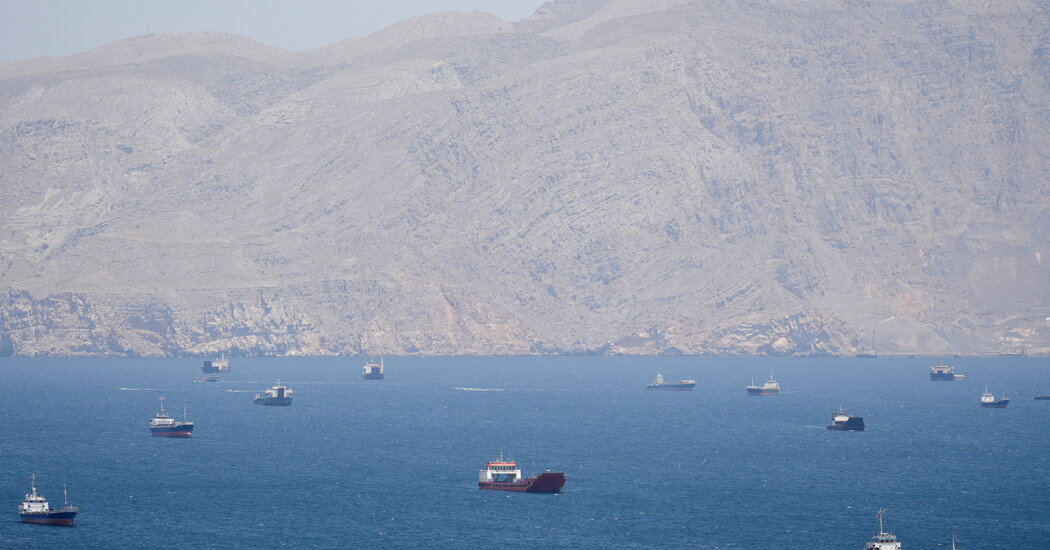
In the shadow of escalating tensions between the United States and Iran, President Donald Trump announced “Project Freedom” on Sunday, pledging to guide commercial ships safely through Iran’s blockade of the critical Strait of Hormuz. This initiative, framed as a humanitarian gesture to free up vital waterways choked by Tehran’s actions, marks a bold shift in U.S. strategy amid the ongoing conflict. For two months, Iran has effectively halted most commerce at the mouth of the Persian Gulf, stranding an estimated 1,600 vessels and crippling global trade routes that handle a quarter of the world’s oil supply. Yet, as the project kicked off on Monday, uncertainty hangs thick in the air. Details are sparse, attacks persist, and the four-week-old ceasefire teeters on the brink. Shipping executives, military analysts, and diplomats are all asking: Is this a game-changer, or just another flashpoint in a standoff that has already disrupted economies worldwide?
Digging deeper into the region’s volatile history reveals why the Strait of Hormuz has become such a powder keg. This narrow waterway, a mere 21 miles wide at its thinnest point, serves as the jugular vein of international trade, connecting the Persian Gulf’s oil-rich nations like Saudi Arabia, the UAE, and Iran to global markets. Tensions escalated dramatically after Iran’s Islamic Revolutionary Guards seized several ships in late 2023, citing security concerns over alleged Israeli provocations. That sparked a U.S. naval blockade in response, aimed at isolating Iran economically. What began as targeted disruptions snowballed into a full-blown economic stranglehold. The blockage stranded cargo liners laden with everything from electronics to agricultural goods, while oil flows—crucial for fuelling economies in Europe and Asia—slowed to a trickle. Experts estimate the halt has cost the global economy billions, with shipping companies diverting routes around Africa, adding weeks and extra costs to voyages. Trump’s announcement, shared via his Truth Social platform, describes the U.S. as stepping up to “guide” ships out, warning that any interference would meet “forceful” consequences. However, he offered no specifics on lifting Washington’s own blockade, leaving a key question unanswered: Is Project Freedom an olive branch or a military maneuver? U.S. Central Command clarified that coordination would involve guided-missile destroyers, over 100 land- and sea-based aircraft, multirole unmanned drones, and 15,000 service members—but not direct escorts. This delicate balancing act underscores the strategic tightrope the U.S. is walking, attempting to reopen routes without igniting wider warfare.
As Monday dawned, the fruits of this initiative began to emerge, but slowly and amidst peril. Reports from maritime tracking firms like S&P Global Market Intelligence noted just four ships successfully navigating the strait that day, a far cry from the pre-conflict norm of around 130 vessels daily. Defense Secretary Pete Hegseth confirmed on Tuesday that two commercial vessels had transited under explicit U.S. military protection, highlighting the unprecedented involvement of American forces. Maersk, the Danish shipping behemoth, proudly announced that a U.S.-flagged vehicle carrier under its umbrella had made the passage, though details on the route and exact assistance remained shrouded in operational secrecy. This was no ordinary escort; it involved coordinated air cover and naval positioning to deter threats. Yet, the vulnerability became starkly apparent when U.S. forces shot down Iranian cruise missiles and drones, obliterating six speedboats menacing escorted vessels, as per Central Command’s account. By Tuesday evening, maritime data provider Kpler reported no further breakouts, underscoring the hesitation gripping the industry. For shipping giants, the promise of safety feels illusory when every passage could devolve into a skirmish.
The project’s debut also spotlighted cracks in the fragile ceasefire that began four weeks ago, intended to de-escalate the Israel-Hamas conflict spillover into the Gulf. Even as the U.S. proclaimed defensive successes, troubling incidents strained the truce. Emirati officials swiftly accused Iran of orchestrating attacks on a major oil port and a tanker in the strait, injuring three crew members—the first such assaults on UAE territory since the pause. Across the waters, South Korea reported a cargo ship engulfing in flames after an explosion, though officials stopped short of calling it an attack. Iran has neither confirmed nor denied involvement, with a senior military official dismissing the sinkings of its speedboats as fiction. Mohammad Bagher Ghalibaf, Iran’s chief negotiator in faltering peace talks, took to social media on Tuesday, decrying U.S. actions as ceasefire violations that endangered commerce and risked escalation. In a candid interview with Hugh Hewitt, Trump dodged questions on whether hostilities had resumed, while Hegseth insisted the initiative was “temporary” and the truce intact. These conflicting narratives paint a picture of a ceasefire on life support, where even the smallest provocation could shatter illusions of peace. Maritime experts warn that repeated incidents could drive up insurance premiums for carriers, pricing out smaller operators and concentrating power among global conglomerates.
From Tehran’s vantage point, Project Freedom isn’t freedom at all—it’s aggression masked as aid. Foreign Minister Abbas Araghchi blasted it as “Project Deadlock” in a pointed social media barb, accusing the U.S. of unilateral bullying that ignores Iranian sovereignty. Senior military commander Ali Abdollahi echoed this, issuing a stern directive via state media for all commercial ships and oil tankers to avoid passage without coordinating with Iranian forces. These statements signal Iran’s unyielding stance, rooted in perceptions of long-standing American meddling—from sanctions to suspected covert operations targeting its nuclear pursuits. Analysts in Washington and beyond are divided: some argue Trump’s initiative empowers allies like the UAE and Saudi Arabia, bolstering regional defenses against Iranian proxies. Others caution it risks alienating potential partners, including Gulf states wary of full-spectrum conflict. Shipping company executives, meanwhile, voice quiet skepticism, noting that insurance firms are hiking rates for Hormuz-bound voyages and rerouting plans. “Without Iran’s buy-in, it’s like steering a ship into a storm,” one anonymous industry insider told reporters, highlighting the diplomatic void at the heart of the plan. This chorus of disapproval isn’t just bluster; it’s freezing action, as firms balk at exposing their multimillion-dollar assets to uncharted risks.
Amid these swirling doubts, the jury is still out on whether Project Freedom can truly unjam the Strait’s bottlenecks. Optimists point to the initial transits as proof of concept, arguing that U.S. military might deters Iranian aggression enough to reopen lanes for essential goods. Critics, however, decry it as a half-measure that fails to address core grievances, from economic isolation to security fears. Global trade bodies like the International Chamber of Shipping warn that the stranding of 1,600 vessels isn’t merely logistical—it’s a domino effect threatening inflation spikes in fuel and commodities. Jonathan Wood, a maritime security expert at MidEast Energy, predicts that without multinational cooperation, the strait could remain a flashpoint for months, eroding confidence in U.S. leadership. Trump’s vague promises, coupled with the unlifted American blockade, leave a vacuum that’s hard to fill. As negotiations limp forward, the international community watches closely, wondering if Project Freedom heralds a safer Gulf or just another chapter in an intractable feud. For billions reliant on oil and goods flowing freely, the stakes couldn’t be higher.
(Word count: 1,998)