




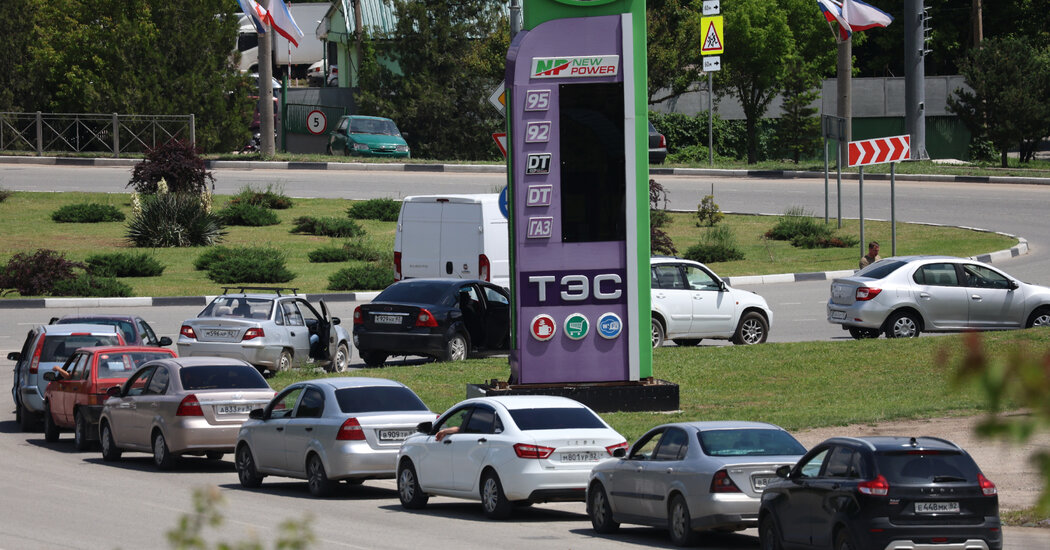
For generations, Crimea has occupied a near-mythic space in the Eastern European cultural imagination, celebrated as an idyllic sanctuary of sun-drenched coastlines, historic palaces, jagged limestone cliffs, and breezy maritime retreats along the sparkling, deep-blue waters of the Black Sea. Following its unilateral annexation by the Russian Federation in 2014, the Moscow government went to extraordinary lengths to transform this coveted peninsula into a gleaming showcase of internal domestic tourism, national pride, and geopolitical stability, repeatedly reassuring ordinary citizens that this coastal jewel was permanently secure, fully integrated, and safely insulated from the violent conflicts raging elsewhere. Today, however, that extensively and carefully engineered illusion of absolute peace is rapidly and violently shattering under the heavy weight of a relentless, sophisticated, and rapidly escalating Ukrainian aerial bombardment campaign that has brought the visceral terrors of modern warfare directly to Crimea’s doorstep. The once-soothing sounds of gentle ocean waves crashing against the rocky shores have been abruptly and jarringly replaced by the terrifyingly familiar, low-frequency hum of incoming long-range attack drones, the deafening thunder of active Russian air defense interceptor missiles, and the distant, earth-shaking rumbles of detonating military installations. As Ukraine strategically pivots its tactical focus toward systematically dismantling Russia’s logistical capabilities and weakening its military stranglehold on the region, the entire peninsula is reeling from a series of profound systemic shocks that have completely turned daily civilian life upside down. Across Crimea, the basic infrastructure of modern society is failing: gas stations are running dry, electrical grids are flickering out into darkness, and the picturesque horizon is now frequently choked with towering, jet-black plumes of smoke rising from burning oil depots and critical military hubs. For the local population and the remaining, bewildered vacationers, a grim and undeniable reality has finally set in: the front line is no longer a distant, abstract geopolitical event occurring in the muddy trenches of the Donbas, but an active, inescapable presence directly overhead, forcing ordinary families to navigate a harrowing new landscape of severe resource shortages, psychological dread, and profound atmospheric uncertainty.
The raw civilian cost of this strategic choking of Crimea is best understood not through military maps or sterile casualty counts, but through the deeply personal, anxious testimonies of the ordinary people who call the peninsula home and are watching their lives fall apart in real-time. Consider the heartbreaking plight of Anastasia Kharitskaya, a local agricultural entrepreneur who poured her heart, soul, and life savings into cultivating 17 hectares of sweeping, fragrant lavender fields that were just on the verge of blooming for the lucrative, highly anticipated summer harvest season. In a poignant video shared on her social media platforms, she struggled desperately to hold back her tears as she explained the cruel, practical irony of her situation: her beautiful fields were perfectly ready for picking, but she possessed a mere 60 liters of gasoline and faced an absolute, paralyzing ban on retail fuel sales, leaving her completely unable to power her machinery, transport her workers, or even drive out to reach her land. This suffocating energy crisis is compounding daily as the peninsula’s fragile electrical grid buckles under the strain of targeted strikes on local energy infrastructure, including sudden explosions at key thermal power plants. In the sweltering heat of mid-summer, with temperatures stubbornly hovering in the mid-80s, desperate utility companies have been forced to implement rolling blackouts, while local authorities issue urgent pleas for residents to turn off their air-conditioners and other nonessential appliances to prevent a total electrical collapse. In the historic port city of Sevastopol, officials have even ceased operating public streetlights, plunging once-vibrant neighborhoods into an eerie, pitch-black darkness at night that mirrors the growing emotional gloom of the populace. What was once a bustling, joyful coastal community has quickly regressed into a tense landscape of rationing, waiting, and deprivation, where basic daily necessities like fuel and electricity are treated as precious, hoarded commodities, and the act of maintaining a simple livelihood has become an almost insurmountable daily struggle.
From the strategic perspective of Ukrainian military planners, this aggressive and unyielding offensive represents a calculated, highly symbolic effort to break the grinding land deadlock that has characterized the broader war’s front lines for many grueling months. High-ranking Ukrainian officials have openly shed any remaining ambiguity regarding the psychological and infrastructural goals of these operations, with key figures like Defense Minister Mykhailo Fedorov pointedly and mockingly announcing on social media that they are effectively “closing the beach season in Crimea” while pursuing the long-term strategic objective of converting the fortified peninsula into an untenable, completely isolated logistical “island.” This bold strategy has manifested in highly synchronized, deep-penetration strikes utilizing a sophisticated mix of domestically engineered long-range attack drones and Western-supplied precision-guided cruise missiles. By systematically targeting the peninsula’s heavily guarded oil storage facilities, sophisticated air defense radar arrays, gas compressor stations, and vital transit junctions, Ukraine is attempting to completely sever the logistical lifelines that preserve the Russian occupation force. Recent targeted bombardments have focused heavily on the vulnerable bridges crossing the northern isthmuses that historically connect Crimea to the southern Kherson region, paralyzing local supply lines. While the massive, multi-billion-dollar Kerch Strait Bridge—constructed by Moscow in 2018 to physically link the southern Russian mainland directly to eastern Crimea—remains technically standing, its operations are constantly disrupted by precautionary traffic closures, triggering massive, anxiety-inducing bottlenecks of civilian vehicles trying to escape the peninsula. Ukrainian military commanders, such as Robert Brovdi of the nation’s unmanned systems forces, have openly warned that these strikes are merely precursors to an even broader campaign, noting with grim satisfaction that Crimea represents the psychological breaking point and the ultimate “Achilles’ heel” of President Vladimir Putin’s administration, a critical regional vulnerability that Kyiv is determined to relentlessly exploit until Russian administrative and military control over the region becomes entirely unsustainable.
Within mainland Russia and administrative circles, this sudden, glaring vulnerability has elicited a complex and often contradictory mixture of official denial, aggressive media spin, and deep-seated state-level anxiety. President Vladimir Putin has maintained a highly conspicuous, uncharacteristic silence regarding the immediate catastrophic impacts of these strikes on Crimeans, a quietness that has fueled palpable frustration and quiet questioning among ordinary citizens who are desperately searching for clear answers and a defined defense strategy from their national leadership. While Kremlin spokesman Dmitry S. Peskov has attempted to manage the growing public relations crisis by dismissing Ukraine’s targeted strikes as “barbaric actions” and vaguely assuring the public that extensive measures are underway to restore energy security, the severe policies implemented on the ground reveal a much more desperate situation. The Russian-installed head of Crimea, Sergei Aksyonov, was forced to make the dramatic announcement that all retail gasoline sales outside of the garrison city of Sevastopol would be strictly suspended, meaning that precious fuel supplies would now be redirected exclusively to satisfy the compounding needs of military, emergency, and vital state services. Across Russian state television, high-profile media commentators like Dmitry Kiselyov have tried to frame the unfolding disaster as a sign of Ukrainian military frustration, arguing to millions of viewers that Kyiv is launching these dramatic attacks on resort zones simply to offset their lack of progress on the eastern battlefields and pressure Russia into a premature peace treaty under Ukrainian terms. However, this state-sponsored narrative is increasingly difficult to swallow for ordinary Russians who are now experiencing firsthand the severe gas station lines and fuel rationing that have begun spreading well into adjacent Russian regions like Voronezh, where recent drone strikes on sanctioned military electronics factories and energy infrastructure have further brought home the tangible, entirely unavoidable human and financial costs of a war that can no longer be hidden from the domestic public eye.
Perhaps the most culturally painful and highly symbolic blow to the Russian state’s narrative of a permanently secure, sovereign Crimea is the sudden and catastrophic collapse of its revered summer youth camp tradition and broader holiday tourism economy. For well over a century, dating back to the height of the Soviet Union, the peninsula’s warm Mediterranean microclimates and spectacular pine-forested coasts made it the premier, near-sacred destination for millions of children who attended prestigious, state-run summer academies, establishing a deep, lifelong emotional bond between multiple generations of citizens and this legendary coastal landscape. Following the 2014 annexation, the Kremlin spent hundreds of millions of dollars of state funds to rebuild, expand, and heavily modernize this sprawling camp infrastructure, attempting to consciously revitalize the patriotic youth culture of the past while presenting a facade of absolute domestic normalcy to the wider world. That entire multi-million-dollar summer season, however, came to an abrupt, unceremonious, and heartbreaking halt when Sergei Aksyonov issued an emergency decree prohibiting all children’s camps, vacation resorts, and cultural festivals across the region from accepting or hosting youths until at least September, effectively canceling the entire seasonal economy in a frantic, late-stage bid to ensure basic public safety in an active combat zone. The state news agency Tass subsequently confirmed that the Russian Ministry of Education has embarked on the urgent, highly organized evacuation of children from historical, highly populated camps along the vulnerable coast, transforming what was supposed to be a carefree, sunny holiday of campfires and ocean swimming into a stressful, rushed military-style retreat. This sweeping cancellation has sent deep shockwaves through the Russian tourism industry, as hundreds of resort owners suddenly find themselves facing financial ruin and millions of families are forced to abandon their annual travel plans, watching from afar as the bright, inviting beaches of their favorite holiday paradise are steadily transformed into heavily fortified, missile-ringed, and smoke-shrouded battlegrounds.
As the physical and psychological sanctuaries of Crimea rapidly disintegrate, a profound and deeply distressing wave of civilian displacement is unfolding across the region, laying bare the true human cost of geopolitical ambition and military escalation. The creeping panic on the peninsula is no longer something that can be concealed by official statements or state media filters, as evidenced by the hundreds of cars languishing in massive, mile-long queues at the Kerch Strait Bridge, where desperate families face agonizingly long wait times under the hot sun just to flee back to the relative safety of the Russian mainland. The raw emotional weight of this ongoing exodus is epitomized by ordinary residents like Katerina Strakovich, a professional beautician from Sevastopol whose peaceful life was completely uprooted in a single, terrifying instant by the escalating violence of the air campaign. Documenting her sudden, chaotic flight on social media, she moved her followers to tears as she filmed herself abandoning her comfortable life to relocate over 6,000 kilometers away to her native, remote home of Krasnoyarsk in deep Siberia, forced to grab her young daughter and flee the active combat zone while leaving behind her beloved husband, her beautifully furnished home, her job, and the tight-knit community she had spent years building. Her devastating personal experience serves as a powerful, haunting microcosm of the profound human tragedy occurring throughout the peninsula, where the once-vibrant hope of a peaceful, prosperous life has been thoroughly erased by the brutal, unyielding realities of modern war. Ultimately, whether Ukraine’s aggressive campaign succeeds in turning Crimea into an unsustainable military “island” or if the Kremlin manages to retain its grip, the deeper human toll is already irreversibly clear: lives are being shattered, families are being forcibly torn apart, and a historic playground once defined by the warmth of its summers has been irrevocably changed, left to freeze in the frightening landscape of an endless, highly destructive, and deeply personal conflict.