





The Tragic Death of Henry Nowak: Police Handcuffing Controversy, Political Firestorms, and a Family’s Plea for Peace
A Fatal Chance Encounter and the Shattered Promise of Youth
The peaceful atmosphere of Southampton was irreparably shattered on the cold night of December 3, 2025, when a brief, chance encounter between two strangers culminated in a horrific act of violence that has since gripped the entire British nation. Henry Nowak, an eighteen-year-old college student remembered by friends, family, and peers as an exceptionally kind, ambitious, and hard-working young man, was walking home from a night out when his path crossed with twenty-three-year-old Vickrum Digwa. According to court testimonies presided over by Judge William Mousley, the interaction began almost insignificantly when Nowak, observing a large weapon on Digwa’s person, made what the judge described as a “cheeky” comment, asking the older man if he was “a bad man” while spontaneously recording the moment on his mobile phone. The response from Digwa was swift, confrontational, and deadly as he moved toward the teenager, declared, “I am a bad man,” and aggressively seized the phone, sparking an immediate physical struggle as the desperate student attempted to retrieve his property. During this scuffle, Digwa’s turban was knocked from his head—an event that apparently triggered a disproportionate and lethal escalation from Digwa, who bypassed his traditional, smaller, neck-worn religious kirpan and drew a second, far larger and fully visible dagger to stab the unarmed teenager. On Monday, following a trial that exposed the raw brutality of the confrontation, Digwa, who is Sikh, was found guilty of murder and handed a life sentence with a strict minimum term of twenty-one years, bringing structural legal closure to a tragic event that continues to reverberate across the political, cultural, and social landscapes of the United Kingdom.
Body Camera Revelations and the Crucial Minutes That Stunned a Nation
While the courtroom secured a criminal conviction for the assailant, the public release of police body-worn camera footage immediately following the sentencing sparked widespread shock and outrage regarding the conduct of the responding officers. In the frantic, chaotic minutes directly succeeding the stabbing, Digwa repeatedly and systematically lied to the arriving law enforcement personnel, fabricating a narrative in which he claimed to be the innocent victim of a racially motivated gang attack. Misled by these falsehoods, the Hampshire police officers on the scene handcuffed a bleeding and dying Henry Nowak, detaining him on the ground for approximately one critical minute before realizing the extreme severity of his internal wounds and starting to administer first aid. The released footage reveals a deeply distressing scene where Nowak, lying helpless on the pavement, gasps out the words, “I can’t breathe,” and pleads repeatedly with the officers that he has been stabbed, only to be met with a dismissive response from one officer who states, “I don’t think you have, mate.” This alarming sequence has prompted an immediate, comprehensive investigation by the Independent Office for Police Conduct (IOPC), the nation’s official watchdog charged with reviewing cases of potential law enforcement misconduct and operational failure. The revelations have already had immediate organizational consequences, with Hampshire police confirming that one of the officers involved in the initial response has resigned, even as investigators under IOPC Director Derrick Campbell continue to dissect the decision-making process, the use of physical restraints on a dying victim, and the timeliness of the medical intervention.
The Digital Arena and the Politics of Public Outrage
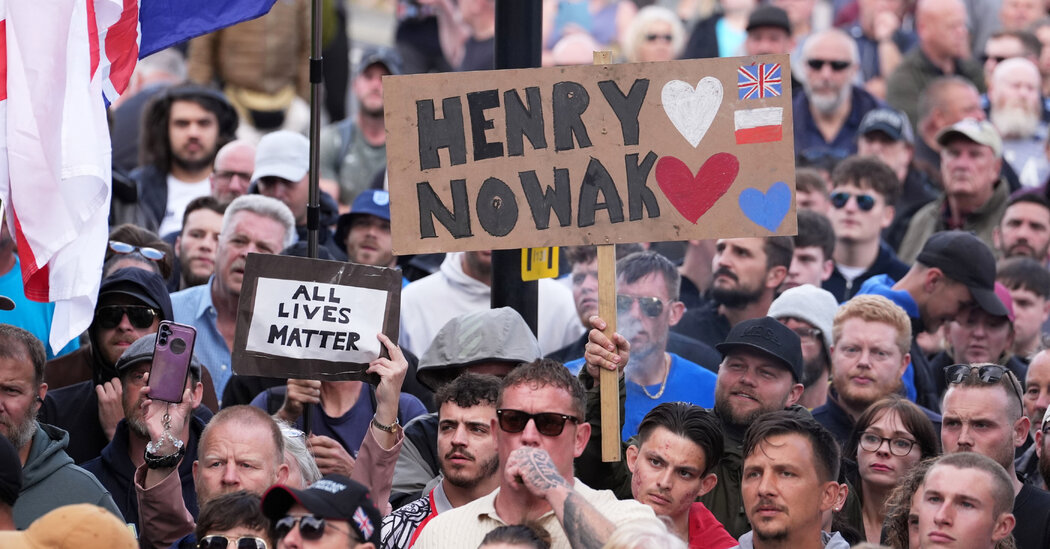
Within hours of the body camera footage being released to the public, the tragic death of Henry Nowak was swiftly swept up into the volatile ecosystem of online hyper-partisanship, transforming a localized tragedy into a national political battleground. Leading the digital charge was Nigel Farage, the prominent leader of the right-wing populist party Reform U.K., who utilized his massive social media platform to release a video statement claiming the police’s actions were indicative of a pervasive “two-tiered culture” in modern Britain, where the rights of white citizens are allegedly deemphasized compared to those of ethnic minorities. Farage drew direct and controversial parallels between Nowak’s dying words and the 2020 murder of George Floyd in the United States, pointing out that Floyd’s death ignited global outrage and questioning why British political leaders had not shown equivalent, vocal condemnation regarding the treatment of the young Southampton student. This rhetorical firestorm was further amplified on the global stage by tech billionaire Elon Musk, who posted multiple times about the case to his hundreds of millions of followers, effectively exporting a complex localized British policing issue into the broader, international culture wars. By instructing his followers to “respond with pure cold rage,” Farage and other commentator-politicians capitalised on public grief to frame the tragedy not merely as an isolated failure of police training and situational assessment, but as undeniable proof of systemic societal bias, creating deep divisions across communities.
Executive Interventions and the Collateral Damage of Misinformation
Addressing a tense House of Commons on Tuesday, British Home Secretary Shabana Mahmood offered clear, unequivocal support for the ongoing Independent Office for Police Conduct investigation while delivering a stern warning about the destabilizing dangers of political exploitation and digital misinformation. Mahmood described the newly public body camera footage as “deeply disturbing and tragic,” expressing her profound sympathies to the Nowak family and emphasizing that they deserve transparent, definitive answers regarding the exact timeline of events and the decisions made by the responding officers. However, the Home Secretary strongly condemned the rapid politicization of the tragedy, asserting that “misinformation and inflammatory commentary” were actively compounding an already devastating situation and threatening the peace of local communities. To illustrate the severe real-world consequences of online rumors, Mahmood revealed that an innocent police officer completely unrelated to the Southampton incident had been falsely identified on social media platforms, leading to targeted death threats that forced law enforcement to relocate the officer and his family for their personal safety. “We cannot allow this murder to turn communities against one another,” Mahmood warned parliamentarians, passionately appealing to public figures to reject the temptation of seeking “personal political profit from tragedy” and allowing the independent investigation to proceed without political interference.
The Boundaries of Justice and the Battle Over Legal Protocols
The polarizing rhetoric championing the “two-tiered policing” narrative faced quick resistance from other heavyweights within the conservative political spectrum, highlighting a deep intra-right debate regarding constitutional propriety and responsible governance. Kemi Badenoch, the leader of the Conservative Party, openly criticized Nigel Farage’s aggressive commentary, accusing him of exploiting a family’s grief to “grandstand” and deepen demographic divisions across the country during a morning interview on the national broadcast “Good Morning Britain.” Badenoch defended the relative silence of mainstream politicians during the trial by reminding the public of the United Kingdom’s strict sub judice laws, which legally restrict public commentary on active criminal prosecutions to prevent jury prejudice and ensure the integrity of the judicial process. This legal caution was particularly crucial given the highly sensitive religious and cultural elements of the case, such as the distinction the judge drew between the small, traditional kirpan worn out of religious duty and the larger, non-traditional dagger Digwa intentionally chose to carry. By explaining the crucial legal guardrails that govern British justice, Badenoch sought to dismantle populist claims of a political conspiracy, emphasizing that waiting for a lawful trial to conclude before commenting is a hallmark of the rule of law rather than evidence of systemic neglect or institutional bias.
A Family’s Dignified Grief and the Search for Institutional Redress
Amidst the swirling political warfare, the family of Henry Nowak has stood as a beacon of dignity, demanding absolute institutional accountability from the police while pleading for a cessation of the hate-fueled exploitation of their son’s name. Standing outside the crown court following the sentencing of Vickrum Digwa, the victim’s father, Mark Nowak, delivered a heartbreaking statement acknowledging that his son did not “die with dignity” due to the unwarranted actions of the responding officers. While expressing deep anger toward the police force for handcuffing his dying son instead of recognizing his mortal wounds, the elder Nowak made a powerful appeal, stating that the family does “not want his death to be used to create further division, hatred or tension” within British society. The family’s elegant pleas for peace stand in direct contrast to the polarizing media storm, refocusing the public conversation back onto the critical issues of emergency first aid training, situational de-escalation, and police accountability. As the Independent Office for Police Conduct continues its painstaking investigation into the events of that fateful December night, the ultimate legacy of Henry Nowak rests at a crossroads between becoming a permanent weapon for cultural division or serving as a catalyst for meaningful, systemic reform within British law enforcement.