


The Geopolitical Fever: How a U.S. Ebola Isolation Plan Ignited Controversy and Constitutional Crisis in Kenya
The Sparks of Geopolitical Discord in Nanyuki
                             LAIKIPIA AIR BASE
                      [ Restricted Military Facility ]
                                     |
                                     |  (300 U.S. AFRICOM Troops)
                                     v
                 +---------------------------------------+
                 |  Planned Exclusive Ebola Ward         |
                 |  - Initial: 50 beds                   |
                 |  - Scaled Capacity: up to 250 beds    |
                 |  - Target: Exposed U.S. Citizens only |
                 +---------------------------------------+
                                     |
                                     | (Exclusivity sparks outrage)
                                     v
+—————————————————————————–+
| THE LOCAL BACKLASH |
| |
| [ Civil Society (Katiba Institute) ] ==> Temporary High Court Injunction |
| [ Medical Unions (KMPDU) ] ===========> Condemned trading biosecurity |
| [ Street Protests (Nanyuki) ] ========> Clashes with police, 3 dead |
+—————————————————————————–+
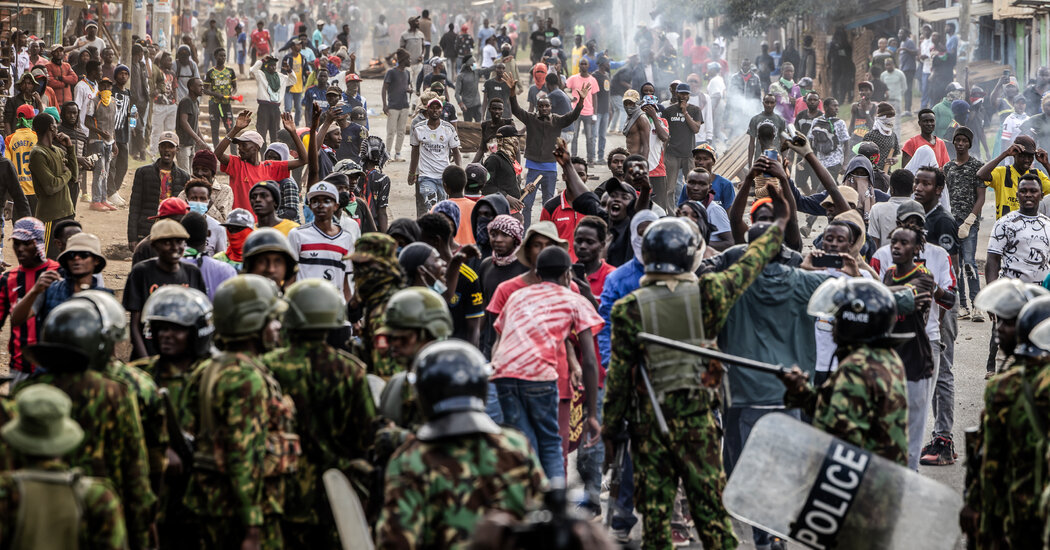
The quiet, sun-drenched savannahs surrounding Mount Kenya have quickly transformed into a high-stakes geopolitical battleground, exposing deep fractures in the strategic alliance between Washington and Nairobi. What was conceived by American health and military planners as a highly controlled, offshore containment strategy to manage a deadly outbreak has instead triggered local violence, intense political rancor, and a major domestic crisis for the Kenyan government. In the bustling commercial hub of Nanyuki, which sits adjacent to the heavily fortified Laikipia Air Base, local residents have taken to the streets in a series of volatile demonstrations. The protests have been met with a severe, heavily militarized response from local law enforcement, who have deployed tear gas and live ammunition to disperse the crowds. According to a grim dispatch from the Kenya Human Rights Commission, at least three civilian protesters have been shot and killed during these street clashes, though local police officials have remained pointedly silent in response to formal press inquiries. This growing civil unrest highlights a profound and volatile public anxiety: the fear of importing a highly lethal, hemorrhagic pathogen into a country that has historically never recorded a single domestic case of the Ebola virus, all to accommodate the security preferences of a foreign superpower.
Washington’s Policy Shift and the Outsourcing of Biosecurity
The origins of this escalating crisis trace back to Washington, D.C., where a sudden shift in American public health policy set off a chain reaction across East Africa. Following the World Health Organization’s urgent declaration of a highly dangerous Ebola outbreak in the Democratic Republic of Congo, U.S. Secretary of State Marco Rubio initially declared a hardline isolationist stance, asserting that no individuals exposed to the virus would be permitted to enter the United States. While Rubio later appeared to soften his rhetoric, behind-the-scenes planning by the administration quickly pivoted to an unconventional strategy of extraterritorial isolation. Instead of bringing exposed American aid workers, diplomats, or contractors home to specialized biocontainment units in the United States, federal officials quietly planned to transport them to a newly constructed, exclusive 50-bed quarantine facility built inside Kenya’s Laikipia Air Base. Under this plan, which was designed to scale up to 250 beds, U.S. citizens suspected of carrying the virus would be monitored and treated entirely on Kenyan soil by American personnel. This strategy has drawn sharp criticism from international health experts and ethicists, who argue that the U.S. government is shirking its sovereign duty to care for its own citizens. Critics argue that by using a sovereign partner state as a buffer zone, the U.S. is effectively offshoring its biological risks to a developing nation with far fewer medical resources.
The Domestic Political Nightmare for President William Ruto
================================================================================
THE GEOPOLITICAL STANDOFF IN KENYA
UNITED STATES POLICY KENYAN DOMESTIC RESPONSE
- Rubio limits domestic entry * Public protests in Nanyuki
- Outsourced isolation plan * High Court halts base construction
- Exclusively treats U.S. citizens * Outraged medical unions (KMPDU)
- AFRICOM proceeds with facility * Critics target President Ruto
================================================================================
For Kenyan President William Ruto, the secretive agreement has quickly snowballed into a major political crisis, leaving his administration vulnerable to charges of executive overreach and modern-day vassalage. Opponents have accused Ruto’s administration of prioritizing financial patronage and diplomatic favors from Washington over the safety and well-being of the Kenyan public. This anger is amplified by a glaring double standard at the heart of the bilateral deal: the state-of-the-art facility is reserved exclusively for U.S. citizens, meaning that local Kenyans would be denied entry and treatment even if the virus were to escape containment and infect the surrounding community. The Kenya Medical Practitioners Pharmacists and Dentists Union expressed this widespread indignation in a blunt, public statement, declaring themselves “utterly disgusted by the government’s apparent willingness to trade national biosecurity and the lives of its citizens for foreign aid.” This controversy has reignited long-standing grievances regarding post-colonial sovereignty, reinforcing the perception among critics that the Global South continues to be treated as a convenient testing ground and safety valve for the policy challenges of the Global North.
The Constitutional Crisis and Judicial Backlash
As public anger spilled into the streets, Kenya’s independent judiciary quickly intervened, transforming the public health dispute into a major constitutional showdown. Acting on a petition filed by the Katiba Institute, a prominent domestic civil society organization dedicated to defending the post-2010 Kenyan Constitution, the High Court issued a temporary injunction halting all assembly and operations at the Laikipia quarantine facility. The presiding judge ordered the Ruto administration to lift the veil of secrecy surrounding the project and fully disclose the terms of its bilateral agreement with the United States, setting a follow-up hearing for June 23. This judicial intervention has highlighted a deep divide between Kenya’s executive branch and its legal institutions, with legal scholars praising the courts for holding the state accountable. Conversely, former Chief Justice Willy Mutunga remarked that the flagrant disregard for the court’s suspension of the facility exposed a cynical double standard in Western foreign policy. Mutunga noted that while the West frequently lectures African nations on the rule of law, they quickly set aside those same local constitutional principles when they conflict with their own strategic or health interests.
AFRICOM’s Unilateral Push Amid Suspensions and Silence
Despite the High Court’s binding injunction and the escalating protests in Nanyuki, the physical construction of the quarantine facility has continued at a rapid pace behind the secure perimeter of Laikipia Air Base. According to a senior U.S. military official who spoke on the condition of anonymity, approximately 300 U.S. troops under U.S. Africa Command (AFRICOM)—sourced from bases in Djibouti, Europe, and the American mainland—were actively assembling heavy medical tents and advanced biocontainment apparatuses as recently as last weekend. The official explained that the American military continued its construction because President Ruto’s administration had not issued a direct, formal request to stop, although operations were temporarily paused on Tuesday due to the nearby civil unrest. This continued military activity amid a formal domestic court suspension has created an awkward diplomatic situation. In Washington, federal health officials like Dr. Mehmet Oz have attempted to project confidence, telling reporters that the State Department would ultimately find a way to work things out with Kenya. Meanwhile, the Katiba Institute is preparing to return to court to seek a contempt order against the Kenyan government, arguing that ignoring the judicial block undermines the integrity of Kenya’s democratic institutions.
Clumsy Diplomacy, Global Health Inequity, and the Shadow of the DRC Outbreak
DEMOCRATIC REPUBLIC OF CONGO (DRC)
[ Escalating Ebola Outbreak ]
- 550+ Confirmed Cases
- 101+ Recorded Deaths
|
| (U.S. citizens exposed in DRC)
v
WASHINGTON’S STRATEGY
[ Divert suspected cases to Kenya ]
|
| (Laikipia Air Base Option)
v
NANYUKI, KENYA
[ Local political backlash & protests ]
This diplomatic standoff illustrates what international relations experts describe as a failure of basic bilateral coordination, leaving Kenya’s leadership politically vulnerable while yielding little strategic benefit. Cameron Hudson, an experienced Africa analyst based in Washington, characterized the execution of the deal as “clumsy diplomacy,” noting that the U.S. government has appeared indifferent to the severe domestic political pressures now facing its key East African partner. While Kenya’s Foreign Ministry official Abraham Korir Sing’Oei has attempted to downplay the crisis by casting critics as partisan actors looking ahead to next year’s presidential election, he conceded that the administration’s public communication “could have been better.” This controversy unfolds against the backdrop of a worsening health crisis in the neighboring Democratic Republic of Congo, where the Ministry of Health has reported over 550 confirmed Ebola cases and more than 101 deaths, raising fears of a wider regional outbreak. As long-term allies, the United States and Kenya share a deep history of joint public health initiatives. However, this current dispute serves as a cautionary tale: when global health initiatives ignore local sovereignty, transparency, and public consent, even the best-laid plans for pandemic containment can quickly break down.