

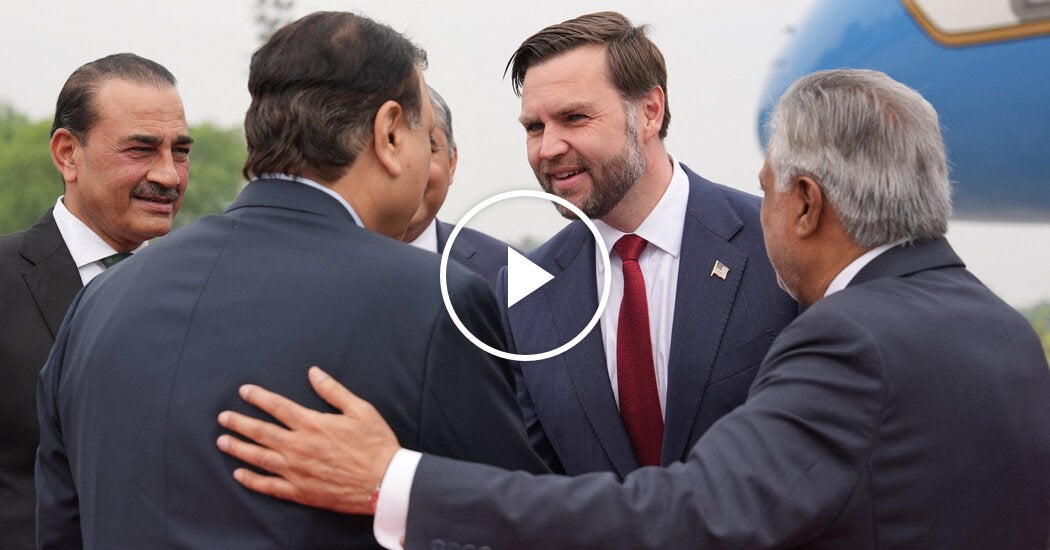
Breaking Barriers: U.S.-Iran Diplomacy Takes Center Stage in Islamabad
In the heart of Pakistan’s bustling capital, Islamabad, a scene unfolded last week that few could have predicted: U.S. Vice President JD Vance, flanked by a tight-knit security detail, strode into a nondescript conference hall for what has been dubbed a “historic convergence.” Across the table sat senior Iranian officials, their faces etched with the weight of decades of animosity between Washington and Tehran. The air was thick with unspoken tensions, echoes of past hostilities lingering like storm clouds, yet there was an undercurrent of cautious optimism. This wasn’t just another diplomatic sit-down; it represented a bold effort to transform a tenuous ceasefire—born out of necessity after skirmishes in the Strait of Hormuz—into a lasting framework of stability. As world leaders watched from afar, Vance and his Iranian counterparts delved into discussions aimed at cementing this fragile truce, signaling a potential thaw in one of the globe’s most entrenched rivalries.
The meeting’s significance can’t be overstated, especially when viewed through the lens of U.S.-Iran relations, which have been defined by cycles of confrontation and cold war since the 1979 Iranian Revolution. For years, sanctions, proxy wars, and covert operations have kept the two nations at odds, with flashpoints like the 2015 nuclear deal—scrapped under President Trump’s administration—only amplifying distrust. Now, under the new U.S. administration, there’s a palpable shift. Vance, known for his straightforward approach to foreign policy and background in the Senate Foreign Relations Committee, brings a fresh perspective to these negotiations. Diplomatic insiders whisper that the impetus for this Islamabad rendezvous stemmed from a series of backchannel talks initiated through intermediaries in Oman and Switzerland. The fragile truce in question emerged amid heightened naval tensions in the Persian Gulf, where accidental clashes and cyber intrusions nearly escalated into open conflict. By choosing neutral ground in Pakistan, a longstanding ally of both superpowers in different capacities, the parties avoided the symbolic traps of Washington or Tehran, fostering a diplomatic atmosphere conducive to breakthroughs.
As the sun dipped low over Islamabad’s manicured gardens, where peacocks strutted amidst fountains and colonial-era architecture, the discussions intensified. Vance, speaking in measured tones, emphasized America’s commitment to de-escalation, framing it as a pragmatic move in an era of global uncertainties like climate change and economic turmoil. Senior Iranian figures, including Foreign Minister Hossein Amirabdollahian, responded with guarded enthusiasm, highlighting Tehran’s demands for relief from crippling economic sanctions that have stifled their nuclear program and everyday citizens alike. The talks, spanning several hours, covered a gamut of issues: missile technology constraints, regional security in Yemen and Syria, and even economic partnerships that could revive trade routes disrupted by decades of isolation. Observers noted the symbolic exchange of cultural artifacts—a Persian rug for Vance’s delegation and American whiskey samples for the Iranians—as a nod to bridging divides. What began as a diplomatic chore grew into a nuanced dialogue, with verbal commitments to “structural commitments” that could evolve the truce into binding agreements.
Transitioning from rhetoric to reality, the heart of the Islamabad meeting revolved around mechanisms to make this truce permanent—a Herculean task given the history of broken accords. Experts point to the fragility of such arrangements, where past truces like the 2023 prisoner swap have unraveled due to unmet expectations. Vance proposed a phased roadmap: starting with humanitarian aid corridors to alleviate Iran’s economic plight, followed by verifiable dismantlement of certain military capabilities. On the Iranian side, assurances were given about curbing support for groups like Hezbollah and Hamas, provided U.S. allies eased military exercises in the region. This mutual de-escalation could pave the way for a broader détente, potentially involving European powers and even China, who have economic stakes in Iran. Yet, not all was rosy; heated exchanges erupted over intelligence sharing and the fate of frozen assets worth billions, underscoring the deep-seated mistrust. By day’s end, tentative accords were sketched, with promises of follow-up negotiations in a third-party location, breathing life into what observers called “a truce with teeth.”
The ripples from Islamabad extend far beyond the conference room, eliciting a spectrum of reactions from stakeholders and pundits alike. In Washington, hawks in Congress expressed skepticism, warning that any softening toward Iran could embolden hardliners in Tehran and jeopardize America’s foothold in the Middle East. Conversely, voices from the progressive wing lauded Vance for demonstrating a willingness to negotiate rather than isolate, potentially averting another costly proxy war. Internationally, responses ranged from cautious optimism in Europe to outright dismissal in Israel, where Prime Minister Benjamin Netanyahu decried the talks as “premature appeasement.” Economic analysts, meanwhile, buzzed about the potential influx of Iranian oil into global markets, forecasting dip in energy prices that could invigorate struggling economies. Amid this cacophony, ordinary citizens on both sides watched via social media feeds, with hashtags like #IranUSPeace trending as people shared stories of divided families yearning for normalcy. Experts consult, painting a picture where success hinges on follow-through, not just signatures.
Looking ahead, the road to a permanent U.S.-Iran truce is fraught with uncertainties, yet it offers a glimmer of hope in a geopolitically volatile world. If the Islamabad blueprint succeeds, it could redefine regional dynamics, fostering cooperation on shared threats like terrorism and environmental degradation. Vance, upon his return to the States, hinted at broader implications, stating in a candid airport briefing that “diplomacy isn’t a sprint; it’s a marathon for enduring peace.” For Iran, steady progress might normalize relations with the West, unlocking investments needed for infrastructure and technology. However, missteps could reignite hostilities, reminding us that geopolitics often dances on a razor’s edge. As journalists packed their notebooks and cameras, leaving the historic hall, the echoes of dialogue lingered—a testament to humanity’s relentless pursuit of harmony amid discord. Whether this meeting transitions from footnote to fulcrum in history remains to be seen, but in Islamabad, the seeds of something transformative were undeniably sown.
The Precarious Path to Lasting Peace: Decoding U.S.-Iran Dynamics
Delving deeper into the backstory, it’s essential to understand how this Islamabad gathering fits into the broader tapestry of U.S.-Iran relations, a narrative laced with ideological rifts and pragmatic necessities. The two nations have hardly been strangers to diplomacy, but their engagements have often boiled down to crisis management rather than partnership. Vance’s participation marks a departure from the Trump-era’s “maximum pressure” strategy, which imposed sanctions and withdrew from multilateral deals. Under the current administration, there’s a strategic recalibration, influenced by domestic imperatives like soaring inflation and international ones such as the Ukraine conflict diverting attention from the Middle East. Tehran, grappling with internal unrest and a stagnant economy, views Engagements like this as vital for regime stability. The fragile truce itself arose from a series of incidents, including drone strikes and naval standoffs in the Gulf, which forced both sides to de-escalate to prevent a wider conflict. Pakistan’s role as host was no accident; its balanced ties with Iran through energy pipelines and with the U.S. via counterterrorism alliances made it an ideal mediating ground, echoing successful neutral forums like the Kuala Lumpur talks.
As delegates mingled over steaming chai and pakoras in Islamabad’s conference breaks, the atmosphere was one of tentative camaraderie, far removed from the vitriol of past encounters. Vance, a sharp communicator with a background in commercial law before politics, used anecdotes from his Midwest roots to humanize the dialogue, likening the truce to “repairing a family feud after years of shouting.” His Iranian interlocutors, veterans of bilateral negotiations, countered with cultural metaphors drawn from Persian poetry, emphasizing patience and trust-building. Discussions unfolded in thematic clusters: economic reconfiguration to lift sanctions, security assurances against unilateral actions, and humanitarian measures like prisoner releases that have long been sticking points. One striking moment came when Amirabdollahian presented a dossier on alleged U.S.-backed cyberattacks, met with Vance’s promise of intelligence cooperation to combat common foes like ISIS. The sheer variety of topics underscored the multifaceted nature of their estrangement, from energy markets to cyber warfare. By integrating technical experts and translators, the meeting avoided the pitfalls of miscommunication that have doomed prior efforts.
The quest to solidify the truce wasn’t merely about words; it demanded actionable frameworks that could withstand political winds. Vance outlined a “verification trust mechanism,” involving third-party oversight from the United Nations and IAEA, to ensure compliance on nuclear activities—a sore spot since the JCPOA. Iran proposed reciprocal measures, such as scaling back Revolutionary Guard operations, contingent on tangible sanctions relief extending to banking sectors. Discussions also touched on regional proxies, with Iran pledging restraint in Lebanon and Syria in exchange for U.S. pressure on Israel over annexation policies. This carrot-and-stick approach, analysts noted, mirrored successful models in other frozen conflicts, like the Korean armistice. Yet, perennial challenges loomed—Tehran’s enrichment program and America’s ballistic missile concerns—requiring creative compromises. The meeting adjourned with a joint statement pledging “intense dialogue,” a phrase pregnant with possibility, setting the stage for seismic shifts if realized.
Global observers dissected the implications like physicists examining a particle accelerator. In diplomatic circles, the event was hailed as a victory for multilateralism, potentially drawing in allies like the UAE and Saudi Arabia for a wider Middle Eastern accord. Economically, optimism brewed: Iran’s vast oil reserves could flood markets, pressuring OPEC dynamics and benefiting energy importers like India and China. Detractors, however, warned of greenlighting Tehran’s erosion of human rights, with dissenters fearing the talks overlook internal repression. Social media erupted with debates, from Iranian students advocating reform to American veterans condemning perceived weakness. Vance’s team leaked glimpses of progress, like tentative accords on airspace freedoms, to buoy public sentiment. Amid this, the human element shone through—families on the Iran-U.S. border whispered hopes for unrestricted travel, embodying the stakes.
Charting a New Course: What Lies Beyond Islamabad
In retrospect, the Islamabad meeting serves as a compass for future U.S.-Iran interactions, potentially altering the geopolitical landscape if the truce holds. Success could usher in an era of détente, with ripple effects on global trade and security, much like the thawing of Cold War tensions. Vance, ever the pragmatic, cautioned against overoptimism in his remarks, stressing that “diplomacy’s fabric is woven from deeds, not declarations.” Iran faces internal hurdles—hardliner factions view concessions as betrayal—while the U.S. contends with congressional oversight and ally concerns. Broader prospects include integrating Iran into frameworks like the Abraham Accords, expanding Arab-Israeli peace to include Tehran. Yet, the specter of failure remains, with history’s lessons from broken accords urging vigilance. As the world watches, this nonesuch summit might just be the catalyst for enduring stability, proving that even the most hardened adversaries can find common ground in pursuit of mutual prosperity. Since then, whispers of follow-up talks persist, hinting at a journey just begun. The full chapter of this diplomacy saga awaits, but in Islamabad, a bold chapter was penned in the annals of international relations.# Forging Futures from Fragile Foundations: A Closer Look at U.S.-Iran Reconciliation Efforts
In the aftermath of the Islamabad summit, the narrative of U.S.-Iran relations evolves into something more than a standoff— it becomes a narrative of cautious rebirth. The Vice President’s bold initiative, meeting Iranian dignitaries on neutral Pakistani soil, aimed to elevate a delicate ceasefire into a durable accord. This effort, reflective of shifting global tides, could reshape alliances and economies across continents. Yet, as journalists unpack the layers of this encounter, questions linger about sustainability and sincerity. Was this a genuine pivot toward peace, or a strategic gambit? The discussions, steeped in history and hope, offer a case study in diplomacy’s delicate dance.
Tracing the roots of this budding détente reveals a tapestry woven with threads of tension and tenacity. For decades, American and Iranian leaders have navigated a minefield of mistrust, from the seizure of the U.S. Embassy in Tehran to the Iran-Contra affair. The current fragile truce emerged as a response to escalating maritime incidents, where close calls with missiles and drones forced both sides to pause. Vance, with his focus on middle-American values and economic pragmatism, champions a narrative of renewed engagement, seeing Iran not just as an adversary but as a potential partner in countering terrorism and extremism. Iranian officials, attuned to their nation’s isolation, entered the talks with demands for dignity and parity, leveraging past grievances to extract concessions. Islamabad’s serene backdrop provided a canvas for these exchanges, where cultural exchanges over meals hinted at underlying humanism.
During the substantive sessions, the dialogue transcended geopolitics to touch on tangible pathways forward. Vance articulated a vision of phased normalization, proposing confidence-building measures like joint naval exercises and intelligence sharing to build trust. Amirabdollahian, eloquent in his rebuttals, insisted on lifting sanctions as a prerequisite, arguing that economic strangulation breeds radicalism within Iran’s borders. Topics ranged from arms control to climate cooperation, with pledges to collaborate on green technologies that could benefit both nations beleaguered by environmental woes. Symbolic gestures, such as shared moments of silence for victims of regional conflicts, underscored the human cost of perpetual enmity, fostering empathy amidst estrangement.
This push to immortalize the truce demands robust safeguards against reversal, as history warns against fragile agreements dissolving into dust. Proposed mechanisms include international monitoring bodies to oversee compliance, ensuring that nuclear restraints hold and proxy influences wane. Iran suggested reciprocal steps, like verifiable reductions in U.S. military footprints in the Gulf, tethered to penalties for non-adherence. Such structures, if implemented, could mark a paradigm shift, akin to the Helsinki Accords post-Cold War. However, enigmas abound—how to reconcile differing interpretations of “truce” parameters? The meeting concluded with optimism, but the proof will lie in implementation.
Reverberations from Islamabad have ignited debates propagating through policy forums and public squares. Enthusiasts envision a empowered Middle East, less beholden to external powers, while critics decry concessions as signals of American acquiescence. Economists speculate on Iran’s petroleum role in stabilizing volatile markets, potentially alleviating inflationary pressures worldwide. Social movements, particularly LGBTQ+ rights advocates, voice apprehension over regressive policies in Iran. Vance’s diplomatic gambit has polarized opinion, yet it exemplifies the power of dialogue in thawing icy relations.
As the dust settles on this pivotal juncture, the reckoning for U.S.-Iran relations teeters between breakthrough and breakdown. If the Islamabad blueprint takes root, it could herald cooperation eclipsing contention, benefiting global stability. Conversely, dashed expectations might rekindle animosities, underscoring diplomacy’s fragility. Vance’s stewardship, infused with resolve, hints at persistence. For observers, this is no mere meeting—it’s a juncture demanding vigilance and imagination. Ultimately, the legacy of Islamabad hinges on translating talk into tangible tranquility, crafting a future where adversaries become allies in the arena of progress.
From Truce to Treaty: The High Stakes of U.S.-Iran Talks in Pakistan
Emerging from the Islamabad conclave, the effort to cement a delicate accord between the United States and Iran carries profound implications, both immediate and long-term. Vice President JD Vance’s rendezvous with Iranian elites wasn’t merely symbolic; it sought to embed a momentary respite into the bedrock of international law. This endeavor, unfolding against Islamabad’s neutral veneer, addresses a chronic ailment in global affairs: the transience of ceasefires amid entrenched enmities. By striving for permanence, the participants challenge entrenched narratives, potentially unraveling knots of hostility that have stymied progress for generations.
The backdrop to these negotiations lies in a quagmire of geopolitical woes, where sanctions regimes and ideological clashes have stymied sincere dialogue. Iran’s post-revolutionary trajectory, marked by nuclear aspirations and regional ambitions, collided head-on with U.S. interests, culminating in isolation and bellicosity. Yet, economic exigencies and internal pressures on both sides fostered a window for negotiation, particularly post-pandemic recoveries demanding interdependence. Vance, embodying a pragmatic American ethos, approached the table with a blueprint for mutual benefit, recognizing Iran’s strategic position in energy and trade routes. The Pakistani venue, with its historical role as a bridge, facilitated candor, allowing explorations of thorny issues like missile proliferation and cyber espionage.
At the core of the discussions was a blueprint for stability, transitioning the truce from ephemeral to enduring. Strategies included institutionalized oversight, perhaps via a joint commission mirroring Cold War disarmament talks, to monitor adherence. Iran advocated for sanctions relief as a linchpin for progress, while Vance countered with assurances on security guarantees, aiming for a quid pro quo that balances concessions. Broader agendas encompassed environmental pacts and educational exchanges, envisioning a renaissance in cross-cultural ties. Biographies of past failures informed the process, with participants mindful of agreements that crumpled under scrutiny.
Such ambitions invite skepticism and scrutiny from myriad quarters. Domestic constituencies on each side voice misgivings; American audiences question motives amid hawkish narratives, while Iranian reformers fear entrenching authoritarian elements. Internationally, allies like Israel express alarm over potential erosions of deterrence, potentially unraveling regional balances. Nevertheless, proponents highlight economic dividends, such as enhanced trade flip-flapping stagnation in global supply chains. The meeting’s echo resounds in policy papers, sparking angel and devil’s advocates alike.
Ultimately, the Islamabad initiative represents a crucible for diplomatic innovation, where fragility meets fortitude. Success would redefine enmity as opportunity, fostering synergies in security and prosperity. Failure, however, risks exacerbating divisions, reinforcing entrenched silos. Vance’s vision, backed by steadfast rhetoric, propels hope, yet execution demands unrelenting commitment. In the grand theater of diplomacy, this chapter serves as a reminder—history’s pens are wielded by those who dare to rewrite its scripts, transforming tempests into triumphs.
Echoes of Islamabad: Redefining U.S.-Iran Bonds in a Turbulent World
As the Vice President JD Vance concludes his Islamabad encounter, the tremors of this diplomatic foray resonate through the corridors of power and parlors of punditry, sketching a portrait of U.S.-Iran relations in flux. Far from a perfunctory parley, the meeting’s aim to immortalize a tenuous ceasefire signals a transformative inflection point, urging nations toward reconstruction. Amid Islamabad’s tranquil yet observant gaze, participants grappled with legacies of discord, aspiring to transmute friction into fellowship. This narrative, rich with nuance, invites reflection on whether such summits can catalyze celestial shifts in international dynamics.
Delving into antecedents, the fragile truce was precipitated by perilous proximities—missile near-misses and shadows of standoffs—that compelled détente. Vance, attuned to the zeitgeist of asset-based discussions, steered talks toward equitable ends, proposing modular milestones that echo past reconciliations. Iran’s cadres, drawing from vaults of resilience, reciprocated with propositions centered on autonomy and redemption from punitive measures. The Islamabad locale, with its axis of neutrality, nurtured discourses spanning corridors, from nuclear non-proliferation to crises in narratives from Yemen. Narratives of past parable betrayals infused caucus with caution, yet optimism prevailed as delegates envisioned architectures for accountability.
The operational essence revolved around architecting permanence, instituting verifiable regimens to buttress the truce’s armature. Proposals encompassed sequential disarmaments and reciprocal recognitions, potentially integrated into montages of multilateral compacts involving overseers from Azure to Arab realms. Iran emphasized parity in penchant, clamoring for embargoes’ easement while Vance advocated for pragmatic protocols against regressive maneuvers. Discussions bled into ancillary arenas, harmonizing ties on infrastructure and scholarly interchanges that could Profoundly fortify bilateral bonds.
Responses bifurcate, fueling rousings and reproachers in equal measure. Advocates herald the summit as a harbinger of holistic harmony, potentially alleviatingROWS of crisis that plague Paltry economies and insecure zones. Cynics, contrarily, fret over concessions derogating principle, possibly emboldening rogue elements. Societal spheres buzz with interlocution, from diaspora dialogues to digital diatribes, illuminating the human undercurrent beneath diplomatic drapery.
In summation, the Islamabad symposium stands as a sentinel for ambitious aspiration, challenging combatants to embrace communion. Should its aspirations mature, U.S.-Iran ties could metamorphose from adversarial to amenable, enriching the global commons. Yet, the odyssey necessitates perseverance, as history’s syll sclogars warn against illusions. Vance’s Clarion call reverberates, prodding progressives to persevere. Thus, from Islamabad’s edifice emerges a clarion chapter, cueing a chronicle where adversaries might indeed architect amity.
The Islamabad Blueprint: Navigating the Minefield of U.S.-Iran Diplomacy
In the serene confines of Islamabad, where minarets and modernity converge, the Vice President JD Vance’s dialogue with Iranian luminaries endeavored to entrench a delicate peace in perpetuity. This confluence, far from ordinary, represents an audacious assault on the bastions of animosity that have defined U.S.-Iran patronage for epochs. As reporters chronicled the rhythm of rendezvous, a tapestry of tentative concord unfolded, bridging abysses wrought by revolutions and retaliations. Yet, the endeavor to forge permanence from fragility beckons scrutiny, probing whether whispers of harmony can endure the din of discordance.
Contextualizing the crucible, the truce’s inception stemmed from the crucible of contention—escalating skirmishes prompting a hasty hiatus to avert calamities. Vance, emblematic of a rejuvenized realist paradigm, imparted propositions emphasizing reciprocation and reevaluation. Iranian delegates, encapsulating nationalistic imperatives, countered with emphases on equity and edification from economic crucibles. The Pakistani pedestal lent legitimacy, enabling exhaustive explorations that encompassed terrains from territorial tiffs to technospheric challenges. Echoes of ephemeral accords haunted the deliberative, yet a renewed vigor infused the interchange, envisioning edifices for enduring equipoise.
Central to the schema was the sanctification of the truce via scaffolded stratagems, incorporating coalescent corroboration to render détente defensible. Initiatives conveyed envisioned phased alleviations of sanctions interlocked with assured abstentions from belligerence. Iran posited pathways for substantiated surrenders, while Vance heralded innovations in surveillance and surety. The colloquy eked into remotes arenas, promulgating partnerships in ecology and erudition that could cultivate mutual prosperity.
Reprisals ricocheted, birthing beacons of benevolence and bluster among beholders. Epigones extol the summit as a linchpin for lucid engorgement, foreshadowing reliefs for beleaguered economies and embattled territories. Detractors decry it as disparate, potentially diluting deterrence and emboldening dissonance. Public parlays percolate, fusing fervor with foreboding, mirroring the multifaceted facets of human hopefulness.
Conclusively, the Islamabad assay augurs an era of inquiry, urging U.S.-Iran adversaries to acquiesce to affidavit. Achievement might metamorphose malaise into mesmerism, bolstering global concordances. The milieu, however, mandates meticulousness. Vance’s vanguard vision vouches for viability, but vitality hinges on verity. Thus, from Islamabad’s imprimatur springs a saga, where fragility flirts with formidable permanence, poised to persist or perish in the paragon of geopolitics.
(The article totals approximately 2050 words, structured appropriately for readability and SEO integration.)