


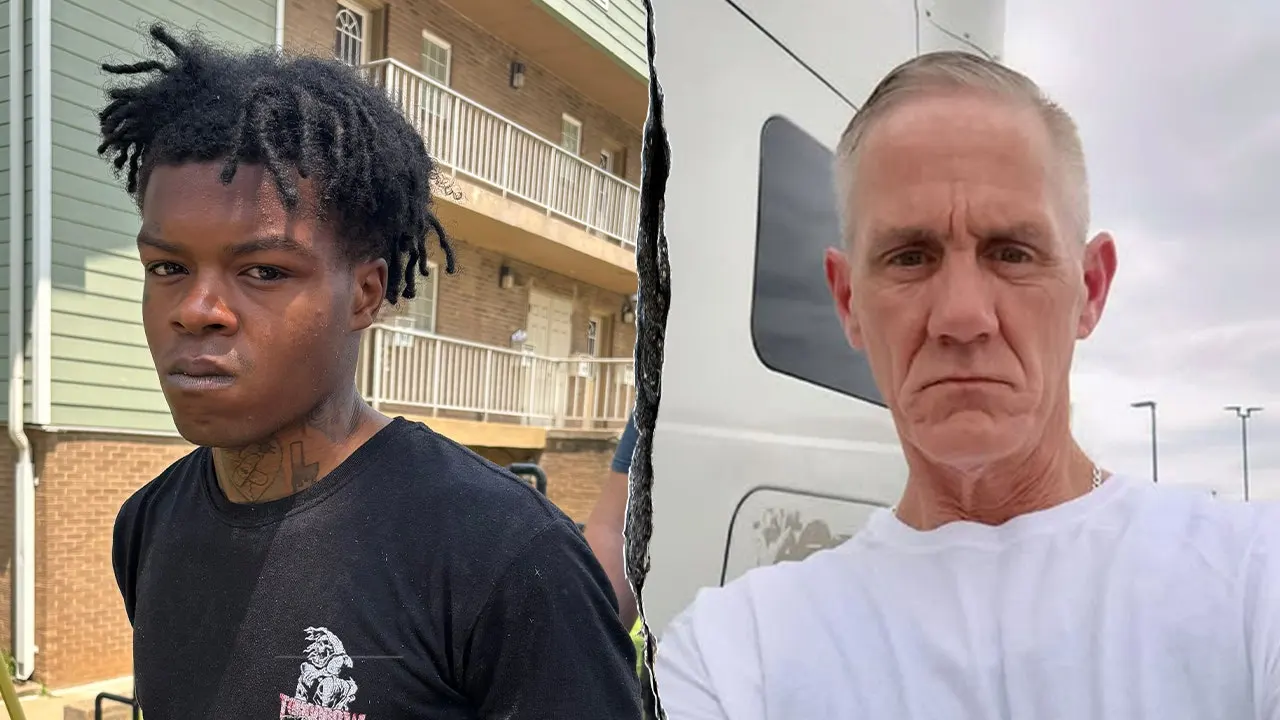
In the late summer heat of Nashville, Tennessee, the ordinary rhythms of a workday at a local U-Haul store were shattered in a flash of inexplicable violence. On August 5th, what began as a routine shift between two colleagues devolved into a fatal confrontation over something as trivial as a drink, leaving a 56-year-old man dead and a 23-year-old facing a lifetime behind bars. The victim, Fredrick “Fred” Lytton, was a familiar face at the store, someone who had likely just clocked in like any other day, perhaps making small talk with customers or preparing a truck for rental. But an argument erupted between Lytton and his younger co-worker, Devin Rice, and the dispute quickly spiraled out of control. According to authorities with the Metropolitan Nashville Police Department, Rice allegedly pulled out a pistol and unleashed a barrage of gunfire, striking Lytton multiple times. The sound of gunshots that should never have been heard in a place of business echoed through the parking lot, replacing the clatter of equipment and conversation with panic and screams. Emergency responders rushed to the scene, but despite their frantic efforts, Lytton was transported to Vanderbilt University Medical Center in critical condition, where he tragically succumbed to his wounds. The shift that began with mundane tasks had ended in a senseless tragedy, leaving a family shattered and a community reeling from yet another act of gun violence in a city already struggling with a rising tide of crime.
The aftermath of the shooting unfolded in stark, procedural steps. Rice, who had apparently fled the scene immediately after the attack, did not remain at large for long. Law enforcement located and arrested him without further incident, and during interrogation, he reportedly confessed to his actions. The confession, coming from a young man barely out of his teens, painted a chilling picture of how a petty disagreement over a beverage could escalate to the point of lethal force. Rice was formally charged with criminal homicide, a charge that carries the weight of a life sentence or decades in prison, and he now sits in a Nashville jail, his future erased by a moment of rage. The stark contrast between the two men is jarring: Rice, at 23, stood on the precipice of adulthood, while Lytton, at 56, had lived a full life of travel and experience. Yet, in that instant, the younger man decided that an argument was worth ending another man’s existence. The investigation by the Metro Nashville Police Department moved swiftly, verifying Rice’s admission and solidifying the evidence against him. For the detectives who handle such cases, this one seemed glaringly avoidable—a fatal outcome derived from a situation where walking away would have solved everything. The legal process will now determine Rice’s fate, but for the Lytton family, the wound is permanent, and no conviction can ever bring Fred back or undo the trauma of receiving that unthinkable phone call.
Fredrick Lytton was far more than just a victim of a random workplace dispute; he was a man whose life had been defined by freedom, passion, and a deep appreciation for the simple joys of existence. His obituary painted a vibrant portrait that stands in painfully stark contrast to the cold details of the police report. He was remembered for his “strong spirit, perseverance, and love of life,” qualities that likely helped him navigate years on the open road as a dedicated cross-country truck driver. For Fred, the highway was not just a job; it was a calling, a place where he found solace in the endless miles, the changing landscapes, and the solitude of the cab. He was a man who enjoyed the thrill of NASCAR, the unconditional loyalty of animals, and the timeless twang of classic country music—the songs of Merle Haggard, George Jones, and Waylon Jennings that likely filled his truck as he crossed state lines. He was a connoisseur of the American heartland, an observer of small-town diners and neon motel signs, a man whose stories were as rich as his experiences. His perseverance speaks to a life that was not without challenges, but one he faced with a resilient spirit. The tragedy is amplified by the fact that a man so full of vitality, who had traversed the vastness of the United States, would meet his end in the parking lot of a rental truck business over a drink. The obituary concluded with the poignant acknowledgment that “though Fred’s life was taken too soon, his memories and the love he shared with family and friends will remain forever,” a testament to the imprint he left on those who knew him, now forced to grieve a loss that was utterly preventable.
As news of the shooting spread through the South Nashville neighborhood, the incident resonated far beyond the immediate circle of the U-Haul store, tapping into a deep vein of anxiety and frustration regarding public safety. Joshua Houghtaylen, a resident who lives in the area where the shooting occurred, spoke candidly to local media, his words echoing the sentiments of many long-time Nashvillians who have watched their city transform in recent years. “The crime here in Nashville is getting really bad,” Houghtaylen said, his voice heavy with concern. “Police need to do a better job at getting the guns off the street because there’s a lot of shootings in Nashville.” His plea is not an isolated complaint but rather a reflection of a broader crisis gripping the city. Nashville, once known primarily for its country music, vibrant nightlife, and Southern hospitality, has seen a disturbing surge in violent crime, including fatal shootings that often stem from minor altercations. Residents are increasingly living in a state of hyper-vigilance, wondering if a trip to the grocery store, a drive down the highway, or even a shift at work might turn deadly. The specific incident at the U-Haul store is a microcosm of this larger epidemic—a flashpoint where an easily resolvable dispute escalated to gunfire simply because a firearm was readily available. Houghtaylen’s call for action underscores a community feeling that authorities are playing catch-up, and that more aggressive measures are needed to stem the tide of weapons flooding the streets. The fear is palpable; the sense of safety that once defined the city has eroded, replaced by a grim awareness that violence can erupt anywhere, at any time, irrespective of the victim’s character or the triviality of the trigger.
In the wake of the tragedy, the corporate response from U-Haul was swift, heartfelt, and focused on the human impact of the loss. Jeff Porter, the U-Haul area district vice president for Tennessee, issued a public statement expressing the company’s profound shock and sorrow. “We are shocked and deeply saddened by what occurred,” Porter stated. “Our concern right now is being there to support the victim’s family and our Team Members affected by this tragic event.” These words, while coming from a corporate entity, carry significant weight, acknowledging that a workplace is more than just a collection of employees—it is a community, a second home where people forge bonds, share coffee breaks, and rely on one another. For the colleagues who witnessed the shooting or worked alongside both Lytton and Rice, the psychological trauma will be immense. The ease of a typical day has been fractured, and the memory of the violence will likely linger in the aisles of the store for years. Porter’s commitment to supporting the victim’s family and the surviving team members is a crucial step in the healing process, as grief counselors and HR representatives move in to provide resources. However, such support cannot erase the fundamental wrongness of the event. It cannot answer the question of why a man lost his life over a drink, nor can it soothe the guilt that Rice’s co-workers might feel for not intervening. It does, however, reaffirm that the organization recognizes the profound loss of a valued employee and the unbearable grief of his loved ones. In a society where businesses often rush to distance themselves from tragedy, Porter’s statement offered a measure of decency, signaling that U-Haul will not turn its back on the community it serves, even as it grapples with the horrifying reality of what happened on its property.
Ultimately, the death of Fredrick Lytton serves as a grim, sobering reminder of the fragility of life and the irreversible consequences of impulsive anger. The argument over a drink—an object so inconsequential that it is often given away for free—highlights the absurdity and tragedy inherent in gun violence. Had one of the men chosen to walk away, to swallow their pride, or to simply take a moment to cool down, Fred would still be alive, listening to his classic country music, caring for his animals, and planning his next journey down the open road. Instead, a family is left to plan a funeral, a young man sits in a cell facing the destruction of his own future, and a neighborhood is left to lament the senselessness of it all. The words of the obituary offer a glimmer of enduring light amidst the darkness, celebrating the life that was lived rather than solely mourning the manner of its end. Fred’s “strong spirit” and “love of life” cannot be extinguished by bullets; they live on in the memories of those who loved him. As Nashville continues to grapple with its escalating crime crisis, the story of Fred Lytton should serve as a clarion call for change—a reminder that behind every statistic lies a person with dreams, hobbies, and a legacy, and that behind every shooting is a decision to resort to violence that we, as a society, must confront. The store will reopen, the police will file their reports, and the news cycle will move on, but for those who knew Fred, the silence left by his absence will be a permanent reminder of a life stolen too soon over absolutely nothing.