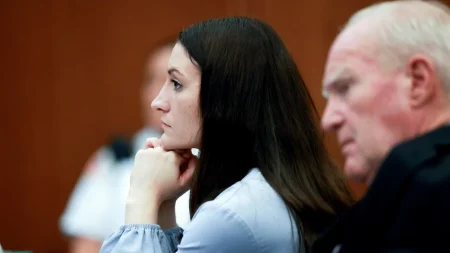


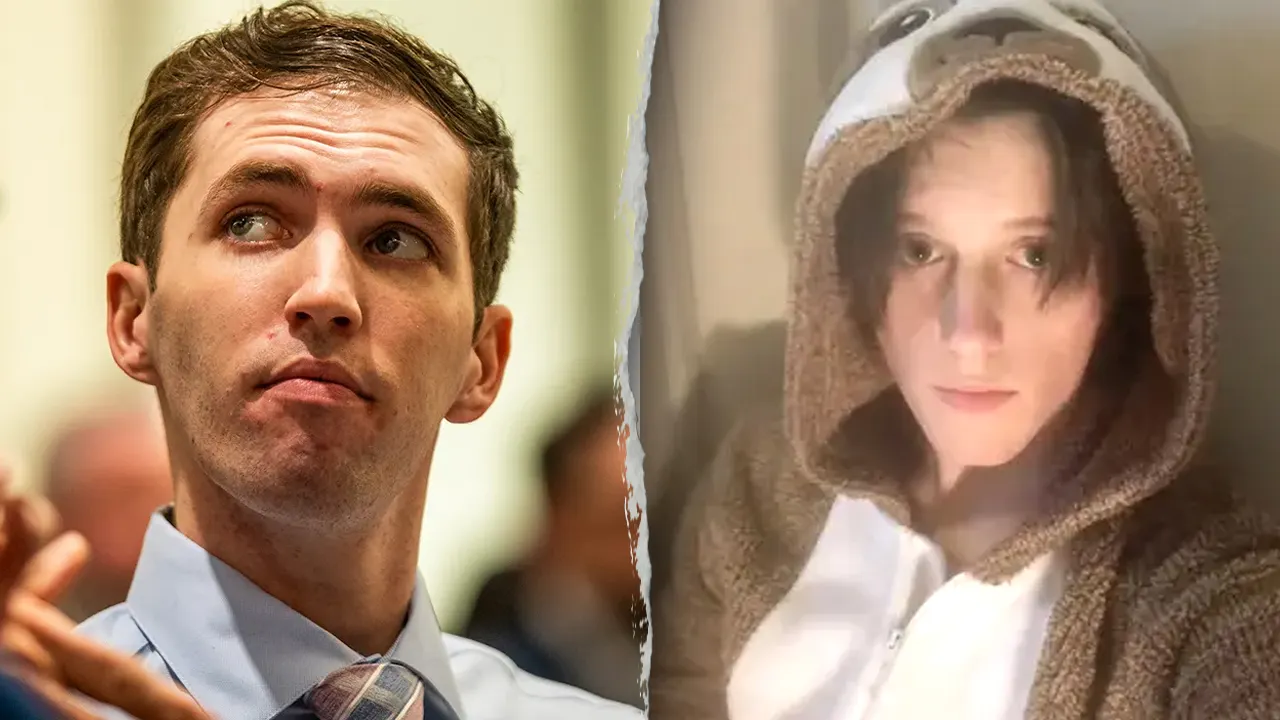
The atmosphere inside the Provo courtroom was thick with raw emotion as the week-long preliminary hearing for Tyler Robinson, the man accused of assassinating conservative figure Charlie Kirk, neared its dramatic conclusion. On Wednesday, the proceedings were momentarily halted by a clash over a piece of critical video testimony from Lance Twiggs, Robinson’s former lover. Prosecutors had intended to play the 37-minute recording, but objections from the defense forced Judge Tony Graf Jr. to order significant redactions. Rather than rushing a compromised version, the prosecution opted to delay the screening until Thursday morning to ensure strict compliance with the court’s order. Inside the gallery, the pain of the tragedy was palpable as Charlie’s widow, Erika Kirk, and his mother, Kathy Kirk, clung to one another in tearful embraces, their shared grief laying bare the devastating human cost behind the high-profile legal battle.
In a poignant and unexpected moment of advocacy, Erika Kirk appeared to urge the family’s attorney, Jeff Neiman, to approach the podium for the first time since the hearing began on Monday. Neiman deliver a powerful, impassioned plea on behalf of the grieving family, arguing that playing a heavily edited version of the video would only foster “doubt and distrust in the judicial system.” He asserted that the Kirk family believes deeply in absolute transparency, demanding that if evidence is to be admitted, it should be made public for the world to see without any censorship. Neiman reminded the court that the judge possesses all the necessary legal tools to guarantee a fair trial for the defendant without having to shield crucial evidence from public view.
However, defense attorney Richard Novak raised serious constitutional objections, arguing that televising what prosecutors characterized as a “confession” before the actual trial would irreparably prejudice a future jury. Judge Graf ultimately sided with the defense, ordering that approximately 16 minutes of the 37-minute video statement be redacted. The full version of the video is said to show Twiggs discussing private texts, chat logs, and a specific note that the prosecution and the public would likely view as a direct admission of guilt from Robinson. Novak, however, strongly disputed this characterization, insisting that the defense does not view these communications as a confession.
Throughout the intense courtroom deliberations, the accused assassin himself, Tyler Robinson, showed visible signs of distress. He appeared noticeably uneasy, particularly when his former lover, Lance Twiggs, was mentioned by the attorneys. Robinson routinely took deep breaths, fidgeted nervously in his seat, and adjusted his suit jacket, as if struggling to maintain his composure under the weight of the allegations. Some of the text messages between Robinson and Twiggs have already entered the public record, revealing exchanges where prosecutors claim the defendant mentioned being “stuck in Orem”—the Utah city where the fatal shooting took place—and seemingly admitted to being “the one who did it.”
While reference to these incriminating texts is scheduled to be scrubbed from the video played in open court on Thursday, Judge Graf clarified that he would still personally review and consider the unredacted communications when making his critical probable cause determination. To keep the trial on track, the judge also firmly announced that the preliminary hearing would conclude no later than 5:00 p.m. on Friday, putting an end to rumors that the highly sensitized proceedings might stretch into the following week. As the courtroom cleared on Wednesday evening, the emotional weight of the day culminated in another heart-wrenching, tearful embrace between Erika and Kathy Kirk, who stood supported by one another in their quest for justice.
As the court prepares for the final stretch of this preliminary phase, Tyler Robinson has yet to enter an official plea to the charges against him. Because of the gravity of the assassination charges, he could face the death penalty if the case proceeds to trial and results in a conviction. With the eyes of the nation on this Provo courtroom, the impending release of the redacted video testimony represents a pivotal moment in a case defined as much by its complex constitutional arguments as by the profound personal ruin left in the wake of Charlie Kirk’s death.