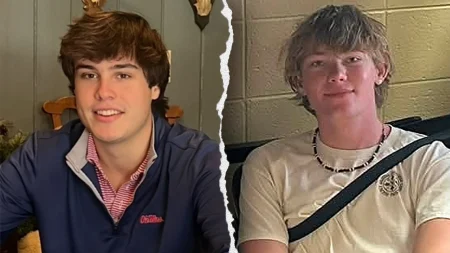



In a courtroom heavy with grief and quiet tension, the human wreckage left in the wake of Charlie Kirk’s assassination was laid bare in Provo, Utah. On the fourth day of Tyler Robinson’s preliminary hearing, prosecutors played a highly anticipated, redacted video interview of Robinson’s former roommate and lover, Lance Twiggs. Speaking softly to investigators, Twiggs—who identified to some as “Luna”—delivered a devastating blow to the defense, recalling a face-to-face conversation with the 23-year-old suspect shortly after the tragedy. “I just asked him in person if what he said was true the night before,” Twiggs told investigators, his voice carrying the weight of a shattered life. “And he said it was, started crying a little bit and said he wishes he hadn’t done it.”
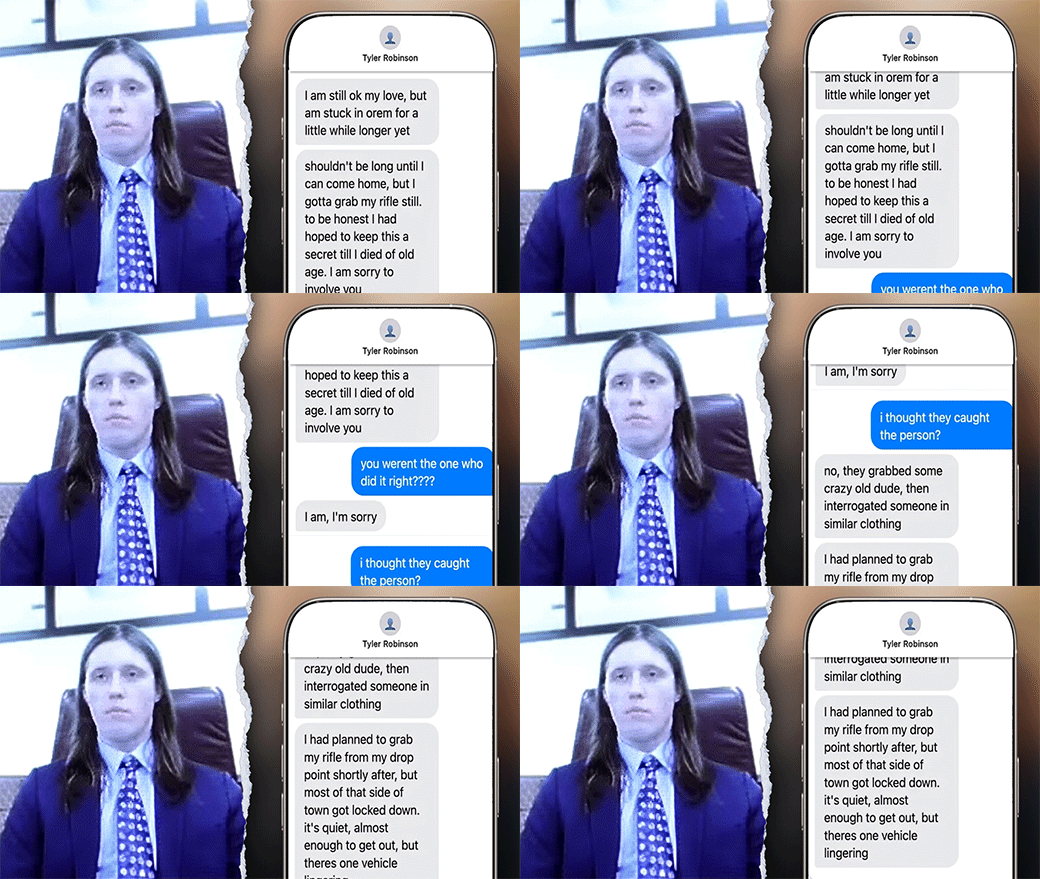
The emotional temperature in the courtroom spiked as prosecutors displayed a series of frantic, heartbreaking text messages exchanged between the two men. Underneath his keyboard, Twiggs discovered a handwritten note that foreshadowed the violence: “I had the opportunity to take out Charlie Kirk and I’m going to take it.” Terrified and hoping for a misunderstanding, Twiggs texted Robinson to ask if he was joking. The reply from Robinson was a chilling confession wrapped in an apology: “Shouldn’t be long until I can come home, but I gotta grab my rifle still… I am sorry to involve you.” When Twiggs desperately asked, “You weren’t the one who did it right????” Robinson simply replied, “I am. I’m sorry.” Listening to these words read aloud, Kirk’s widow, Erika Kirk, wept openly in the gallery.
The testimony also shed light on the meticulous and eerie preparation that allegedly preceded the September 10 shooting at Utah Valley University. Twiggs recalled Robinson asking for a Dremel tool roughly a month before the attack, claiming he wanted to engrave messages on bullets for a family hunting trip. Twiggs, unsuspectingly, pointed him to the tool and even warned him to be careful not to accidentally discharge a round. Prosecutors allege that multiple casings, including one found in the suspect’s home and others recovered from the murder weapon, bore these customized engravings. As this forensic connection was detailed, Robinson fidgeted uncomfortably in his chair, while his family members sat crumpled in the front row, holding onto one another in shared despair.
The narrative of the day of the shooting painted a picture of a calculated routine masked as normalcy. Twiggs recounted hearing Robinson leave their shared home unusually early, claiming he had “a long drive to work.” Yet, the reality was far more sinister; Robinson allegedly lingered around the Orem campus until well after midnight following the sniper attack. In a moment that drew quiet scoffs of disgust from the Kirk family sitting in the gallery, Twiggs mentioned that he slept until early afternoon on the day of the killing. Throughout the video, Robinson’s physical reactions in court seemed to betray his anxiety; he noticeably scratched his throat when Twiggs described the painful final moments they shared before Robinson surrendered to authorities.
Further tying Robinson to the crime, Twiggs walked investigators through an FBI wanted poster featuring a person of interest on campus. While hesitant to commit to absolute certainty due to grainy camera quality, Twiggs admit to detectives that the figure wore the exact same shoes, sunglasses, and jeans that Robinson owned. Though Twiggs did not appear in person this week—having been placed under federal protection before leaving the state—his recorded words dominated the courtroom, painting a vivid portrait of a young man caught in a web of love, loyalty, and sudden horror.
The path forward for Robinson remains slow and deliberate. Judge Tony Graf Jr. announced that he would not rule on whether the case will proceed to trial at the conclusion of this week’s hearings. At the request of the defense, both sides will submit written briefs before returning for oral arguments on September 1—nearly a year after the fatal shot was fired at the Turning Point USA event. Only then will the court decide if there is sufficient probable cause to send Robinson to a trial where, if convicted of the political assassination, the 23-year-old could face the death penalty.