


The Pragmatic Pivot: How Washington and Beijing Are Quietly Rewriting the Rules of Gobal Power
1. The Birth of a New Diplomatic Vernacular
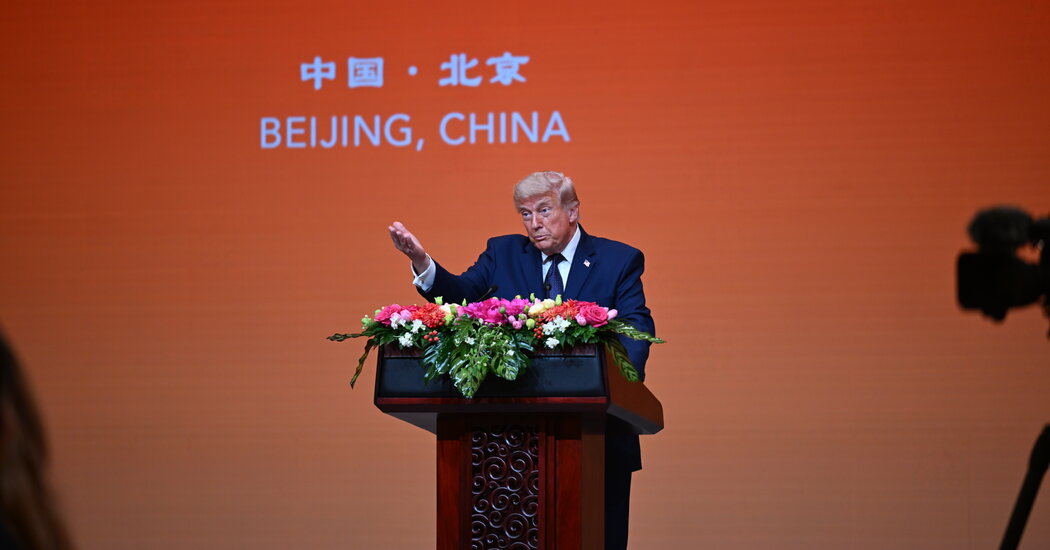
It began not with a grand treaty or a dramatic press conference, but with a quiet, almost imperceptible shift in diplomatic vocabulary. During a quiet meeting in Malaysia, Secretary of State Marco Rubio extended an unexpected olive branch to Beijing’s top diplomats, suggesting that the United States and China shared a rare, crucial opportunity to establish “strategic stability” and identify mutual areas of cooperation. While foreign policy observers initially paid little attention to the remark—and similarly overlooked its repetition during Rubio’s subsequent tour of the Caribbean—officials in Beijing immediately recognized the profound strategic opening. Sensing a chance to reshape the narrative of the world’s most critical bilateral relationship, Chinese diplomats quickly refined the terminology, presenting an even more cooperative variation back to Washington: “constructive strategic stability.” This polished phrase made its official, highly coordinated debut during a high-stakes summit in Beijing, where President Donald J. Trump and Chinese President Xi Jinping formally embraced the language to signal a reset in relations. Though skeptics might dismiss such diplomatic jargon as mere semantics, these carefully engineered terms serve as vital structural guideposts for the global community. By standardizing this new catchphrase, both the White House and the Kremlin of the East have signaled to their respective bureaucratic agencies, military leaders, and nervous regional allies that the world’s two largest economies are actively seeking to de-escalate tensions, establish guardrails against accidental conflict, and cultivate a highly transactional modus vivendi that prioritizes economic pragmatism over ideological warfare.
  THE GENESIS OF A NEW BILATERAL PARADIGM

  [ Secretary Rubio's Quiet Diplomacy ]
                   │
                   ▼
     Proposed: "Strategic Stability"
                   │
                   ▼
     Beijing's Counter-Proposal: "Constructive Strategic Stability"
                   │
                   ▼
  [ Formally Adopted: Trump-Xi Beijing Summit ]
2. A Strategic Hold on Taiwan and the Transactional Shift
Nowhere is the shockwave of this diplomatic recalibration felt more acutely than in Taipei, where decades of security guarantees suddenly feel subject to the whims of realpolitik and deal-making. For generations, U.S. policy toward Taiwan has been anchored by the historic Taiwan Relations Act of 1979 and the foundational “Six Assurances,” frameworks that mandated a steady flow of defensive military hardware to the self-governing island. Yet, in a move that has deeply unsettled defense establishments from Washington to Tokyo, the White House recently ordered the State Department to freeze a massive, congressional-approved armaments package worth upward of $14 billion. This dramatic freeze on Taiwan arms sales—which Rubio has publicly downplayed as a routine administrative “review” rather than a deliberate withholding—was directly intended to avoid provocative actions ahead of the Beijing summit, especially after veteran leader Xi Jinping repeatedly warned against such military sales. Rather than viewing Taiwan as an ideological outpost of democracy that must be defended at all costs, Donald Trump has signaled a highly transactional perspective, openly describing the frozen defense packages as a powerful negotiating chip in broader trade talks with Beijing. This transactional mindset was underscored by Trump’s candid public remarks expressing extreme reluctance to drag American forces into a conflict “9,500 miles away” to police local independence movements, urging both Taipei and Beijing to simply “cool down.” For veteran analysts, including Bonnie S. Glaser of the German Marshall Fund, these rhetorical shifts suggest that the White House has deeply internalized Beijing’s long-standing narrative on Taiwan, sparking profound anxiety among democratic nations throughout the Indo-Pacific who fear they may be sidelined in a broader superpower bargain.
3. Reversing the Hawkish Trend: A Surprising Pivot to Pragmatism
This emerging, cooperative dynamic represents a stunning departure from the hostile tariff wars and combative rhetoric that characterized the administration’s initial approach to China years prior. For much of his political career, Trump viewed Beijing primarily through the lens of economic aggression, leading to retaliatory trade measures that ultimately forced painful domestic agricultural bailouts and highlighted the limits of unilateral economic warfare. Having felt the sting of China’s retaliatory economic leverage, the administration has pivoted toward a model of peer-to-peer accommodation, with Trump increasingly presenting the U.S.-China dynamic as a “G2″—an exclusive club of two equal, towering superpowers tasked with managing the global order. During the Beijing summit, this newfound mutual respect was on full display as Trump enthusiastically praised Xi Jinping’s commanding leadership style, while Xi boldly spoke of “great changes unseen in a century,” a favorite phrase of his signaling the inevitable decline of traditional Western hegemony. To prevent these shifting tides from culminating in direct military confrontation, Xi urged his American counterpart to actively avoid the “Thucydides Trap”—the historical tendency of established empires to go to war with rising powers—an entreaty that Trump received warmly, even defending Xi’s critiques of past American governance by framing them as criticisms of previous administrations. This dramatic rhetorical softening has left Beijing feeling more optimistic about its American prospects than ever before; as foreign policy scholars like Yun Sun of the Stimson Center observe, the Chinese government now views this administration as a golden opportunity to rehabilitate its global image and build lasting, positive relations with key national security circles in Washington.
THE EVOLUTION OF U.S. CHINA POLICYFIRST TERM CURRENT ERA
• Aggressive Tariff Warfare • “Constructive Strategic Stability”
• Unilateral Economic Deterrence • Superpower Peace (“G2” Framework)
• Firm Defense Insistences • Transactional Realpolitik (“Negotiating Chips”)
• Rigid Anti-Beijing Alliances • Pragmatic Bilateral Deals
4. Technology, Compromise, and the Nvidia Concession
While both nations publicize this era of constructive strategic stability as a triumph of cooperative diplomacy, a parallel undercurrent of tech-sector competition and national security caution continues to simmer. In a bid to maintain domestic support for national security, the Pentagon recently expanded its blacklist of Chinese technology firms and major electric vehicle manufacturers accused of maintaining ties to the People’s Liberation Army, aiming to curb their expansion in Western markets and reinforce the administration’s demands for economic “fairness and reciprocity.” However, these protectionist gestures stand in stark contrast to significant, highly lucrative export concessions made in the high-tech sector, most notably the administration’s decision to permit Silicon Valley giant Nvidia to export highly advanced AI-capable semiconductor chips to Chinese enterprises. This high-profile semiconductor waiver, which directly bypasses the stringent technology export controls established by previous policymakers, was dramatically highlighted when Nvidia CEO Jensen Huang joined the president aboard Air Force One during a refueling stop in Alaska en route to the Beijing summit. While congressional critics from both major political parties express deep alarm that these advanced processors could accelerate China’s domestic artificial intelligence and military capabilities, Chinese tech executives are scrambling to capitalize on this regulatory thaw, rapidly drawing up purchasing agreements to secure the restricted components. This delicate balancing act—blacklisting select electric vehicle makers while simultaneously greenlighting critical AI microchip sales—exposes the dual track of modern U.S.-China relations, where performative national security enforcement goes hand-in-hand with quiet, multi-billion-dollar corporate compromises.
5. Geopolitical Tremors Across the Indo-Pacific Allied Network
This rapid, unpredictable transformation in U.S. foreign policy has sent shockwaves through traditional allied capitals across Asia, leaving historic partners from New Delhi to Manila scrambling to recalibrate their own strategic equations with Beijing. For the past several years, the strategic glue holding the U.S.-India relationship together was a shared, urgent interest in countering China’s expansionist moves across the Himalayas and the Indian Ocean, a mutual concern that powered the rise of the Quadrilateral Security Dialogue (the Quad) alongside Japan and Australia. However, with Washington now pursuing bilateral accommodation with Beijing, Indian officials fear that the United States is withdrawing from its broader geostrategic commitments in Asia to secure short-term trade deals, a sentiment echoed by former Indian Foreign Secretary Shivshankar Menon, who noted that Washington seems focused solely on economic rivalry while neglecting real regional security concerns. In a bid to soothe these mounting anxieties, Secretary Rubio embarked on a diplomatic mission to New Delhi immediately after the Beijing summit, but the visit yielded little more than symbolic photo opportunities and embassy galas, failing to restore deep strategic confidence. Meanwhile, at an annual defense forum in Singapore, Defense Secretary Pete Hegseth attempted to walk a tightrope, acknowledging the region’s “rightful alarm” regarding China’s rapid naval expansion, while simultaneously declaring that the United States “respects” Beijing’s global ambitions—all while conspicuously becoming the first American defense chief in over a decade to completely omit any mention of Taiwan from his keynote address, a glaring silence that spoke volumes to the anxious diplomats in attendance.
REGIONAL REACTION TO AMERICAN FOREIGN POLICY SHIFTS┌──────────────────┐ ┌──────────────────┐ ┌──────────────────┐
│ TAIPEI │ │ NEW DELHI │ │ SINGAPORE │
├──────────────────┤ ├──────────────────┤ ├──────────────────┤
│ Freezing of key │ │ Fearing loss of │ │ Hegseth omits │
│ arms sales and │ │ India-US “glue” │ │ Taiwan reference │
│ rising survival │ │ as Washington │ │ during primary │
│ anxieties. │ │ adopts G2 approach│ │ regional speech. │
└──────────────────┘ └──────────────────┘ └──────────────────┘
6. The Military Counterweight: Deterrence on the Pacific Rim
Despite the undeniable pivot toward transactional diplomacy and political accommodation, the physical realities of military deterrence in the western Pacific tell a much more complex story. Even as civilian leaders craft optimistic talking points about strategic stability, the U.S. Indo-Pacific Command is quietly reinforcing its defensive perimeter, establishing a vital new logistics and maritime refueling network on the strategically positioned island nation of Palau. This long-term defense infrastructure is matched by a dramatic increase in both the scale and complexity of multilateral combat exercises, such as the landmark Exercise Balikatan in the Philippines, which brought together over 17,000 elite troops from seven allied nations. This massive display of joint military capability featured the historic deployment of Japanese combat troops on Philippine soil for the first time since the close of World War II, alongside live-fire testing of the advanced Typhon missile system—a state-of-the-art weapon platform specifically engineered to target and deter amphibious invasion fleets. As former White House national security official Matt Turpin points out, these highly sophisticated, forward-deployed combat exercises serve as an unmistakable demonstration that the American military intelligence community continues to take the threat of regional conflict with the People’s Liberation Army with utmost seriousness. Ultimately, the future of the Indo-Pacific will be defined by this ongoing, high-stakes dualism: a delicate balance between the pragmatic, deal-driven diplomacy orchestrated in the corridors of power in Washington and Beijing, and the unrelenting, hard-power military deterrence played out across the contested waters of the South China Sea.