





The dramatic collapse of what was supposed to be a triumphant legislative showcase began with the quiet dismantling of a stage. In the historic, echo-filled chambers of Statuary Hall, workers had already begun setting up the risers, microphones, and podiums where triumphant Republicans planned to stand shoulder-to-shoulder, celebrating a rare and hard-won bipartisan housing affordability bill. It was a moment meticulously designed to show an anxious, inflation-weary American public that the governing party possessed the empathy and practical focus required to ease their daily economic burdens. But with the single, sudden strike of a social media post, Donald Trump shattered this carefully constructed imagery, dismissively labeling the bipartisan achievement as a matter of “minor importance.” By unilaterally canceling the signing ceremony, the former president did not merely disrupt a press event; he pulled the rug out from under his own congressional allies, leaving them standing empty-handed before a skeptical electorate. The suddenness of the cancellation sent a shockwave of bewilderment and frustration through the Capitol corridors, instantly transforming an atmosphere of choreographed unity into one of profound vulnerability and confusion, as rank-and-file lawmakers stared at the empty space where their crowning domestic achievement was meant to be sealed.
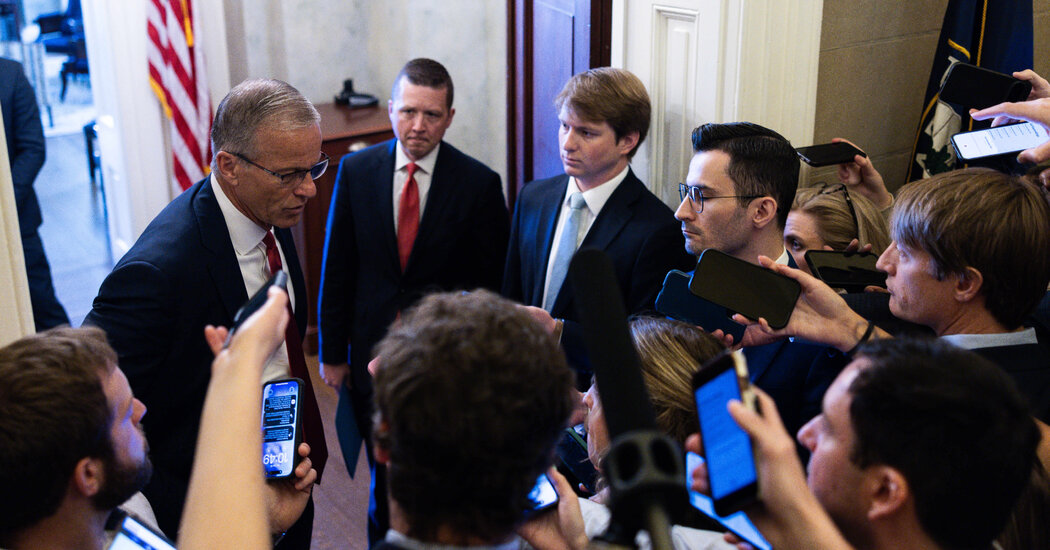
At the very center of this brewing political storm stood Senate Majority Leader John Thune, whose face registered a mixture of deep institutional exhaustion and quiet disbelief as the news of the cancellation reverberated through his office. Thune had spent his initial weeks in leadership trying to navigate a treacherous path, seeking to maintain a functioning legislative body while managing a simmering, increasingly personal feud with Trump over the Senate’s sacred filibuster rules. Trump had been relentlessly demanding that Thune use his position of power to demolish the legendary sixty-vote threshold, a move that would allow Republicans to cram through the controversial SAVE America Act—an election-focused bill requiring proof of citizenship to register to vote and severely limiting mail-in balloting. Thune, a pragmatic Midwesterner who respects the hard math of the chamber he leads, had repeatedly tried to explain that the votes to alter the filibuster or pass the voting bill simply did not exist, a reality already proven by a string of unsuccessful test votes. When Thune stepped off the Senate floor on Wednesday, he appeared visibly dazed, telling reporters he had little to say; though he and Trump later managed a polite, performative display of cordiality for the cameras, the underlying tension remained thick enough to cut with a knife, leaving Thune to quietly harbor the fading hope that the president would someday find a way to sign the housing bill.
The mechanical details of how this chaotic day unfolded highlight a deep and highly unusual fracture within the traditional Republican leadership structure, spearheaded by Senator Rick Scott of Florida. Rather than waiting for a formal invitation from the official Senate leader to address the entire Republican conference during their standard, high-profile Tuesday gathering, Trump’s visit to the Capitol was brokered during a casual, late-week telephone call with Scott, who invited the former president to speak at a much smaller, highly conservative weekly luncheon that he personally hosts. This back-channel invitation carried a heavy undercurrent of personal and institutional rivalry; Scott had recently lost a bruising leadership race to Thune, during which he had positioned himself as the ultimate, unapologetic champion of the populist base. By hosting Trump at his private gathering, Scott effectively established an alternative center of gravitational pull within the Senate, forcing mainstream lawmakers to navigate a minefield of conflicting loyalties. While Scott framed the lunch as a simple, harmless exercise in fostering healthy communication and keeping the lines of dialogue open ahead of critical deadlines like the September government shutdown, the reality was far more disruptive, prioritizing Trump’s relentless focus on the SAVE America Act over the practical, bread-and-butter economic issues that moderate senators desperately wanted to champion.
The internal party strife was further intensified by an emotional, high-stakes rebellion concerning Trump’s unilateral execution of the ongoing conflict in Iran. Just twenty-four hours before Trump’s physical arrival at the Capitol, the Senate had taken a remarkable, deeply symbolic step by passing a war powers resolution that directed the administration to either immediately wind down the military operations or seek explicit, constitutionally mandated authorization from Congress to keep fighting. This rare and stunning reprimand of a president was made possible only because four desperate Republican senators split from their party line to vote with Democrats, exposing a profound, underlying anxiety about the unchecked expansion of executive war-making power. Trump’s reaction to this internal defiance was swift and deeply personal, as he publicly lashed out at the four defectors on social media, branding them as “losers” who were effectively giving aid and comfort to an adversary. Yet, the unease in the Senate ran much deeper than those four votes, quietly spreading to some of Trump’s most loyal congressional defenders, who harbored private, agonizing reservations about the secretive diplomatic deals being negotiated to end the conflict, leaving a haunting disconnect between Trump’s public assertions that the war was “going very well” and the bloody realities reported back from the front lines.
This toxic mixture of legislative paralysis and foreign policy discord had a deeply chilling effect on vulnerable, moderate Republicans who are currently locked in grueling, career-defining re-election campaigns across the country. For lawmakers like Senator Susan Collins of Maine, who has built her political identity on independent, centrist problem-solving, Trump’s sudden decision to trash the housing bill was not just a frustrating distraction; it was a direct threat to her survival in a swing state. Collins did not hide her dismay, calling the abrupt policy shift a “complete surprise” that threatened to strip her of a primary talking point showing voters she could deliver real economic relief. On the Senate floor, the internal debate over the voting legislation exposed a raw, ideological civil war; while level-headed pragmatists like Senator Bill Cassidy of Louisiana openly pleaded with their colleagues to accept reality, abandon the doomed SAVE America Act, and focus on passble bills, firebrands like Senator Mike Lee of Utah publicly condemned their own leadership for surrendering too easily. This bitter, public squabbling laid bare a profound philosophical crisis of identity within the GOP: whether to run as a pragmatic governing party focused on the immediate financial anxieties of the middle class, or to pursue an all-or-nothing ideological crusade that risks losing the congressional majorities altogether.
Ultimately, the tremors of Trump’s Senate intervention quickly crossed the Capitol rotunda, triggering a full-scale, paralyzing crisis on the floor of the House of Representatives on the eve of the Independence Day recess. Reinvigorated and emboldened by Trump’s public dismissal of the housing compromise and his fierce insistence that the SAVE America Act remain the party’s ultimate legislative priority, a small, aggressive faction of hard-line House conservatives decided to hijack the legislative process. Furious that their Senate colleagues had failed to push the voting bill forward, these lawmakers threatened to paralyze the House completely, vowing to block Speaker Mike Johnson from bringing any critical legislation, including essential annual spending bills, to a vote. Lacking the necessary numbers within his own ranks to break the blockade, a defeated House leadership was forced to cancel planned votes and send lawmakers home early for the holiday, leaving their entire legislative agenda in a state of chaotic suspension. As exhausted members of Congress boarded flights to return to their home districts, they were left with no celebrated bipartisan victories to pitch to their constituents, carrying instead the heavy, sobering realization that their party’s message, cohesion, and very capacity to govern remain completely hostage to the unpredictable, shifting winds of a single man.