



Trump’s Renewed Interest in Greenland: A Tale of National Security and International Relations
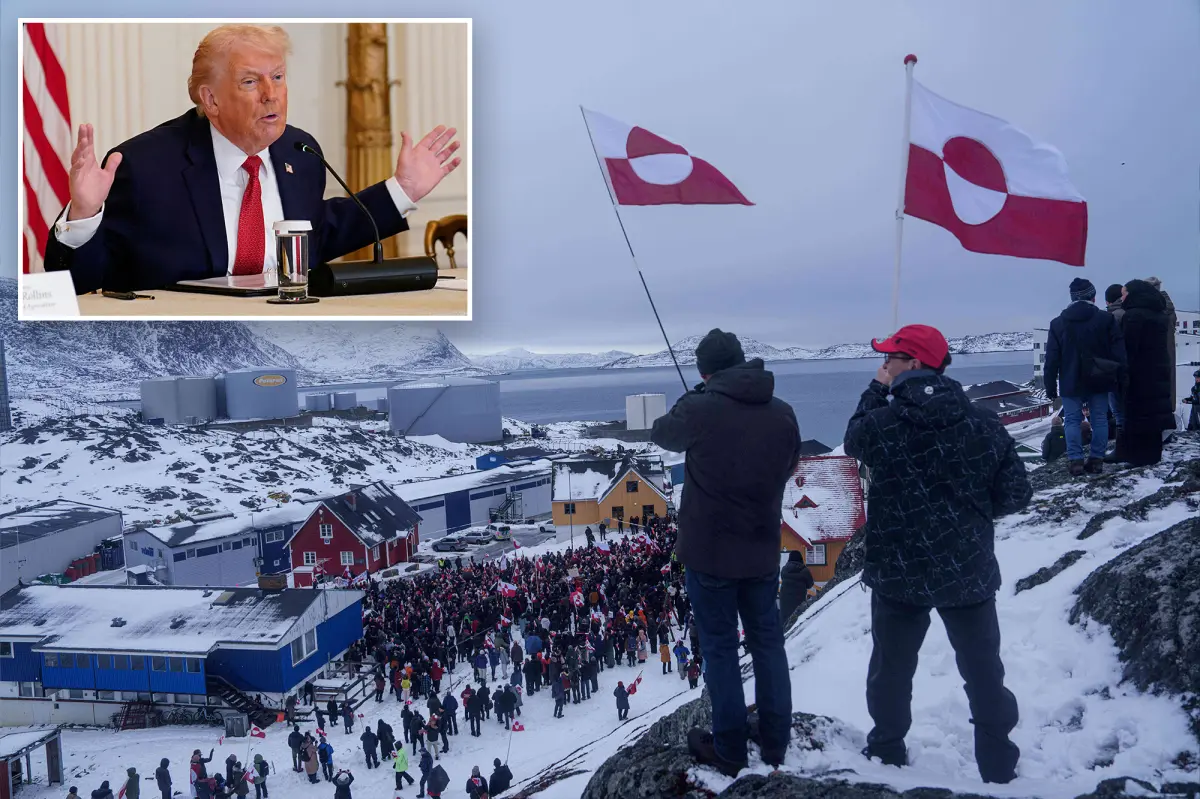
Former President Donald Trump has reignited his interest in acquiring Greenland, the autonomous Danish territory, through a series of bold declarations on his social media platform, Truth Social. In a recent post, Trump claimed Denmark has failed for two decades to address what he describes as a “Russian threat” to Greenland, despite alleged NATO warnings. “Now it is time, and it will be done!!!” Trump proclaimed, suggesting his determination to resolve the situation if returned to office.
This renewed focus on Greenland isn’t entirely surprising, as Trump’s administration previously explored the possibility of purchasing the world’s largest island back in 2019. At that time, his suggestion was met with firm resistance from both Danish and Greenlandic officials, who unequivocally stated that Greenland is not for sale and has no desire to become part of the United States. Danish Prime Minister Mette Frederiksen memorably called the proposal “absurd,” leading to diplomatic tension between the longtime allies. Despite this clear rejection, Trump appears undeterred, now framing the acquisition as a matter of urgent national security rather than merely a real estate transaction.
Trump has escalated his rhetoric by threatening to impose increasing tariffs on European allies until the United States is permitted to purchase Greenland. This approach reflects his familiar negotiating style of using economic pressure as leverage in international relations. The former president’s justification centers on geopolitical concerns, specifically citing the “encroaching presence of China and Russia” as making Greenland “vital to US security interests.” Indeed, Greenland’s strategic location in the Arctic, abundant natural resources, and potential shipping routes opened by climate change have attracted interest from global powers in recent years. However, Danish and other European officials have countered Trump’s security argument by pointing out that Greenland is already protected under NATO’s collective security agreement, making formal U.S. ownership unnecessary for defense purposes.
The situation highlights deeper questions about sovereignty, international relations, and the changing nature of Arctic geopolitics. Greenland, while part of the Kingdom of Denmark, maintains significant autonomy over its internal affairs, with its predominantly Inuit population having a strong sense of cultural identity and self-determination. Any discussion about the territory’s future must necessarily involve the Greenlandic people and government, whose voices have been clear in rejecting external control. The United States already maintains a significant military presence in Greenland through Thule Air Base, established during the Cold War, which provides radar surveillance and space tracking capabilities considered important to American defense systems.
Climate change has dramatically increased the Arctic’s strategic importance, with receding ice opening new shipping routes and improving access to vast mineral deposits and potential oil reserves. Russia has been expanding its military presence in the region, while China has declared itself a “near-Arctic state” and invested in mining operations in Greenland. These developments have indeed raised legitimate security concerns for NATO allies, including the United States. However, the appropriate response to these challenges remains a matter of debate among security experts and diplomats, with most favoring enhanced cooperation within existing alliance frameworks rather than territorial acquisitions.
The White House under President Biden has not commented on Trump’s recent statements, nor has Denmark’s foreign ministry issued an immediate response. The episode serves as a reminder of how differently Trump approaches international relationships compared to traditional diplomatic norms. While his transactional view of foreign policy—treating international relations like business deals—appeals to some supporters who appreciate his directness, it often creates friction with allies who value predictability and mutual respect in diplomatic exchanges. As the 2024 presidential election approaches, Trump’s renewed focus on Greenland suggests that, if returned to office, his administration would likely pursue similarly unconventional approaches to foreign policy and national security challenges, particularly in the increasingly contested Arctic region.