


Trump’s European Diplomacy Takes a Sharp Turn
In a surprising diplomatic twist, former President Donald Trump has signaled a potential shift in his approach to international relations with European allies. In a message initially sent to Norwegian Prime Minister Jonas Gahr Støre and subsequently forwarded to multiple European ambassadors in Washington, Trump expressed frustration over not receiving the Nobel Peace Prize despite what he characterized as stopping “8 Wars PLUS.” This communication marks a notable departure from conventional diplomatic language, with Trump suggesting he no longer feels “an obligation to think purely of Peace,” although he maintained it would “always be predominant” in his considerations.
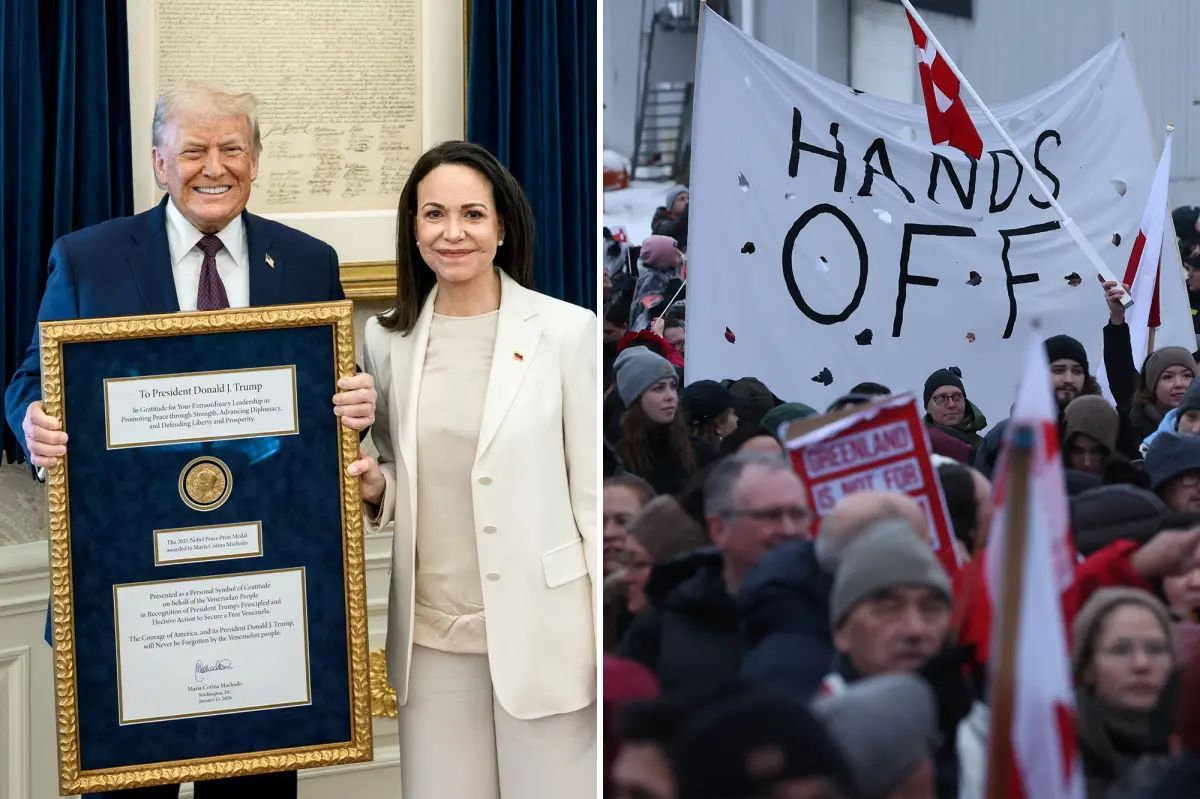
The message quickly pivoted to the topic of Greenland, resurfacing an interest Trump first displayed during his presidency. With remarkable directness, Trump questioned Denmark’s claim to the territory, arguing that “Denmark cannot protect that land from Russia or China,” and challenging the historical basis of Danish sovereignty by stating, “There are no written documents, it’s only that a boat landed there hundreds of years ago, but we had boats landing there, also.” This revisiting of his interest in acquiring the world’s largest island indicates Trump’s continued belief that American control of Greenland would serve strategic interests, as he asserted that “The World is not secure unless we have Complete and Total Control of Greenland.”
The timing of Trump’s message appears linked to recent developments in the Nobel Prize sphere. Just a day before sending his message to Prime Minister Støre, Trump had threatened additional 10% tariffs on several European nations including Denmark, Norway, Finland, Sweden, France, The Netherlands, Germany, and the United Kingdom. The condition for avoiding these tariffs was stated plainly: Copenhagen’s agreement to the “complete and total purchase of Greenland.” This connection between trade policy and territorial acquisition represents an unusual approach to international diplomacy, blending economic leverage with geopolitical ambitions in a manner rarely seen in modern statecraft.
Further context for Trump’s message can be found in his recent interactions with Maria Corina Machado, the 2025 Nobel Peace Prize winner from Venezuela. Trump welcomed the Venezuelan opposition leader to the White House for a private lunch meeting during which Machado presented him with her Nobel medallion. This gesture takes on additional significance given Trump’s well-documented campaign for the Nobel Peace Prize during his presidency. The timing of his message to European leaders—coming shortly after his meeting with Machado—suggests a complex interplay of personal ambition, diplomatic strategy, and perhaps a sense of perceived slight at not receiving recognition he felt was deserved for his international peace efforts.
The Norwegian Prime Minister confirmed to the tabloid VG that he had indeed received Trump’s message on a Sunday afternoon. The communication had apparently come in response to Støre’s request for a three-way conversation that would have included Finnish President Alexander Stubb. While the White House did not immediately respond to requests for comment on the matter, the forwarding of Trump’s message to multiple European ambassadors ensured its wider circulation within diplomatic circles, amplifying its impact beyond the initial bilateral exchange.
Trump’s renewed interest in Greenland and his linkage of this territorial ambition to both security concerns and his contributions to NATO reflects a consistent theme in his approach to international relations. In his message, he emphasized, “I have done more for NATO than any other person since its founding, and now, NATO should do something for the United States.” This framing positions his interest in Greenland not merely as a unilateral American objective but as a form of reciprocity for what he perceives as America’s outsized contributions to European security through NATO. The directness of Trump’s communication style—concluding his message with “Thank you! President DJT”—stands in stark contrast to the typically nuanced and carefully calibrated language of international diplomacy, highlighting his unique approach to engaging with world leaders on matters of significant geopolitical importance.