




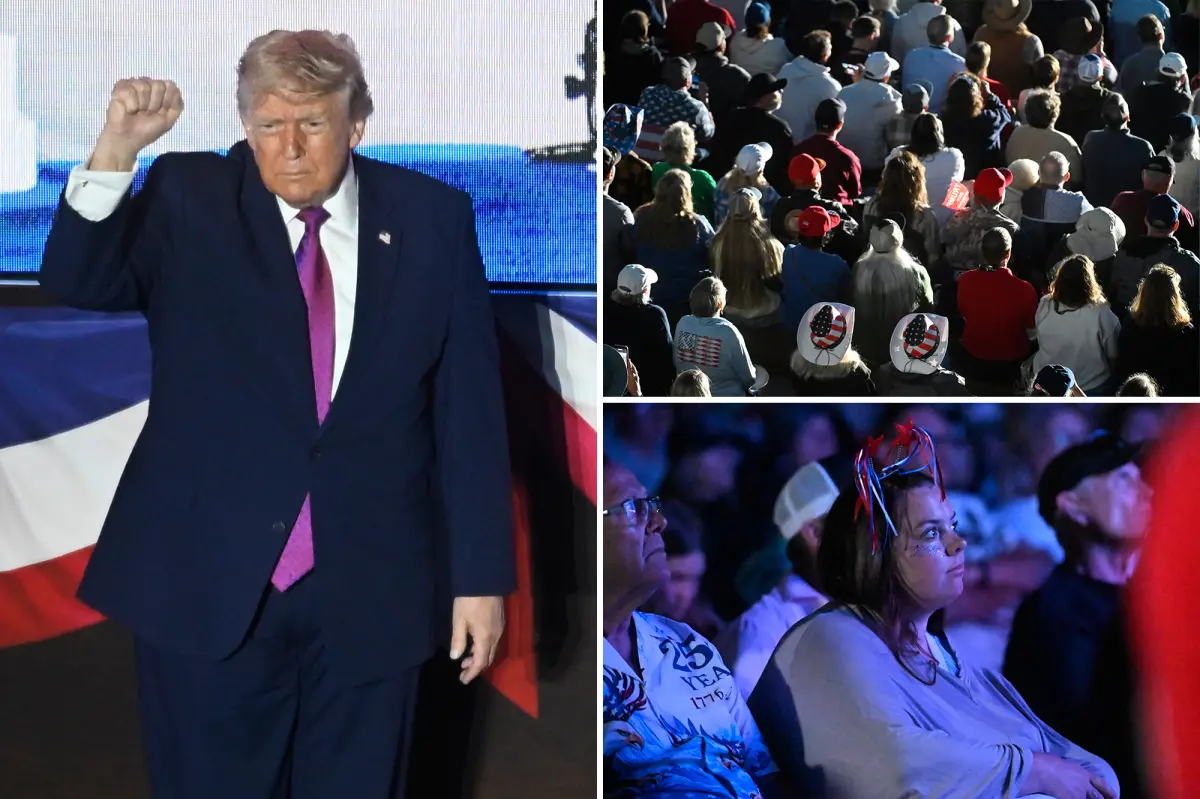
Standing before the colossal stone faces of Mount Rushmore on the eve of America’s semiquincentennial, President Donald Trump delivered a searing address that cast the nation’s political divisions not as mere policy debates, but as an existential battle for the country’s soul. Speaking against the backdrop of the monument’s towering granite sculptures of past leaders, the president warned of a quiet but dangerous resurgence of far-left ideologies within the borders of the United States. He framed this moment in history as a critical turning point, suggesting that the very identity of the republic is under a coordinated and aggressive assault. Decades after the conclusion of the Cold War, a conflict many believed permanently settled the debate between global freedom and totalitarianism, Trump argued that the ghost of that era has returned to haunt modern American society.
To an audience gathered in South Dakota for the pre-anniversary celebrations of the nation’s 250th birthday, the president asserted that the threat of communism is no longer just a distant foreign concern, but an active domestic challenge. He pointed to a growing domestic embrace of collectivist ideas, specifically noting that a portion of the country’s newer residents are bringing with them beliefs that directly run counter to historical American values of individual liberty and capitalism. Rather than viewing these challenges through the lens of traditional bipartisan disagreement—such as debates over tax policy or the scope of federal regulations—Trump urged the public to recognize the situation as a profound cultural emergency. In his view, these competing ideologies represent a mortal threat to the core foundations of American prosperity and personal freedom.
In deeply passionate and stark terms, the president contrasted the foundational promises of the American Experiment with the historical realities of authoritarian governance. He described the tenets of communism as the absolute antithesis of the natural rights championed by the Founding Fathers: life, liberty, and the pursuit of happiness. In place of those celebrated ideals, Trump argued that far-left philosophies yield only oppression, decay, and the systematic erosion of personal initiative. By painting the ideological landscape in such contrasting colors, he sought to remind his audience of the high stakes involved in protecting the country’s constitutional heritage against modern attempts to erode it.
A central theme of the address was the impossibility of dual allegiance when it comes to the fundamental values of the nation. In a highly direct and memorable portion of his remarks, the president insisted that one must choose between the collectivist theories of Karl Marx and the patriotic ideals that established the United States. He argued that true patriotism and communist philosophies are completely irreconcilable, forcing citizens to decide where their ultimate loyalties reside. This portion of the speech served as an emotional rallying cry, designed to inspire a renewed sense of national pride and civic responsibility among those who feel their traditional way of life is increasingly being questioned by cultural shifts.
Beyond warning of these internal challenges, the president used his platform to deliver an unwavering promise of national resilience. He vowed to the crowd that under his watch, the United States would reject these radical shifts and remain a beacon of freedom, refusing to let the light of its founding principles be extinguished. By choosing Mount Rushmore as his stage, Trump sought to connect his modern-day political message with the grand lineage of the American story, suggesting that the determination of past generations must be summoned once more to navigate the complex social and political tides of the twenty-first century.
As the country prepares to celebrate two and a half centuries of independence, the speech highlighted the deep divides that continue to characterize contemporary political life. The event at Mount Rushmore was not just a tribute to the past, but a defining statement about how the leadership views the path forward. By framing the current political struggles not as ordinary debates but as a struggle to protect basic freedoms, the address set a serious tone for the ongoing national conversation about what the American identity should mean for future generations.