


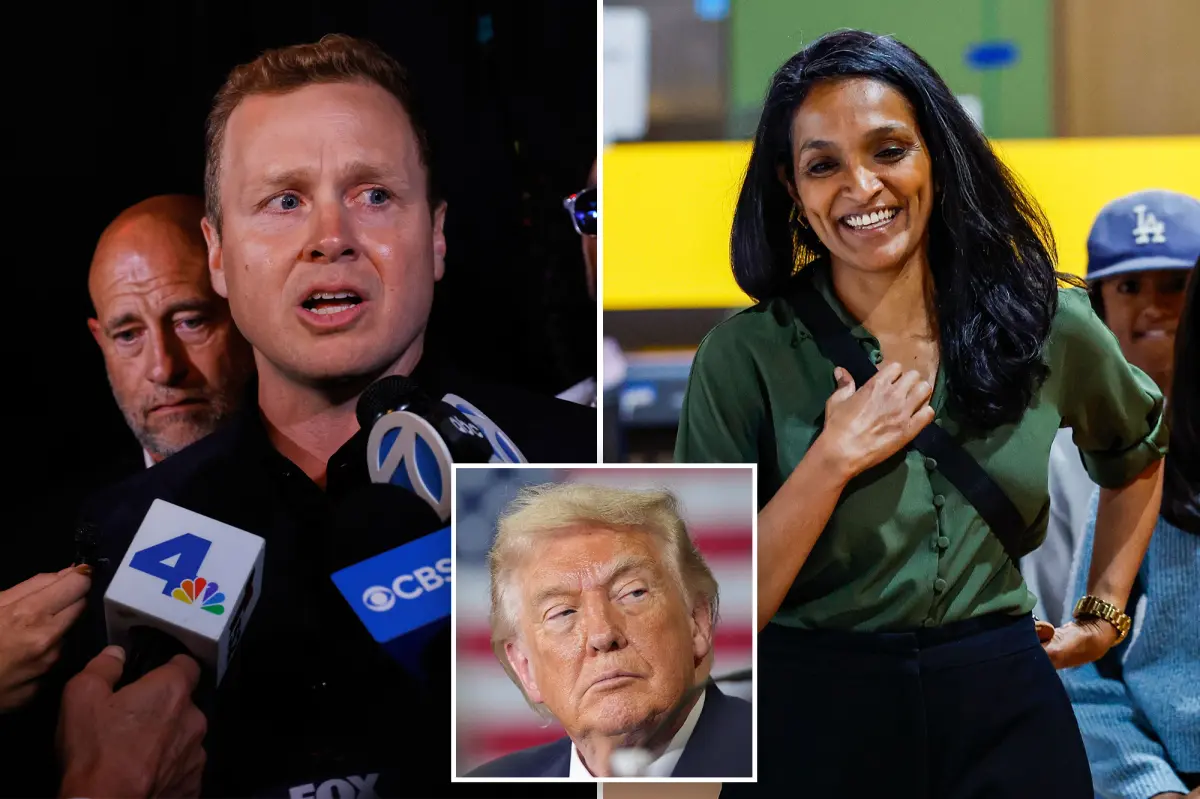
In the grand arena of contemporary American politics, few landscapes are as fraught with raw emotion, deep-seated division, and explosive rhetoric as the election environment of California. Recently, this highly volatile atmosphere was set ablaze once again by former President Donald Trump, who took to his social media platform, Truth Social, to launch a searing attack on the state’s primary process. Labeling the ongoing electoral proceedings as “crooked” and “cheated,” the former president did not merely vent his frustrations; he issued a dark, ominous warning of “great trouble and consternation” if conservative candidates are shut out of the general election come November. For a nation already weary of polarized debates, Trump’s fiery declarations feel both intensely familiar and deeply destabilizing, capturing the heightened anxiety of a political class that views every election not just as a preference poll, but as an existential battleground. By urging his followers to “Watch this ‘Election’ closely!!!” and accusing the “Dumocrats” of trying to steal the victory, Trump tapped into a direct vein of public exhaustion and skepticism. Behind these sweeping accusations lies a deeper human reality: the profound disillusionment felt by voters who see their democratic institutions constantly painted as broken, casting a shadow of doubt over the millions of individual citizens who dutifully cast their ballots expecting a fair, transparent, and prompt outcome. This rhetoric does not exist in a vacuum; it acts as an amplifier for the real-life anxieties of candidates and their volunteer teams, who spend years campaigning only to watch the final stretch of their democratic journey dissolve into weeks of digital warfare, public recriminations, and systemic distrust. Ultimately, this opening salvo sets the tone for a deeply emotional struggle over the very legitimacy of public franchise, highlighting how easily bureaucratic delays can be transformed into proof of conspiracy in the minds of a deeply divided electorate.
Nowhere is this emotional turbulence more vividly on display than in the fiercely contested Los Angeles mayoral primary, a race that has morphed from a regulatory process into a gripping human drama. Spencer Pratt, the former reality television star turned political aspirant, found himself abruptly pushed into a devastating third place on Sunday, a painful shift occurring a full five days after the initial polls had closed. This dramatic slide was fueled by the steady, relentless rise of far-left progressive candidate Nithya Raman, whose campaign journey has been a rollercoaster of high-stakes emotion. Just days earlier, Raman was seen weeping openly as she addressed her weary, anxious supporters when the first agonizingly slow dribble of results began to emerge. However, the subsequent updates from election officials painted a radically different picture, showing Raman gaining ground over Pratt with every subsequent batch of counted votes. The shifts were staggering; an initial election night lead of 8.1 percentage points for Pratt evaporated entirely, transforming into a grueling 0.4% deficit that has virtually sealed his fate, with prediction markets like Polymarket now placing Raman’s hopes of making the November run-off at a commanding 99 percent against Pratt’s minuscule 1 percent. In a coping mechanism that perfectly illustrates the modern convergence of celebrity culture and political deflection, Pratt reacted to media reports of a massive 43,000-vote swing by defensively linking the number to a local report on Los Angeles’s notorious homelessness epidemic. By sharing an article noting that roughly 43,000 people go unsheltered on any given night in LA with the sarcastic comment “Probably nothing,” Pratt sought to redirect his personal political defeat into a broader, cynical critique of municipal dysfunction. This bitter pivot showcases the fragile egos and immense pressures of public life, where personal loss is quickly repackaged as systemic corruption, leaving everyday citizens to navigate the noise while their actual, pressing human struggles—such as homelessness—get weaponized as mere rhetorical shields in a high-profile political blame game.
Further up the ballot, the tension is equally thick for Steve Hilton, the prominent conservative personality and gubernatorial hopeful who still hasn’t officially punched his ticket to the highly anticipated November general election. Watching the snail-like pace of the vote counting process from his campaign headquarters, Hilton has found himself increasingly consumed by frustration, openly branding the entire municipal apparatus a “shambles” that makes the state a global laughingstock. Stepping into the spotlight of social media and national television, Hilton targeted his ire directly at the heart of California’s leadership, demanding to know the whereabouts of Governor Gavin Newsom and decrying what he perceives as a profound exhibition of executive incompetence and uselessness. Hilton did not mince words, aiming sharp-tongued barbs at Xavier Becerra—who has already secured his place in the November lineup—by labeling him “bumbling” and jokingly quipping that if Becerra were in charge of organizing the Olympic Games, a simple 100-meter dash would take nearly a week to conclude. Despite the mounting delays and his vocal disgust with the bureaucratic machinery, Hilton sought to project an image of absolute resilience and unwavering confidence during an appearance on Fox News with anchor Maria Bartiromo on “Sunday Morning Futures.” He insisted to a national audience that he remains highly confident of eventual victory, pointing to his current 4.4 percentage point lead over the billionaire Democratic contender Tom Steyer, even as only 72 percent of the ballots have been officially processed. This paradoxical mixture of public rage and absolute self-assurance captures the agonizing psychological limbo that modern political campaigns must endure, where candidates are forced to project unshakeable triumph to their benefactors and base while privately harboring the deep, quiet panic of knowing their political futures rest entirely in the hands of an agonizingly slow, unfeeling mathematical tally.
Underneath this theatrical surface of political tantrums and public outcries lies the mundane, tedious, and deeply human reality of California’s election administration. The primary reason the state’s post-election phase is so notoriously protracted is not because of clandestine operations or dark-room manipulation, but because of a deliberately cautious, highly regulated bureaucratic framework designed to prioritize accuracy and inclusion over speed. In California, every single registered voter is automatically mailed a ballot, a massive logistical undertaking that dramatically expands access to the ballot box but conversely creates an unprecedented mountain of physical paperwork that must be individually verified by hand. Dedicated, often exhausted civil servants and temporary election workers must meticulously cross-reference signatures, inspect envelopes for damage, process millions of mail-in ballots, and conduct rigorous, mandatory audits to guarantee the absolute integrity of the process. State law legally grants county election officials up to 30 full days after the election to complete this gargantuan task, allowing ballots to be counted as long as they are postmarked by Election Day and arrive at county offices by June 9th. This painstaking grind, which concludes with final reports to the California Secretary of State by July 3rd and official certification a week later, is a quiet testament to the ideals of universal suffrage, yet it clashes violently with the instant-gratification expectations of a digital society accustomed to immediate results. When election workers are thrust into the center of national controversies, forced to work under the microscope of suspicious partisan observers, the human cost of safeguarding democracy becomes clear—these workers are ordinary citizens doing their best to manage a system designed for maximum security, only to find themselves vilified by impatient political actors who mistake procedural diligence for systemic failure.
This fundamental disconnect between administrative thoroughness and modern psychological expectations creates a fertile breeding ground for a deep, cultural divide across the American electorate. For many conservative voters and commentators, the weeks-long silence from election centers feels like a betrayal of trust, a lingering gray zone where they believe political elites can manipulate outcomes behind closed doors. Conversely, for progressive organizers and voters who historically struggle to make their voices heard, this slow, deliberative process is viewed as a vital safeguard that ensures low-income workers, students, and marginalized communities have their mail-in votes fully registered and validated. This split in perception turns the simple act of counting paper ballots into a proxy war over the definition of fairness itself: is a fair election one that is swift and decisive, or one that is painstakingly exhaustive? The human tragedy of this division is the collateral damage it inflicts on public trust, as political candidates capitalize on the agonizing wait times to sow seeds of doubt, conditioning their followers to only accept victories as legitimate and to treat defeats as evidence of systemic theft. When Spencer Pratt wonders aloud about “43,000 votes” or Steve Hilton compares vote-counting to a stalled Olympic sprint, they are tapping into a very real, human impatience that is easily converted into cynicism, further widening the chasm between citizens and the institutions that govern them. Instead of viewing the slow count as a comforting sign of meticulous care, a highly digitized public, accustomed to instantaneous banking, shopping, and communication, increasingly interprets delayed civic decisions as a sign of decay, demonstrating how technological advancement has ironically weakened our collective capacity for patience and political grace.
As the dust slowly settles on the California primaries, the political trajectory points toward a highly charged, high-stakes showdown in November that will test the resilience of the local democratic framework. Incumbent Los Angeles Mayor Karen Bass sits securely in the wings, having already locked in her spot for the general election with a solid 34.7 percent of the vote, waiting to see which of her exhausted, mud-slinging challengers will emerge from the administrative quagmire to face her. The lessons of this primary season stretch far beyond the borders of California; they serve as a stark warning about the rising emotional temperature of American democracy, where the quiet, methodical work of elections is increasingly overshadowed by performative theater and dangerous conspiracy theories. The coming months will demand a collective reassessment of how we engage with our democratic processes, challenging candidates to lead with integrity rather than building self-serving narratives of victimization, and pushing voters to find patience in the slow, grinding noise of a representative republic. As November approaches, bringing with it a presidential contest of historic proportions, the nation will look to California not just as a source of cultural trends or economic power, but as a critical test tube for whether a modern, diverse society can still trust in the quiet sanctity of the ballot box. Whether candidates like Steve Hilton and Spencer Pratt choose to heal these fractures or continue to exploit them remains to be seen, but the ultimate endurance of the system will rely on the quiet determination of everyday citizens who continue to show up, cast their votes, and believe against all odds that their voices still matter.