

Tragedy on Oregon Roads: Unlicensed Immigrant Driver’s Fatal Crash Raises Immigration Policy Questions
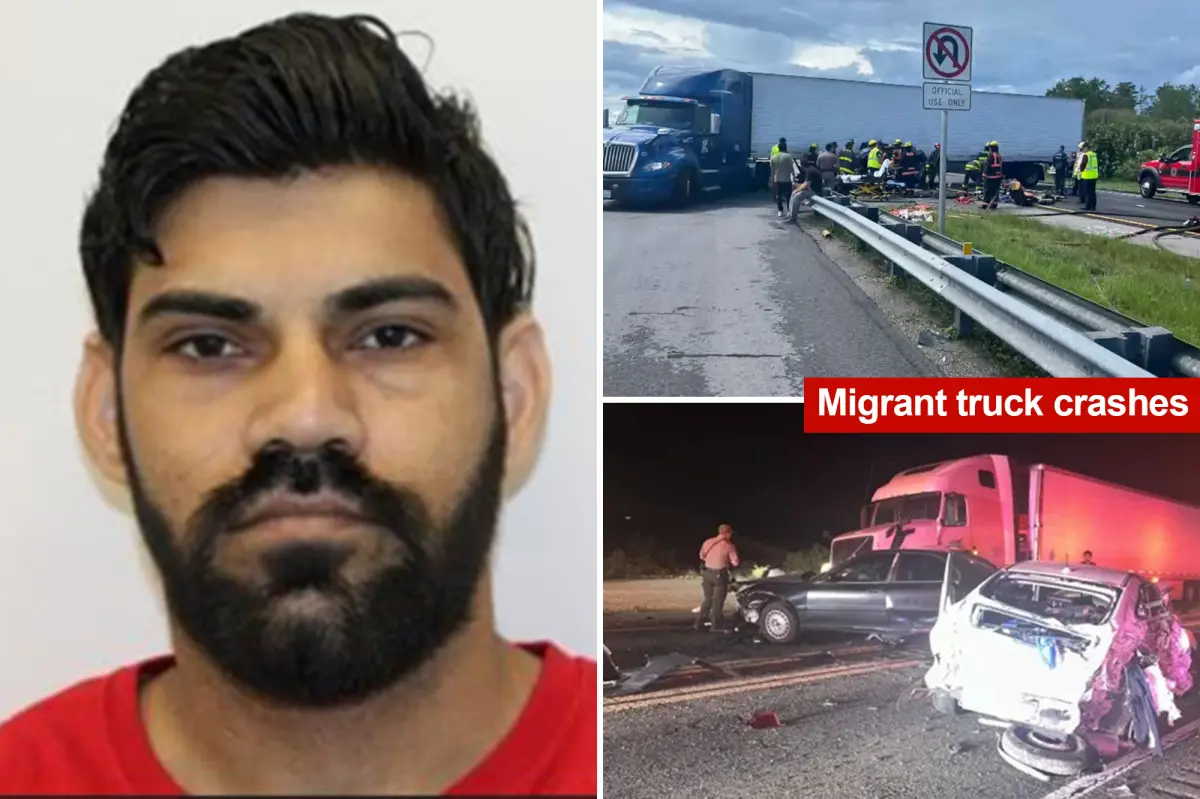
In a heartbreaking incident that has reignited debates about immigration enforcement and driver licensing, a truck driver named Rajinder Kumar has been charged in the deaths of newlyweds William Carter and Jennifer Lower. The couple’s lives were cut short on November 24 when Kumar’s semi-truck jackknifed and collided with their vehicle in Bend, Oregon. What has elevated this tragedy beyond a typical traffic accident is the revelation by the Department of Homeland Security that Kumar, a 32-year-old Indian national, was in the United States illegally. According to federal authorities, Kumar had been released into the country under Biden administration policies before obtaining a commercial driver’s license in California. The case has become a flashpoint in ongoing discussions about immigration enforcement, with DHS placing an immigration detainer on Kumar following his arrest.
The circumstances surrounding Kumar’s presence in America and his ability to secure professional driving credentials have raised serious questions about gaps in the system. Federal officials report that Kumar was initially released into the United States under current immigration policies, later managing to obtain a commercial driver’s license in California—a state known for its more permissive policies regarding undocumented residents. In 2023, Kumar was granted work authorization, allowing him to legally drive commercial vehicles despite his unresolved immigration status. This sequence of events has prompted criticism from immigration enforcement advocates, with DHS Assistant Secretary Tricia McLaughlin directly questioning the policies that allowed Kumar to operate a semi-truck on American highways. The tragic deaths of William and Jennifer, who had just begun their life together as a married couple, have added emotional weight to these policy debates.
This incident isn’t isolated, according to Department of Homeland Security officials, who point to a concerning pattern of similar cases in recent months. Just this past August, another individual identified as Harjinder Singh, also allegedly in the country illegally, was arrested following a deadly crash in Florida that claimed three lives. That same month, Partap Singh was implicated in a multi-car accident in California that left a five-year-old child with severe, life-altering injuries. More recently, in October, authorities arrested Jashanpreet Singh for allegedly causing a fatal crash while driving under the influence, resulting in three deaths in California. These cases collectively suggest a troubling trend that crosses state lines and has prompted calls for stricter enforcement of immigration laws, especially when it comes to commercial driving privileges.
The policy debate intensified with McLaughlin’s pointed statement: “Rajinder Kumar, a criminal illegal alien from India, was released into our country under the Biden administration and issued a commercial driver’s license by Gavin Newsom’s Department of Motor Vehicles.” Her question—”How many more senseless tragedies must take place before sanctuary politicians stop allowing illegal aliens to dangerously operate semi-trucks on America’s roads?”—directly challenges the policies of states that have adopted more lenient approaches to undocumented immigrants. California, under Governor Gavin Newsom, has implemented policies allowing undocumented residents to obtain driver’s licenses, including commercial ones in some circumstances. Proponents of these policies argue they improve road safety by ensuring all drivers receive proper training and carry insurance, while critics contend they reward illegal entry and potentially endanger the public.
The human dimension of this tragedy cannot be overlooked amid the political discourse. William Carter and Jennifer Lower had just embarked on their journey together as husband and wife when their lives were abruptly ended. Their families now face the devastating aftermath of losing loved ones in circumstances that feel both random and preventable. McLaughlin acknowledged this human toll in her statement, noting, “Our prayers are with William and Jennifer’s families.” The couple represents the personal cost behind policy failures—two individuals whose future together was cut short in an instant on an Oregon highway. Under the leadership of Secretary Noem, Immigration and Customs Enforcement (ICE) has pledged continued efforts to address the issue of unlicensed or improperly licensed commercial drivers who are in the country illegally.
As this case moves through the legal system, it will likely continue to serve as a lightning rod for debates about immigration policy, driver licensing requirements, and the balance between inclusive policies and public safety concerns. The tragedy has already prompted calls for review of how commercial driver’s licenses are issued to non-citizens and whether current verification procedures adequately screen applicants. For the families of William Carter and Jennifer Lower, however, these policy discussions offer little comfort in the face of their immeasurable loss. Their story reminds us that behind every headline about immigration policy and traffic safety are real human lives—people with dreams, relationships, and futures that can be irrevocably altered in a moment’s time. As communities across Oregon mourn with these families, the case continues to raise difficult questions about how America can create systems that both respect human dignity and ensure public safety.