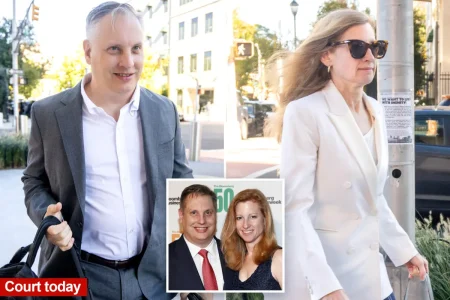






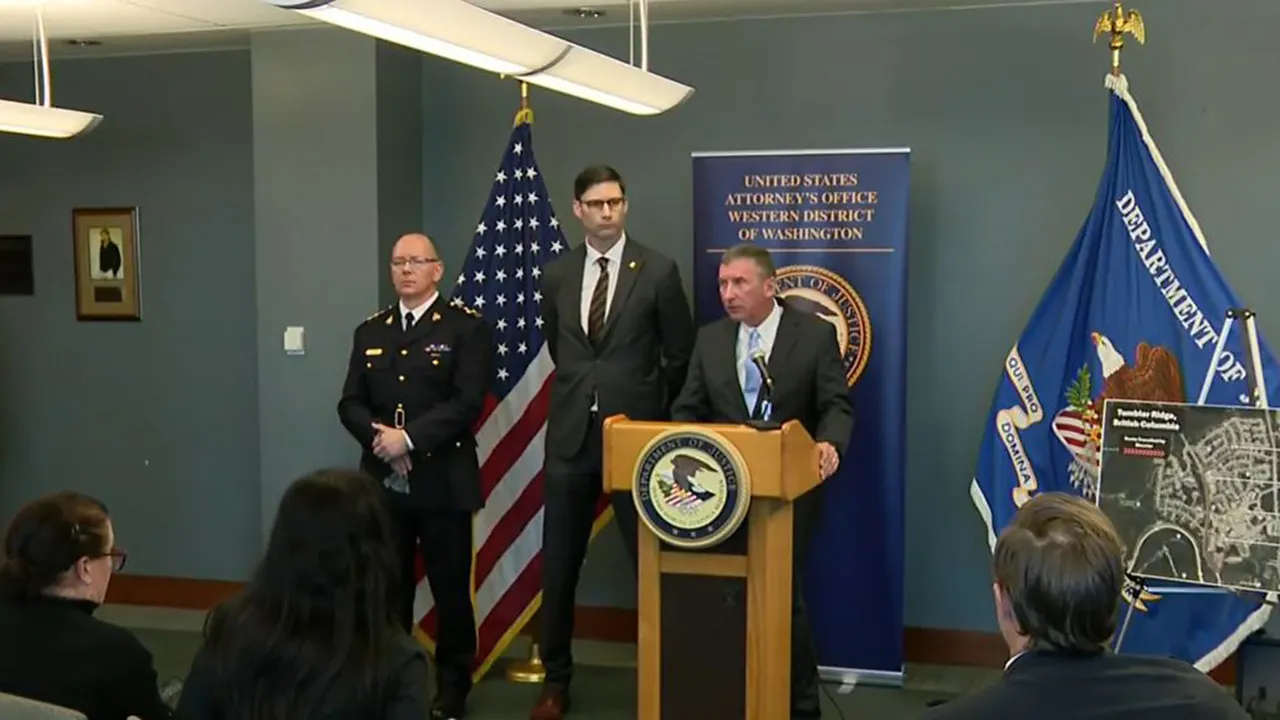
On a gray Tuesday morning in Bellingham, Washington, federal agents moved in and arrested a 30-year-old man whose online presence had allegedly stretched across an international border and into one of Canada’s most heartbreaking school shootings. The man, James Cody Bryant, was not accused of pulling a trigger or stepping foot inside a school. Instead, prosecutors say, he acted as a distant but vital accomplice: sending money, offering tactical advice, and agreeing to broadcast the slaughter as it unfolded. The accusation lands with particular weight because, according to federal officials, Bryant had the information and the ability to alert law enforcement before the attack at Tumbler Ridge Secondary School in British Columbia. He allegedly even discussed the possibility of calling the authorities with the shooter. But he chose not to. In the words of Acting U.S. Attorney Neil Floyd, “Bryant had the information and ability to alert law enforcement, and even discussed that possibility with the shooter, but he chose not to. Instead, he encouraged and offered assistance to a murderer.”
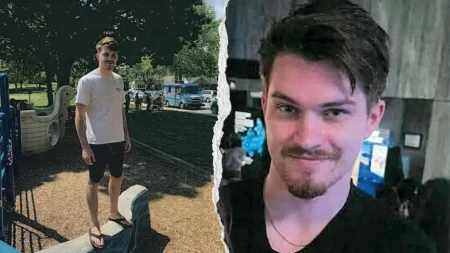
The violence that Bryant is accused of enabling took place on February 10, inside a small secondary school in the remote community of Tumbler Ridge, British Columbia. When it was over, eight people were dead, including five students, an educator, and the shooter’s own mother and 11-year-old stepbrother. The shooter, 18-year-old Jesse Van Rootselaar, was found dead inside the school from an apparent self-inflicted injury. Both Bryant and Van Rootselaar identified as transgender, authorities confirmed, with Bryant identifying as female. But investigators were careful to say they had no indication that their transgender identities were connected to the violence, nor did they know why the two had remained in contact after meeting. What is known is that their connection began years earlier in a seemingly random online encounter. They met through Omegle, the anonymous chat platform that pairs strangers together, roughly three years before the attack. What started as an accidental virtual meeting evolved into a friendship, and eventually, according to the FBI, into long conversations about mass violence.
Over at least six months, the two allegedly discussed plans with a casual tone that investigators described as particularly difficult to read. FBI Seattle Special Agent in Charge W. Mike Herrington said the complaint was disturbing in part because of “the casual tone these two individuals used when discussing the mass taking of innocent lives that was being planned.” The digital trail reveals a troubling progression from online chat to concrete planning. Bryant allegedly agreed to serve as the broadcast manager for the attack, recording and streaming the events to maximize the shooter’s notoriety. Herrington stressed that Bryant even stayed awake after finishing an overnight work shift to make sure the horrific act would be widely viewed online. The shooter, it seems, was worried that without Bryant’s help, few people would witness the attack at all. Van Rootselaar reportedly did not have many social media followers and was depending on Bryant to amplify the livestream. In the end, the broadcast on Twitch lasted only about 20 seconds before being shut down, but the intention and the alleged complicity were enough for federal prosecutors to bring serious charges.
The assistance allegedly went beyond livestreaming. Bryant is accused of sending the shooter financial support, including a little more than $100 for shoes. An attempted transfer of roughly $15 for a lighter was ultimately reversed. The two also discussed the possibility of sending weapons from the United States to Canada, but Bryant reportedly felt uncomfortable with that step, and investigators have found no indication that the guns used in the attack came from the U.S. Even more chilling, prosecutors allege that after the shooter had already killed two family members, Bryant helped Van Rootselaar start a car to travel to the school and continue the rampage. “So even after the shooter had already tragically killed two family members, Bryant assisted the shooter in successfully traveling to the second location to take even more lives,” Herrington said. The complaint, he added, includes Bryant even admitting to being “maybe the only one who could stop the shooter.” That admission, paired with the decision not to act, forms the emotional core of the case: a person with knowledge of impending horror who allegedly chose to help it happen rather than prevent it.
The investigation moved quickly across national borders. Within days of the massacre, Canadian police received information from an online platform used by the shooter and contacted the U.S. Department of Homeland Security. From there, investigators on both sides of the border worked together, gathering subpoenas and warrants and reviewing thousands of communications, many on Discord, before Bryant’s arrest. Canadian authorities have also interviewed more than 90 students, educators, and first responders as part of their ongoing investigation, and Assistant Commissioner Elija Rain of the British Columbia RCMP said the possibility of further charges in Canada remains under active consideration. The cross-border cooperation highlights how digital crimes and violent plots increasingly ignore geography, leaving law enforcement to trace electronic fingerprints across thousands of miles. For the families in Tumbler Ridge, a remote town unaccustomed to violence, the investigation has been a painful reminder that the roots of such tragedy can be planted anywhere, by anyone, in the quiet spaces of the internet.
Asked about possible motives, investigators said they found no evidence of political ideology or group affiliation behind the planning. Instead, the themes that stood out were personal suffering and a desperate, almost obsessive desire for notoriety. The two had discussed other mass shootings, how the public reacted, and their hope that the Tumbler Ridge attack would receive similar attention. That fixation on fame, on being seen, adds another layer of tragedy to an already devastating story. It suggests a kind of moral emptiness where the worst act imaginable becomes a performance, and where an accomplice far away can play a role in the drama without ever facing the immediate horror. The 20-second livestream, brief as it was, represented that dark ambition. Bryant now faces a federal charge of conspiracy to murder persons in a foreign country, and Herrington’s warning was blunt: “If you think you are safe from prosecution because you did not pull the trigger, or were not physically present at the scene of the crime, think again. The FBI and our partners will use all of the considerable investigative tools at our disposal to hold accountable those who enable or assist in acts of mass violence.”
Ultimately, this case forces a sober reflection on the nature of accountability and the quiet power of bystanders. James Cody Bryant is not accused of being a shooter, but he is accused of being something that, in the eyes of the law, may be just as culpable: an enabler who knew what was coming and decided to help. The story is full of missed moments for intervention—conversations where the future could have been changed, a phone call that could have been made, a livestream that could have been refused. Instead, children are dead, a community is shattered, and two young people who identified as transgender have become part of a painful narrative of violence and loss. There is no easy explanation for why someone would choose to assist in such an act, and the authorities themselves do not claim to fully understand it. What remains is the legal process, and a reminder that complicity can take many forms. In an age when online connections can cross borders and alter lives, the case of Bryant and Van Rootselaar stands as a grim example of how digital friendships can sometimes curdle into something unrecognizable, and how far too often, the warning signs are only clear in hindsight. For the people of Tumbler Ridge, and for everyone touched by the loss, justice may offer some comfort, but it cannot undo the terrible events of that February day.