


The Return of the Bashment: How Toronto Millennials Are Reviving the Sacred, Sweat-Drenched Era of the Basement Jam
Sweat, Vents, and Vintage Denim: Inside the Unapologetic Revival of the Underground Basement Jam
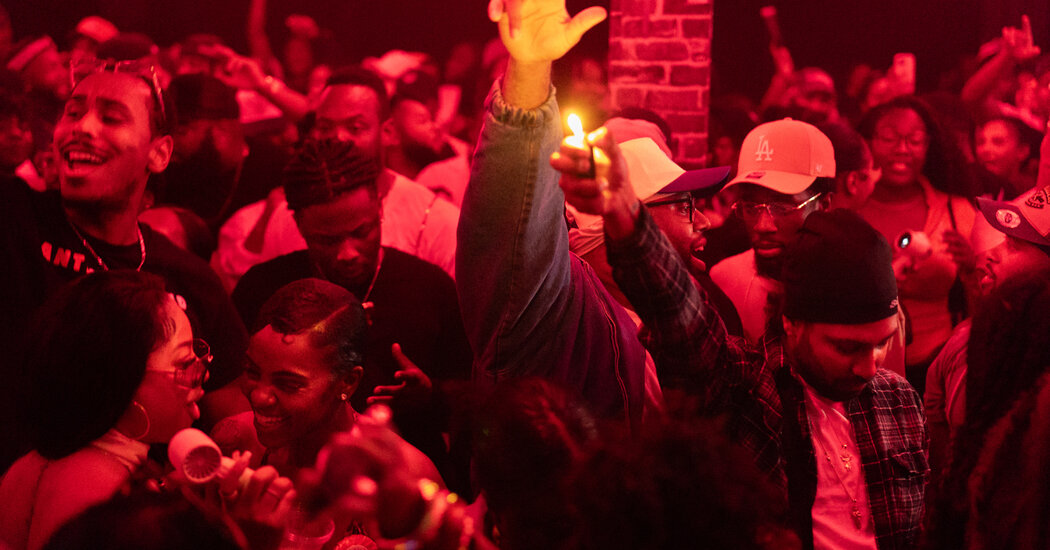
Even the aluminum vents in this subterranean Toronto crawl space were sweating, weeping heavy beads of condensation onto the hundreds of bodies undulating below to the syncopated rhythms of classic Jamaican dancehall. Caught in an almost hypnotic trance, the tightly packed crowd moved as a single, breathing organism, executing every synchronized step demanded by the selector on the turntables—rowing the boat, stepping in rhythmic succession from left to right, and pointing down to show off their footwear as the system boomed with Vybz Kartel’s 2010 anthem “Clarks.” Yet, on this humid Saturday night in May, the dominant footwear of choice was not the classic British crêpe-sole suede boot, but rather a nostalgic mosaic of worn-in Converse, vintage Vans, and crisp Nike Air Force 1s. These shoes served as the foundation for a masterclass in Y2K-era aesthetic revivalism: sideways-tilted baseball caps, oversized basketball jerseys draped over stark white T-shirts, pristine Adidas tracksuits, pastel Baby Phat logos, translucent visor sunglasses, and heavy washes of distressed denim, camouflage print, and bubblegum pink. The air was thick, warm, and rich with the scent of sweet perfume and ambient smoke, turning this cellar into a living, breathing time capsule of a forgotten local nightlife epoch. This was the triumphant return of the classic Toronto basement jam—a raw, domestic sanctuary of rhythm and community that had largely vanished from the city’s gentrified urban landscape by the late 2000s, leaving a generation of music lovers starved for unpretentious spaces to dance. Driven by a collective exhaustion with the cold, transactional nature of modern nightlife—where evenings are dictated by restrictive dress codes, exorbitant cover charges, patronizing bouncers, and the looming pressure to purchase pricey bottle service inside cordoned-off VIP booths—a passionate contingent of Toronto millennials has sparked a full-scale cultural resurrection. For veterans of the scene like 32-year-old Tristan Dunn, who stood at the edge of the dance floor cooling off in vintage denim overalls with a single brass buckle undone, the appeal of this revival lies in its refusal to conform to modern commercial standards. “The basement jam is a pure form of party,” Dunn remarked, wiping sweat from his brow. “There’s no booth. There’s no bottles. There’s no pretentiousness. It’s just the music, the people, and the physical release of the dance floor.”
From Backyards to Concrete Basements: How Caribbean Immigrants Built a Sanctum from the Canadian Winter
To truly comprehend the cultural weight of the basement jam—historically referred to by community insiders as a “bashment”—one must trace its lineage back to the late 1960s, a crucial era marked by a massive wave of migration from the English-speaking Caribbean to the metropolitan centers of Canada. As West Indian families navigated the unsettling, often hostile realities of establishing new lives in a racially divided, cold-climate country, they faced a stark absence of social spaces that catered to their cultural traditions. When the unforgiving Canadian winter buried backyards under feet of snow, preventing the outdoor “yard parties” popular in Jamaica, Trinidad, and Barbados, these resourceful newcomers looked beneath their feet and unlocked the potential of their unfinished basements. These cellar areas, characterized by exposed pipes, low ceilings, and concrete walls, were quickly transformed into makeshift dancehalls complete with heavy sound systems, dim lighting, and homemade food. Invitations to these gatherings were never printed or advertised; they were whispered through networks of relatives, neighbors, and coworkers, operating entirely on a trust-based word-of-mouth system. These domestic parties served a purpose far beyond simple recreation—they were vital sites of cultural preservation, spatial reclamation, and emotional survival where working-class immigrants could shed the exhausting weight of systematic marginalization. However, as the pioneering generations grew older, bought quiet suburban homes, and aged out of hosting duties, the basement jam gradually receded into the background, eclipsed by the rise of commercial nightclubs that offered a louder, more accessible, albeit sterile, alternative.
+————————————————————-+
| EVOLUTION OF TORONTO’S NIGHTLIFE |
+————————————————————-+
| 1960s – 1980s: Domestic Safe Spaces |
| – Caribbean immigrants adapt yard parties to basements. |
| – Word-of-mouth invitations preserve community safety. |
| |
| 1990s – 2000s: The Commercial Club Boom |
| – Nightlife shifts to Toronto’s Entertainment District. |
| – Basement jams fade as commercial venues take over. |
| |
| Present Day: The Nostalgic Millennial Revival |
| – High cost of living prevents home-hosting. |
| – Organizers create ticketed “basement jams” in clubs. |
+————————————————————-+
Reclaiming the Sandbox: How Gen Z and Millennials Resurrected the Nostalgic Family ‘Bashment’
“The people who probably would have thrown basement jams, we still live with our parents. There is a real need that people in the diaspora and my community also have to go to these events. They just don’t exist.”
— Ashley Henry, Co-founder of Uncle Delroy
The quiet death of the authentic home bashment in the late 2000s left a profound void in Toronto’s urban landscape, one that was deeply felt by first- and second-generation Caribbean-Canadians. The primary obstacle to keeping the tradition alive at home was no longer a lack of interest, but rather the harsh socioeconomic realities of modern Toronto. “The people who probably would have thrown these basement jams, we still live with our parents,” explained 30-year-old Ashley Henry, a Torontonian of Jamaican heritage who witnessed firsthand the decline of these intimate gatherings. The city’s notorious housing crisis and skyrocketing cost of living have made homeownership an elusive dream for many young adults, effectively cutting off access to the spacious suburban basements that once hosted these intergenerational events. Recognizing this cultural void as a unique opportunity, Henry and her childhood friends, Shaunalee Bennett and Ilya Mogg, stepped forward to bridge the generational gap. Three years ago, while balance-beaming their way through demanding, full-time careers, the trio co-founded Uncle Delroy, an entertainment and event production company dedicated to preserving the cultural heritage of the West Indian diaspora. Hosting wildly popular events like dancehall karaoke and carefully curated basement jams, Uncle Delroy has become a cultural phenomenon, with tickets routinely selling out within minutes of release. The moniker of the company is itself a warm, inside joke designed to evoke instant familiarity. “We want everybody to feel like they are walking into a family gathering,” Henry said with a smile. “The name ‘Uncle Delroy’ is a direct nod to the stereotypical, loud, dance-loving Jamaican uncle that everyone has in their family line. Many of our patrons genuinely believe he’s a real person who will greet them at the door—and we never bother to correct them.”
Beyond the Velvet Ropes: Navigating Race, Leisure, and Spatial Justice in Toronto’s Nightlife Economy
In their mid-century heyday, these celebrations were multigenerational, family-centric affairs that took place beneath the floorboards of modest suburban bungalows, particularly in the sprawling residential pockets of East Toronto and Scarborough. “You wouldn’t have left us at home with Grandma, because Grandma was already down in the basement dancing at the wave,” recalled Dr. Cheryl Thompson, an associate professor at Toronto Metropolitan University whose academic work focuses heavily on Black Canadian culture and performance. During a period of widespread systemic exclusion, these residential neighborhoods evolved into vibrant cultural sanctuaries where patrons could enjoy rare vinyl records, shipped straight from Kingston in heavy wooden crates, that were completely shut out from Canadian commercial radio. Dr. Thompson emphasizes that the domestic bashment of the 1970s and 80s was born out of necessity, serving as a critical shield against the rampant discrimination that marginalized Black people faced in mainstream commercial spaces. “The suburban house party was actually a far superior experience to the traditional downtown club,” Dr. Thompson explained. “You would always prefer to go to a basement in Scarborough because you knew you would be welcomed, respected, and kept safe.” Fast forward to the present day, and the foundational anxieties of that era still linger in the hearts of young Black clubgoers in Toronto. Ashley Henry notes that Black patrons continue to face disproportionate scrutiny, racial microaggressions, and arbitrary dress-code rejections when attempting to gain entry into the mainstream venues of Toronto’s Entertainment District. By taking over commercial venues and deliberately stripping them of their elitist trappings, the organizers behind the modern basement jam revival are engaging in a form of spatial justice—carving out a welcoming, somatic proving ground where the music is loud, the dress code is nonexistent, and the physical vocabulary of dancehall can be celebrated without judgment.
| Party Type | Location Type | Accessibility & Door Policy | Primary Vibe & Visual Heritage |
|---|---|---|---|
| Traditional 1970s Bashment | Suburban basements (Scarborough, East Toronto) | Strictly word-of-mouth; family-centric and multigenerational | Heavy smoke, low-frequency bass, record crates, community safety |
| Mainstream 2000s Nightclubs | Downtown Toronto Entertainment District | Strict dress codes, high covers, arbitrary bouncer selection | VIP booths, bottle service, commercial Top 40, pretentious atmosphere |
| Modern ‘Uncle Delroy’ Revival | Low-ceiling club basements, community pop-ups | Ticketed online entry; radically inclusive, community-first | Nostalgic Y2K clothing, high-energy dancing, classic dancehall riddims |
The Global Blueprint: How a Subterranean Scene in Scarborough Breathed Life Into Pop Iconography
The historical influence of Toronto’s subculture extends far beyond its provincial borders; it has left an indelible mark on global pop music, most notably through the music video for Sean Paul’s 2002 international smash hit “Get Busy.” The iconic video, which served as many global viewers’ introduction to the aesthetics of Canadian-Caribbean party culture, was directed by veteran Canadian filmmaker Julien Christian Lutz—widely known as Director X. Drawing from his own upbringing in a West Indian household in the Toronto suburbs, Lutz constructed a visual narrative that felt authentic to the local experience. The video portrays the Grammy-winning Jamaican artist stepping out of a pickup truck into the biting cold of an Ontario winter, zipping up an oversized puffer jacket before walking into a suburban home and descending into an unfinished, concrete basement where a sweat-slicked party is already in full swing. “I found that there was a completely different flavor, a different elegance, to Toronto kids in the way they danced,” Lutz recalled, pointing to the unique fusion of Afro-Caribbean heritage, hip-hop styling, and distinct Canadian sensibilities that bloomed in the city. Sean Paul himself credits these Canadian-Caribbean nodes as major engines of his global crossover success. “Canada played a massive role in building my career,” the dancehall icon shared in an interview, reminiscing about the many childhood summers he spent visiting his grandfather and extended family in Scarborough. While critics often credit Sean Paul with single-handedly propelling dancehall into the global mainstream, the artist humbly redirects that praise back to the genre’s legendary sonic architects, such as producer Steven “Lenky” Marsden, whose syncopated 2001 “Diwali Riddim” powers “Get Busy.” When that exact beat boomed out over the speakers at the Uncle Delroy party around midnight, the response was immediate: a synchronized roar went up from the dance floor, and the concrete foundation of the room shook as the heavy bass vibrated through the ankles of everyone in the room.
The Echo in the Concrete: Why the Revival of the Basement Jam is an Essential Canadian Cultural Legacy
As the clock ticked toward 3:00 a.m., the atmospheric heat inside the club basement reached its peak, completely fogging up the mirrored walls and leaving partygoers drenched in a collective, cathartic sweat. In a passionate display of physical memory, dancers began rhythmically slapping the low-hanging aluminum vents overhead, reviving a legendary club custom designed to show appreciation for the selector’s track transitions. The musical journey of the night was not just a tribute to Kingston’s musical giants; it was a love letter to the distinct, hybrid identity of Toronto itself. The room swayed together to the melodic, steel-drum-laced intro of “Gwan Big Up Urself” by Roy Woods—a recording artist hailing from neighboring Brampton, Ontario—before breaking out into a soulful, collective singalong of Drake’s 2011 classic “Trust Issues.” Today, as digital interaction increasingly replaces physical human connection, the resurrection of this subterranean subculture acts as an essential archive of community, touch, and resilience. Originally born out of a desperate need to survive both the harsh Canadian winter and systemic social exclusion, the basement jam has evolved into an invaluable artifact of the city’s multicultural history. For the millennials who gather in these sweating, low-ceilinged rooms, these events are far more than mere exercises in retro nostalgia. They are a declaration of community presence, a reclamation of physical spaces where the weight of daily life can be danced away, and a promise to future generations that the rhythm of the diaspora will always find a place to play in the heart of Toronto.