




When we think of the Hamptons today, our minds naturally drift to images of sprawling shingle-style mansions, exclusive beach clubs, and the effortless glamour of Wall Street executives and Hollywood elite sipping gin and tonics under the summer sun. Yet, long before this strip of Long Island’s South Fork became the ultimate playground for the wealthy, its wild, salt-sprayed shores held secrets of a far more dangerous and illicit nature. In 1699, right beneath the very ground where modern socialites now gather, one of history’s most legendary and misunderstood figures, Captain William Kidd, walked the wind-swept dunes with a heavy burden. Far from the tropical coves of the Caribbean or the deep waters of the Indian Ocean, Kidd chose a secluded, privately owned sanctuary in New York—Gardiner’s Island—to bury a staggering fortune of gold, silver, exquisite silks, and glittering rubies. It is a delicious historical irony that the epicenter of contemporary American wealth was once the literal treasure chest for a pirate’s booty. If William Kidd and his beloved wife, Sarah, were alive today, they would not be out of place among the Hamptons’ elite; in fact, they would likely be hosting the most sought-after soirées of the season, navigating the high-society social ladder with the same ease as the most seasoned modern philanthropists.
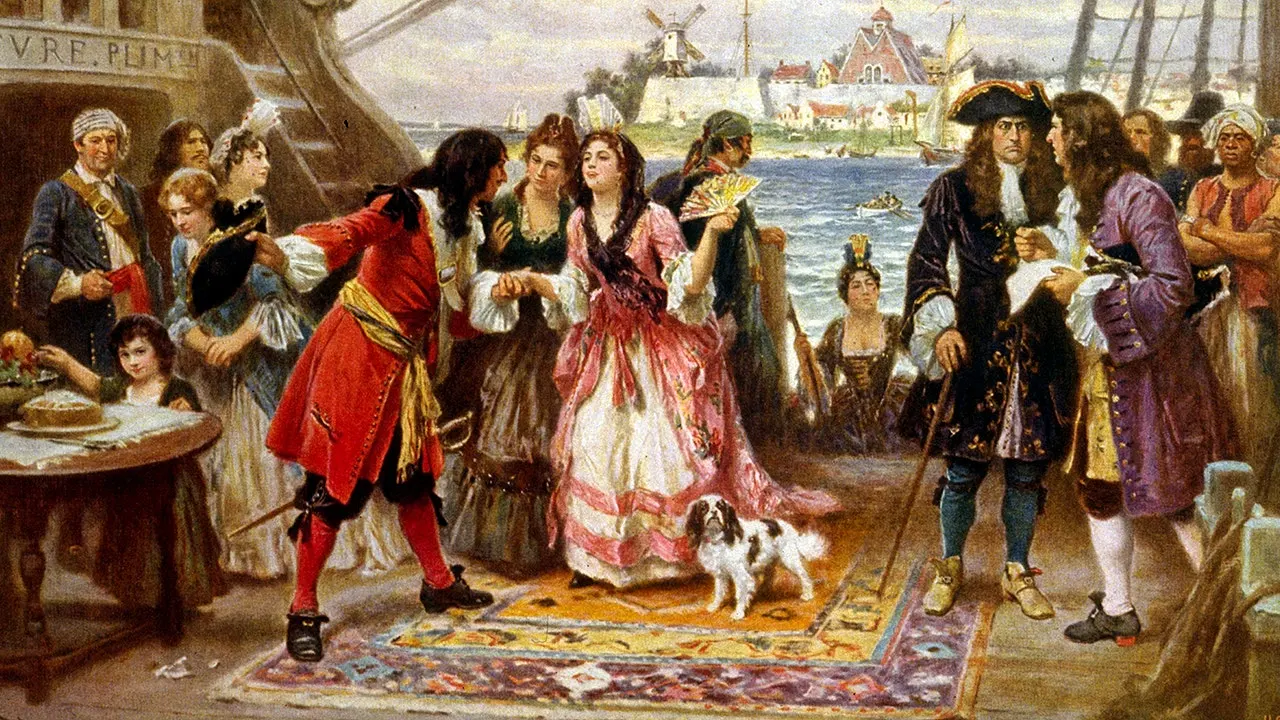
To truly understand Captain Kidd, we must first dismantle the cartoonish caricature of the eye-patch-wearing, cutlass-swinging sea dog that pop culture has cemented in our minds. As historian Daphne Palmer Geanacopoulos, author of the illuminating biography A Pirate’s Wife: The Remarkable True Story of Sarah Kidd, reveals in the Fox Nation series Crazy American History with Eric Shawn, William Kidd was not a lawless societal outcast but rather a pillar of late-seventeenth-century New York establishment. He was a highly respected, deeply wealthy gentleman who owned prime Manhattan real estate, contributed to the construction of Trinity Church, and navigated the upper crust of colonial society with absolute confidence. Together, William and Sarah were New York’s premiere “power couple,” living a life characterized by luxury, sophistication, and domestic stability. Their elegant home on Pearl Street was filled with fine English china, polished silver plate, delicate French wines, and imported linens—luxuries that testified to their high standing and impeccable taste. They hosted elaborate dinner parties for the city’s political and mercantile elite, proving that Kidd was a man who valued his hearth, his family, and his social standing far more than the chaotic criminality associated with the golden age of piracy.
At the heart of this humanized historical narrative is Sarah Kidd, a woman of remarkable resilience, intelligence, and grace whose life with William was anchored by deep mutual affection and a shared commitment to their family, which included two cherished daughters. Sarah, who had been widowed twice before marrying William, was a sophisticated woman of property in her own right, and her marriage to Kidd was a partnership built on genuine love rather than mere convenience. While William was at sea, tasked with what was originally a legitimate, crown-sanctioned privateering mission to hunt French vessels and pirate ships, Sarah managed their extensive household and maintained their social standing in a rapidly evolving colonial New York. The tragedy of Captain Kidd’s legacy is deeply tied to this domestic paradise; he was not a man who wished to abandon society for the open ocean forever, but rather a devoted husband and father who saw his maritime endeavors as a means to secure an even brighter, more prosperous future for his family. When political winds shifted back in London and his legitimate privateering ventures were politically re branded as acts of piracy, the devastating blow was felt most acutely at home, where Sarah and their daughters waited anxiously in their Manhattan mansion, praying for the safe return of a man who was suddenly the most wanted outlaw in the British Empire.
The frantic climax of Kidd’s maritime career led him directly to Gardiner’s Island, a sprawling, historic estate situated between the two forks of Long Island that remarkably remains in the hands of the very same family that welcomed Kidd to its shores over three centuries ago. As Samuel Marquis—a direct ninth-generation grandson of Captain Kidd and author of Captain Kidd: A True Story of Treasure and Betrayal—explains, the burying of the treasure was not an act of casual whimsy but a desperate, calculated insurance policy. Facing imminent arrest and betrayal by the very political patrons who had financed his voyage, Kidd arrived at Gardiner’s Island in June of 1699 and struck a deal with the island’s proprietor, John Gardiner, burying forty pounds of gold, silver, precious gemstones, and valuable fabrics in a ravine on the property. This hidden hoard was intended to serve as a powerful bargaining chip to negotiate his clemency with colonial authorities, a physical testament to his willingness to cooperate in exchange for his life and the preservation of his family’s honor. Marquis notes that while Gardiner’s Island remains the most famous and historically documented site of Kidd’s hidden wealth, local lore and historical clues suggest that the desperate captain may have stashed portions of his vast fortune in other coastal enclaves along the East Coast, including secret caches in Connecticut, Rhode Island, and the marshlands of New Jersey.
The saga of William Kidd ultimately culminated in a heartbreaking trial of political betrayal, high-stakes scapegoating, and profound personal tragedy that shattered the domestic bliss he and Sarah had worked so hard to build. Upon his return to New York, Kidd was arrested by his former patron, Lord Bellomont, who sought to distance himself from the politically toxic captain; the buried treasure on Gardiner’s Island was quickly dug up by royal authorities to be used as evidence against him, though rumors have persisted for centuries that not all of the booty was recovered. Shipped to London in chains, Kidd was subjected to a highly biased and deeply unfair trial at the Old Bailey, where crucial documents that would have proven his innocence—by showing he was acting under official royal commissions—were mysteriously “lost” by the prosecution. In May of 1701, the “posh pirate” was executed at Execution Dock in Wapping, his body hung in chains over the River Thames as a grim warning to others, leaving Sarah and their daughters to pick up the pieces of their ruined lives in New York. Despite the immense public disgrace and the confiscation of much of her husband’s estate, Sarah displayed a fierce, quiet resilience, fighting tirelessly to reclaim her property, protect her daughters, and quietly rebuild a life of dignity in the city that had once celebrated her as its social queen.
Today, this fascinating chapter of early American history is brought vividly to life in the third episode of the Fox Nation series Crazy American History with Eric Shawn, offering viewers a captivating glimpse into the real, flawed human beings behind the myth of the bloodthirsty pirate. By peeling back the layers of legendary folklore, the series allows us to see Captain William Kidd not as a monsters of the deep, but as a tragic New York gentleman caught in a web of imperial politics, global trade, and personal devotion. The enduring romance of the buried treasure continues to captivate modern treasure hunters and history buffs alike, serving as a tangible link to a time when danger and luxury walked hand in hand along the shores of Long Island. Ultimately, the story of the Kidd family reminds us that history is best understood not through dry textbook dates or exaggerated myths, but through the deeply human desires for security, love, and legacy that drive us all. As the waves gently lap against the private shores of Gardiner’s Island and the elite of the Hamptons carry on with their summer festivities, the ghost of the posh pirate and his devoted wife Sarah remains woven into the very fabric of the American landscape, a quiet reminder of a time when the hunt for fortune was a literal matter of life and death.