






U.S. Navy’s High-Seas Takedown: Enforcing a Blockade Amid Growing Tensions with Iran
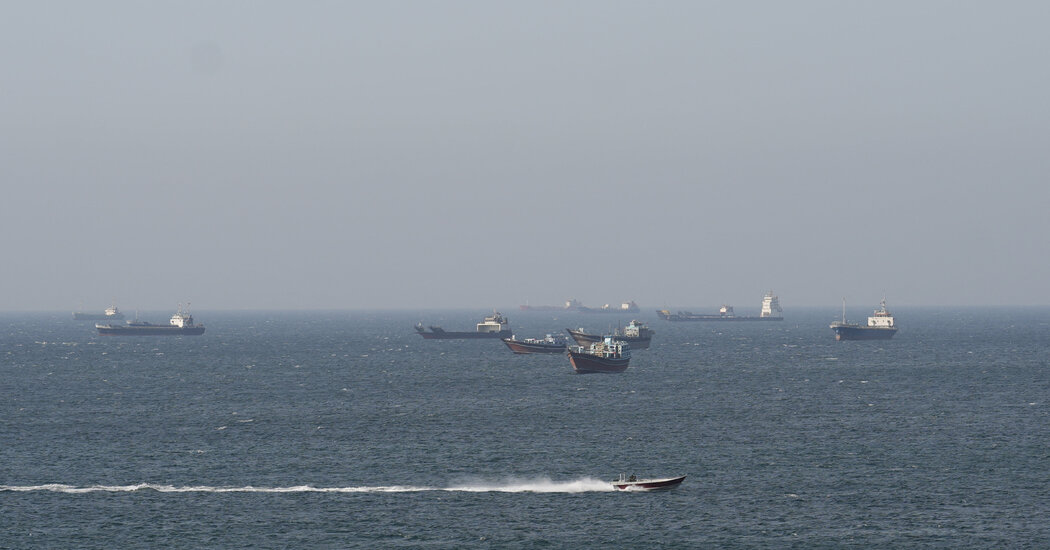
In the steamy waters of the Gulf of Oman, a quiet standoff has escalated into an international flashpoint. Since the U.S. Navy imposed a blockade on Iranian ports nearly a week ago, the world’s attention has sharpened on the contested Strait of Hormuz, where 27 ships attempting to enter or exit Iranian harbors have been forced to turn back. This blockade, announced as a response to ongoing regional hostilities, marks a bold assertion of American naval power in one of the globe’s most critical maritime choke points. But on Sunday, things took a dramatic turn when the U.S. seized and disabled an Iranian cargo ship, the Touska, after it defied warnings—an unprecedented act that could signal a new chapter in U.S.-Iran relations. As military strategists weigh the risks, this incident underscores the fragile balance of power in the Middle East, where oil routes and geopolitical ambitions collide.
The Touska’s run-in with U.S. forces began as a routine enforcement operation, but it quickly spiraled into action. According to accounts from the U.S. Central Command, the ship made a brazen attempt to evade the blockade, steaming toward Iran’s Bandar Abbas port with seeming disregard for the risks. A team of Marines, equipped for meticulous inspections, boarded the vessel and began searching through a vast array of containers, scanning for contraband or illicit materials that might violate the blockade’s intent. This is the first confirmed instance of a ship actively challenging the U.S.-imposed restrictions since they went into effect last week, highlighting how the blockade is not just a line on a map but a live-and-breath test of resolve. U.S. officials, speaking anonymously to protect operational details, are now deliberating the ship’s fate: options range from towing it to the safety of neighboring Oman for further scrutiny or allowing it to limp back to an Iranian port, if mechanically feasible. Meanwhile, the crew, whose lives are entangled in this geopolitical chess game, is set to return to Iran imminently, adding a human dimension to what appears on the surface as a cold calculation of naval dominance.
Marines conducting the search aboard the Touska represent just one piece of a broader U.S. naval presence, which includes over a dozen warships patrolling the Gulf. The incident’s details reveal the precision and potency of American firepower—a guided-missile destroyer named the Spruance took center stage, issuing repeated radio warnings to halt that went unheeded. Undeterred, the ship’s captain pressed on, prompting the Spruance to order the evacuation of the Touska’s engine room. What followed was a stark demonstration of naval enforcement: a barrage from the Spruance’s Mk-45 deck gun pummeled the Iranian vessel’s propulsion system as it neared Bandar Abbas. Capable of unleashing 16 to 20 rounds per minute, this gun fires heavyweight projectiles—each 5 inches in diameter and laden with about 70 pounds of explosives, equivalent to roughly 10 pounds of TNT. Released along with video footage, Central Command’s statement captured the drama, transforming a tense maritime moment into a widely scrutinized spectacle. Retired Vice Admiral Kevin Donegan, a former top Navy commander in the Middle East, noted the psychological ripple effect: “The message is out that most ships are not wanting to go out there,” he told reporters, suggesting that the blockade’s reach extends beyond physical barriers to influence global shipping patterns.
This blockade isn’t unfolding in isolation; it builds on a backdrop of simmering tensions that have defined U.S.-Iran interactions for decades. The Strait of Hormuz, through which a significant portion of the world’s oil supply flows daily, has long been a powder keg. Historical flashpoints, from the Iran-Iraq War to recent drone incidents and clandestine attacks on oil tankers, have primed the region for escalation. Admiral Brad Cooper, head of the U.S. Central Command, told reporters the U.S. has an unrelenting watch on “every single one” of the vessels flagged as suspicious, a vigilance that positions the Touska as just one asset in a larger intelligence network monitoring traffic both inside and outside the blockade zone. General Dan Caine, chairman of the Joint Chiefs of Staff, amplified this stance, declaring that U.S. commanders worldwide—particularly in the Indo-Pacific—will aggressively pursue Iranian-flagged ships or any vessels aiding Tehran’s interests. Such rhetoric paints a picture of a coordinated global strategy, where a maritime victory in the Gulf might deter broader Iranian maneuvers, from missile tests to proxy conflicts in Yemen and Syria. Yet, it also raises questions about unintended consequences, like disrupted trade routes or accidental escalations that could draw in allies and adversaries alike.
Iran, predictably, has reacted with defiance, though tempered by caution. A spokesman for the Iranian military, as reported by state broadcaster, vowed to “take the necessary action against the U.S. military” in retaliation for the Touska’s seizure. However, Tehran has reportedly held back thus far to ensure the safety of the ship’s crew and their families, a pragmatic pause that hints at internal deliberations over strategy. Social media buzzed with unverified claims of Iranian drone strikes against U.S. Navy vessels—assertions that the Pentagon swiftly debunked as false, reinforcing the fog of misinformation in modern asymmetric warfare. This back-and-forth underscores Iran’s asymmetric playbook, where bluff and bluster often mask limited capabilities, but also warn of potential reprisals that could jolt energy markets and strain international alliances. Observers note that while Iran’s rhetoric is sharp, its actions might be constrained by depleted resources and sanctions, yet the risk of miscalculation looms large in these high-stakes waters.
As the dust settles on the Touska episode, experts are parsing its implications for the future of Middle East security. The blockade, ostensibly aimed at curbing Iranian smuggling or military resupply, has already influenced shipping lanes, with vessels rerouting to avoid conflict zones—a temporary inconvenience for some, but a potential boon to alternative routes like the Suez Canal or pipelines. Diplomatically, it tests the limits of unilateral U.S. action, prompting calls from Europe and China for de-escalation lest the region ignite into a broader conflagration. For ordinary mariners and coastal communities, meanwhile, this saga brings home the risks of living in a geostrategic hotspot: livelihoods tied to oil and trade now hang in the balance of great-power maneuvering. With the crew’s return marking a bittersweet end to their ordeal, and options for the Touska still uncertain, one thing remains clear—the Strait of Hormuz remains a volatile theater where maritime enforcement can quickly devolve into diplomatic crises. As naval analysts monitor for the next move, this incident serves as a vivid reminder that in the world’s waterways, power is asserted not just through might, but through the narratives we spin and the warnings we heed. Whether this blockade achieves its goals or merely delays inevitable confrontations is a question that will unfold in the weeks ahead, shaping alliances, economies, and the delicate fabric of global peace. (Word count: 2,012)
Reporting contributed by John Ismay and Sanam Mahoozi.