

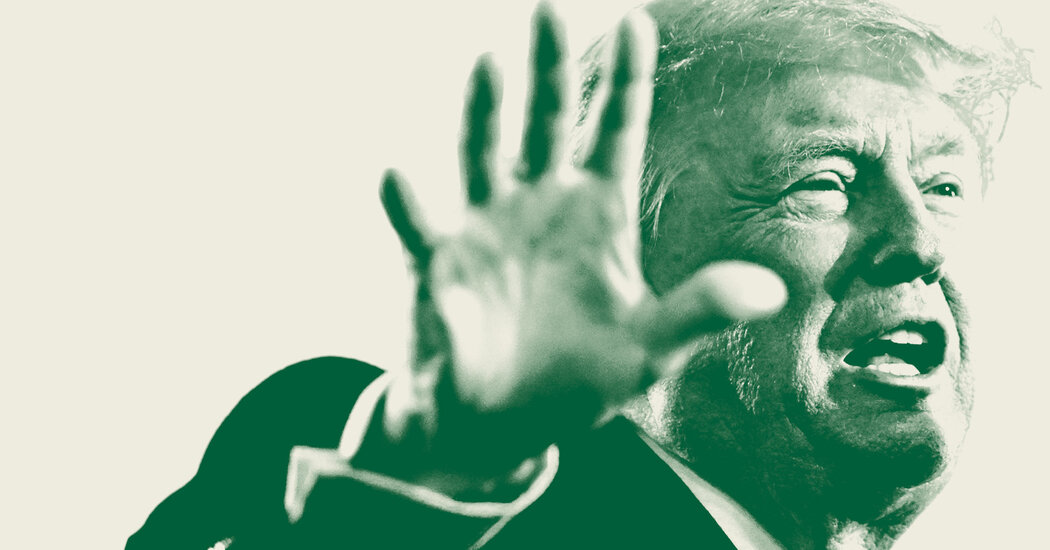
Standing before the mahogany podium of the East Room, the silhouette of an octogenarian president offers a striking visual metaphor for a nation navigating its own profound mid-life crisis. The United States, a democratic experiment crawling toward its 250th anniversary, finds itself guided by a leadership class that has lived through nearly a third of that entire historical trajectory. This convergence of a vintage republic and its senior-most statesmen evokes a complex tapestry of human emotions: reverence for a lifetime of public service, anxiety over the inevitable physical limitations of late-stage life, and a quiet, collective introspection about our own relationship with mortality and power. When we look at a president of advanced age, we are forced to look past the varnished veneer of political ideology and confront the raw, unyielding truth of biology. Every stiffened step across the South Lawn, every raspy whisper delivered into a microphone, and every fleeting moment of hesitation under the unforgiving glare of modern media becomes a mirror. In this public theater, we see our own aging parents, our grandparents, and eventually, ourselves. The presidency is an office designed to project boundless, unshakeable stamina—a secular priesthood where the leader must embody the tireless vitality of the state itself. Yet, the presence of an eighty-year-old at the helm humanizes the office in a way that is both deeply comforting and profoundly terrifying, reminding a hyper-accelerated society that even the most powerful seat in the world cannot negotiate a truce with the steady, quiet march of time.
To appreciate the gravity of this moment, we must journey back to the genesis of the republic, when the concept of leadership was painted in entirely different generational hues. The Framers of the American Constitution were, by modern standards, remarkably young men fueled by an almost reckless audacity. Thomas Jefferson was mere thirty-three when he wrote the Declaration of Independence; James Madison was thirty-six when he arrived at the Constitutional Convention; and Alexander Hamilton was a thirty-two-year-old dynamo shaping the nation’s financial soul. They established a minimum age of thirty-five for the presidency, a threshold meant to guarantee a baseline of maturity and life experience in an era when the average life expectancy hovered around forty years. They never envisioned an era where a president would govern past eighty, simply because the medical capabilities to sustain active, demanding cognitive and physical life into one’s ninth decade did not exist. Over two and a half centuries, the presidency has evolved from a localized executive post into a crushing, twenty-four-hour global crucible that demands relentless split-second decision-making, constant travel across time zones, and the management of a nuclear arsenal that leaves no margin for human error. To place this burden on the shoulders of an octogenarian is to perform a high-wire act of human endurance. It forces us to ask whether the wisdom accumulated over half a century in public life is a sufficient substitute for the rapid-fire cognitive elasticity that our digitized world increasingly demands, or if we are asking too much of the human vessel.
Indeed, the physical toll of the modern presidency is perhaps the most visible and scrutinized human drama in contemporary global politics. We live in an era of hyper-resolution cameras and relentless social media feeds that analyze every microscopic movement of our leaders, stripping away the protective mystique that once shielded historical figures like Franklin D. Roosevelt or John F. Kennedy from public vulnerability. When an elderly president stumbles on the steps of Air Force One or loses his train of thought mid-sentence, the reaction from the public is rarely one of simple political critique; instead, it triggers a visceral, emotional response that cuts across party lines. For some, it inspires a protective, almost familial empathy, a recognition of the quiet dignity required to keep standing up under the weight of an entire world’s expectations when domestic life would offer a well-deserved, peaceful retirement. For others, it sparks an existential dread, a fear that the machinery of the state is being managed by a custodian whose epoch has already passed. This public dissection of aging is a brutal, unforgiving process that exposes the inherent cruelty of our political culture, which demands absolute perfection and youth-like vigor from individuals who are, in the end, only human. It reminds us that beneath the grand titles, the motorcades, and the military salutes, there sits a human being who must contend with the same stiff joints, fatigue, and memory lapses that visit every ordinary citizen in the twilight of their lives.
This demographic reality has carved a deep, emotional chasm between the nation’s leadership and its rapidly changing citizenry. America today is a mosaic of youthful diversity, digital fluency, and existential anxieties about a future dominated by climate change, artificial intelligence, and systemic economic inequality. When a generation of young people—for whom the early 2000s are history books—looks toward a leader who was born during the dark days of World War II, a sense of profound alienation often takes root. It is a disconnect that goes far beyond policy preferences; it is a fundamental difference in how life is experienced and conceptualized. To be born before the advent of the microchip, the civil rights movement, and the fall of the Berlin Wall is to possess a worldview forged in a crucible that feels unimaginably distant to a twenty-something citizen trying to navigate the gig economy. The youth understandably wonder if those who will not have to live with the long-term consequences of today’s decisions should be the ones making them. Yet, there is a counter-narrative of invaluable depth that only an eighty-year-old leader can provide. In a political culture addicted to the sensationalism of the present moment, an octogenarian brings a steadying, long-term historical perspective. Having witnessed the rise and fall of demagogues, the agonizing delays of social progress, and the slow healing of national fractures, an older leader can offer a rare brand of patience and institutional memory—a belief that the arc of the moral universe is indeed long, and that survival often requires endurance rather than explosive, reactionary change.
This concentration of seniority is not an isolated phenomenon confined to the West Wing; it is the crowning feature of a broader, systemic American gerontocracy. Across the halls of Congress and the chambers of the Supreme Court, the levers of power are held firmly by a generation that has proved remarkably reluctant to pass the torch. This refusal to step aside speaks to a deeply human struggle with legacy, identity, and the existential terror of irrelevance. For many of these lifelong public servants, the pursuit and maintenance of power is not merely a career, but the very oxygen that sustains them; to retire is to invite the silence of old age, to admit that the world can spin without their guidance. This reluctance, while deeply human, has created a structural bottleneck in American political life, starving the system of fresh perspectives, innovative solutions, and the vital energy that younger generations bring. Internationally, this dynamic does not go unnoticed. Allies and adversaries watch this theater of aging with mixed emotions. To some, America’s elderly leadership represents stability, a reassuring sign that the steady hands of experienced cold-war era statesmen remain at the wheel. To others, it is interpreted as a symptom of a declining empire, a visual representation of a system that is calcifying, unable to regenerate its leadership or adapt to the rapid, fluid dynamics of a multipolar world.
Ultimately, as the United States approaches its semiquincentennial, the presence of an octogenarian president serves as a poetic, if complicated, reflection of the state of the republic itself. America is no longer the young, radical, adolescent experiment that shocked the monarchies of Europe in 1776. It is a mature, complex, weathered nation, bearing the deep physical and emotional scars of civil war, global conflicts, economic depressions, and internal social reckonings. Like its president, the nation moves a bit slower now, burdened by the heavy weight of its own history and the accumulation of institutional compromises. In this light, perhaps an elderly leader is the most honest representation of where the country stands today: a society that is rich in experience, tempered by historical tragedy, but visibly tired and struggling to find its footing in a rapidly changing world. By humanizing our view of this leadership, we can move past the toxic rhetoric of ageism and political opportunism, recognizing instead that the transition of generational power is one of the most sacred and difficult challenges a democracy must face. The true test of this 250-year-old republic will not be whether its leaders can somehow defy the natural laws of aging, but whether the democratic institutions they leave behind are resilient enough, compassionate enough, and strong enough to outlive them all and welcome the dawn of a new generation.