





Trump’s Bold Declaration on Iran: Promises of a Superior Nuclear Agreement Amidst Echoes of the Past
In the complex arena of international diplomacy, where nuclear ambitions intertwine with economic pressures and military posturing, President Donald Trump’s recent vow to forge a “far better” deal with Iran than the 2015 nuclear accord struck under President Barack Obama has reignited debates over Middle Eastern stability. Documented in a prominently shared social media post on Monday, Trump lambasted the original pact—the Joint Comprehensive Plan of Action (JCPOA)—as “one of the Worst Deals ever made having to do with the Security of our Country.” Labeling it a “guaranteed Road to a Nuclear Weapon” for Iran, he decried the transfer of $1.7 billion in physical cash to Tehran, an act he frames as emblematic of misguided appeasement. As the 45th president eyes a potential return to the Oval Office, his commitment to renegotiate the Iran nuclear deal underscores a policy pivot that critics argue could mirror past missteps, potentially leaving the United States entangled in costly conflicts.
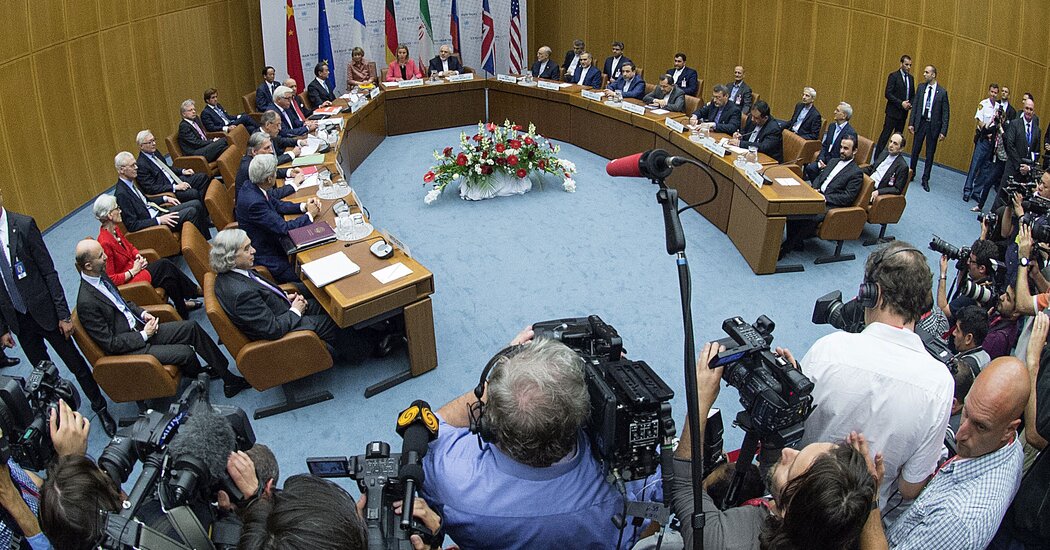
The 2015 agreement, formally known as the JCPOA, emerged after years of intense negotiations between Iran, the United States, and a coalition of global powers including Russia, China, Britain, France, Germany, and the European Union. Its core aim was to curtail Iran’s nuclear program sufficiently to prevent the development of atomic weapons, in exchange for substantial economic relief from crippling sanctions. However, Trump’s decision in 2018 to unilaterally withdraw from the deal, reimposing harsh economic penalties, prompted Iran to ramp up its nuclear activities dramatically. This escalation culminated in targeted U.S. airstrikes last year and another this year, ostensibly to dismantle Iranian capabilities toward a potential nuclear breakout, an accusation Tehran steadfastly denies. Observers, including seasoned foreign policy experts, contend that maintaining the original pact might have averted these confrontations, preserving a delicate balance that kept Iran more than a year from nuclear breakout capability. Yet, Trump’s critics warn that his pursuit of an improved agreement might ultimately yield little better than what Obama achieved over a decade ago, potentially sacrificing diplomatic progress for political rhetoric.
Delving into the historical context, President Obama’s push for the JCPOA stemmed from a confluence of strategic imperatives and domestic priorities. Upon taking office in 2009 amid the winding down of the Iraq War, Obama faced mounting evidence that Iran’s theocratic government, under the Ayatollah’s regime, was advancing toward nuclear weaponry capabilities. Western intelligence agencies had monitored ominous indicators, including clandestine enrichment efforts and ballistic missile tests, that raised alarms about a potential atomic arsenal. Rather than opt for military intervention—a path fraught with the risk of embroiling the U.S. in another protracted conflict—Obama sought a diplomatic lifeline. He also feared Israeli preemptive strikes on Iranian nuclear sites, which could drag America into an unwanted regional war. Tehran, for its part, saw the negotiations as a pathway to unshackle its economy from the grip of punitive sanctions imposed by the U.S. and Europe. Over 20 months of grueling talks, Obama steered the international consortium toward a deal that would push Iran’s nuclear threshold back to at least a year away from bomb-grade material, buying precious time for global response. Proponents within the administration also harbored hopes that thawing relations might catalyze internal reforms in Iran, boosting moderates over hardliners and reintegrating the nation into the global economy, fostering a more stable Middle East.
At its heart, the JCPOA demanded rigorous concessions from Iran to assuage international fears. The regime was obligated to relinquish nearly all of its uranium stockpile—shipments totaling 98% of its holdings abroad—leaving it with insufficient material for even a single atomic bomb where it had once possessed enough for eight to ten. Iran dismantled two-thirds of its centrifuges, those mechanized wonders that enrich uranium to higher purities suitable for energy or armaments, and capped its operations at just 5,060 units using only outdated models for a decade. Underground bunkers like the Fordo facility were barred from uranium activities for 15 years, and enrichment levels were restricted to non-weapons-grade 3.67% until 2030—ideal for medical and research applications but far shy of bomb-making potency. Additionally, a heavy-water reactor producing weapon-usable plutonium waste was disabled. Compliance was fortified through stringent oversight by the International Atomic Energy Agency (IAEA), complete with intrusive inspections, cameras, and verification protocols. This framework not only curtailed Iran’s nuclear ambitions but also ensured transparency, creating a web of accountability that deterred covert advancements. For many diplomats, this wasn’t merely about containment; it represented a model of preventive diplomacy in an era rife with geopolitical tensions.
Nevertheless, the agreement drew sharp criticism from detractors who saw inherent flaws destined to unravel over time. Detractors, including influential Republicans and regional allies like Israeli Prime Minister Benjamin Netanyahu, argued that sunset clauses—provisions expiring after 15 years—would expire by 2030, effectively licensing Iran to surge ahead with unrestricted nuclear expansion. Opponents vilified Obama officials for conceding too much, predicting that Iran, relieved of sanctions, would pivot toward aggression, funding proxies like Hamas in Gaza, Hezbollah in Lebanon, and Yemen’s Houthis. Proponents countered that securing longer commitments was untenable, as Iran would have balked, and that the deal afforded critical delay for ongoing diplomatic engagement. Intriguingly, the pact’s preamble explicitly repudiates nuclear weapons pursuit, a pledge Trump has historically dismissed. This ideological clash highlights the fragile equilibrium between idealism and realism in arms control, where temporary safeguards must contend with the long shadow of technological proliferation. As tensions flared post-withdrawal, with Iran’s arsenal surging, the debate morphed into a cautionary tale of “what ifs,” underscoring how policy choices today echo in future security crises.
In tandem with its obligations, Iran reaped substantial rewards under the JCPOA, as sanctions that had isolated its economy for over a decade were systematically dismantled. Oil exports resumed legally, banks reopened to international transactions, and shipping and insurance sectors shed restrictive burdens. Even U.S. secondary sanctions—penalizing third-party nations trading with Iran—were lifted, enabling Tehran to court global investment and overhaul its aging infrastructure, from roads to aeronautics. Freed assets swelled Iran’s coffers; estimates from the U.S. Treasury pegged immediate access at around $50 billion, though skeptics, led by Trump allies, inflated figures to $100 billion or more. Iran invested in neglected sectors like healthcare and education, but allegations swirled that funds funneled to militant groups exacerbated regional instability. Tehran protested bitterly that full economic revival eluded grasp, attributing shortfalls to intimidating tactics by hardline factions warning foreign partners of retroactive repercussions. This duality—the promise of normalized trade versus the reality of geopolitical friction—illuminated the deal’s ambition to reshape Iran’s trajectory, blending economic incentives with the hope of moderating domestic policies in a nation long at odds with the West.
The saga of the “pallets of cash”—the $1.7 billion delivered to Iran in 2016—epitomizes the JCPOA’s controversies, morphing from a routine settlement into a symbol of perceived weakness under Obama. This sum, dwarfed by the broader unfreezing, arrived via plane in wooden crates, an image seized upon by critics as emblematic of capitulation. Delivered amid Iran’s compliance affirmations and the release of American detainees like Jason Rezaian, it fueled claims of a clandestine ransom, even as administration officials refuted direct linkages, noting the absence of explicit ties in the accord. Historical context reveals the roots: predating the 1979 revolution, Iran had prepaid the U.S. for arms shipments never delivered post-overthrow, accruing interest through decades of arbitration. The payout—$400 million initial sum plus interest, denominated in currencies like Swiss francs due to sanctions—settled a longstanding claim a legal advisor braced for losing. Despite the optics, defenders assert it demonstrated adherence to international law, countering narratives of appeasement. As debates persist, this episode illustrates the high-stakes theater of nuclear diplomacy, where financial nuances collide with existential fears, shaping narratives in an ever-volatile Middle East and informing Trump’s pledge for a tougher stance.