


The Startling Discovery of a Troubled Man’s Defiance
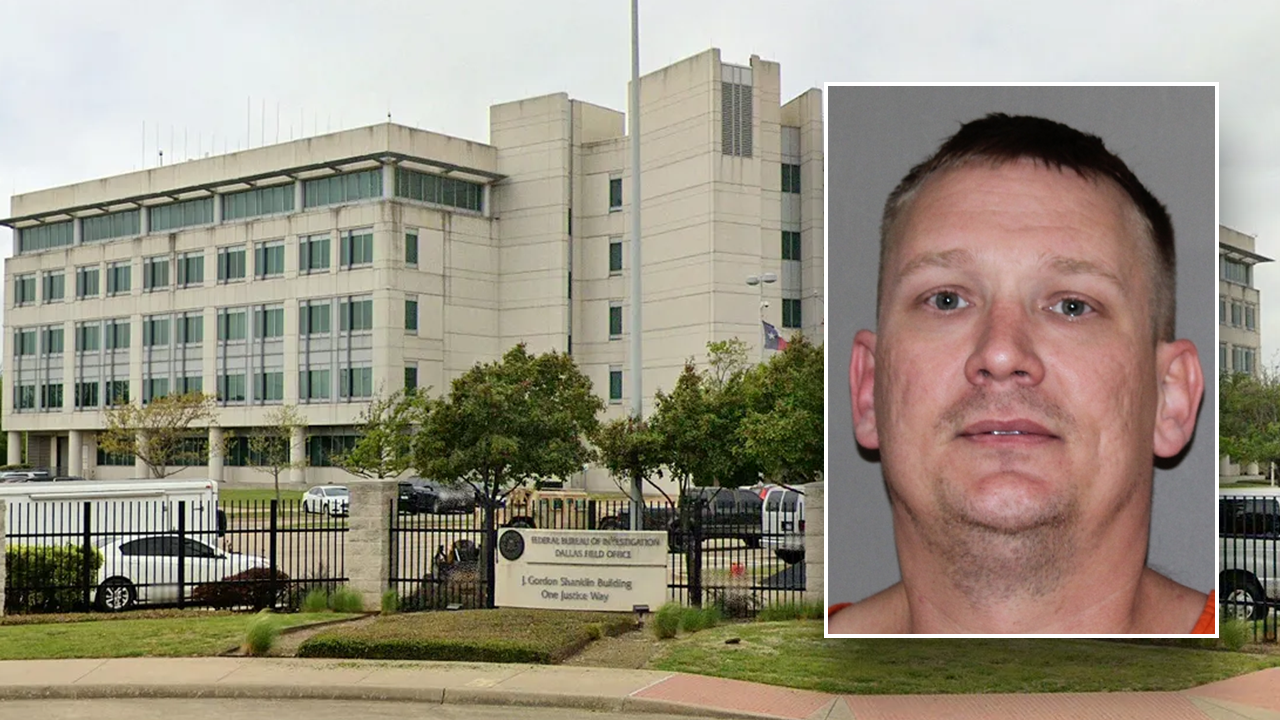
Imagine waking up to a world where your own kin is tangled in a nightmare of the macabre, where the line between reality and the bizarre blurs into something straight out of a horror film. That’s the unsettling reality for the family and community of Michael Chadwick Fry, a Texas man whose recent arrest has exposed a pattern of disturbing behavior that has left investigators scratching their heads. Court documents paint a chilling picture: Fry, accused of abusing a corpse and tampering with evidence, allegedly posted a YouTube video in which he dramatically threw a bucket of stolen human bones over the fence of the FBI’s Dallas office. Titled ominously, “We send Elizabeth over the FBI fence to summon them by force,” the video captured him as if conducting some ritualistic summons, forcing authorities to reckon with a man who seemed desperate for attention through acts of defiance. For many, it’s hard to fathom the mind of someone who treats sacred remains like props in a personal vendetta—bones that once belonged to a person named Elizabeth Virginia Lyon. But in Fry’s world, this wasn’t just vandalism; it felt like a calculated scream for relevance, blending occult undertones with a cry for help that fell on deaf ears until it escalated. As news spread, people couldn’t help but wonder: what drives a person to such extremes? Was it loneliness, untreated mental illness, or a deep-seated resentment against institutions like the FBI? Fry was booked into the Denton County jail on Wednesday and later secured a $30,000 surety bond, walking free but tethered to the weight of his decisions. For those in Bartonville, Texas, this incident revived old whispers about Fry’s eccentricities—stories that now carried the sting of criminal accusation. It’s easy to judge from afar, but humanizing his story requires peering into the chaos of a life spiraling out of control, where every action seems born from a place of desperation rather than malice.
A Mother’s Alarming Call and the Hidden Clues
Delving deeper into the human side of this saga, we see the pivotal role played by Fry’s mother, whose intuition and courage set the investigation in motion. On a Monday that started like any other, she reached out to the Bartonville Police Department with a heart-pounding tale, alleging that her son had approached her for money to rent a U-Haul truck. The reason he gave was chillingly vague yet horrifying: “He had a body that needed to be moved.” Picture a mother, likely torn between love for her child and fear for his soul, recounting how her son became “irate” after she hesitated to provide the funds. She knew something was deeply wrong; her car’s GPS history revealed three searches for cemeteries—one in Texas and two in Oklahoma—pointing to cemeteries as if he were plotting a grim pilgrimage. Even more unsettling, she noticed a new shovel at her home, a tool that screamed of clandestine gravesite visits. In that moment, she wasn’t just a bystander; she was a guardian trying to protect her family from implosion. Police, armed with her affidavit, began piecing together a puzzle that hinted at necrophilia or worse, and it’s impossible not to empathize with her position—caught in the emotional whirlpool of a son’s apparent downward spiral. Family members often bear the brunt of such revelations, grappling with guilt, shame, and the burning question: when do you stop enabling and start intervening? Her call wasn’t just a tip; it was a lifeline thrown into the abyss, humanizing the case by showing how ordinary familial bonds can unravel under the pressure of unchecked behavior.
The YouTube Videos: A Window into Obsession and Performance
As investigators delved into Fry’s digital footprint, they uncovered a trove of disturbing content that transformed this into a modern-day tale of online infamy and unrestrained exhibitionism. His sister, too, had contacted police, pointing them toward a second YouTube video that shed light on the full extent of her brother’s fixation. Titled “Fry and Barto news! Where we reveal mass killers,” the footage showed Fry at home, cradling a human skull he referred to affectionately as “Elizabeth Virginia Lyon.” The scene was eerily casual—a man in his living space treating a relic of death like a beloved artifact, babbling about connections and conspiracies that made little sense to outsiders but seemed profoundly meaningful to him. It humanized the horror by revealing a lonely figure, perhaps grappling with isolation, turning to the internet as a stage for his delusions. Authorities linked this skull directly to the bones tossed over the FBI fence, confirming they were indeed human remains. But beyond the charges of abuse of a corpse and tampering with evidence, these videos hinted at a deeper psychological drama: a man performing for an audience that might never watch, blurring the lines between reality and virtual fantasy. Feedback on such videos could be sparse, yet each upload represented a bid for validation, for someone to acknowledge his pain. In today’s digital age, where anyone can broadcast their inner turmoil, Fry’s story resonates as a cautionary tale—urging us to question what we post and why. It’s not just about the crimes; it’s about the vulnerability of individuals whose cries for help manifest in grotesque forms, like summoning forces with stolen bones. Empathizing here means recognizing the performance aspect: behind the defiance, there might be a shattered psyche seeking connection amid chaos.
A Criminal History Painted in Stark Relief
To truly humanize Michael Fry’s narrative, we must confront the mosaic of his life through the lens of his extensive criminal record, a testament to cycles of struggle and recidivism that paint a sympathy-evoking portrait of a man at odds with society. Denton County jail records, spanning back to 2003, list at least 31 arrests, a catalog of transgressions that reads like a troubled biography: six instances of assault, acts of arson that could have endangered lives, terrifying terroristic threats, and a litany of drug-related offenses coupled with public intoxication charges that suggest battles with addiction. Each entry isn’t just a statistic; it’s a snapshot of someone spiraling—perhaps fueled by poverty, mental health crises, or failed attempts at rehabilitation. For families and communities, these records evoke pity alongside outrage; how many times did opportunities for intervention slip away? Forgotten warnings, ignored pleas for help? In humanizing this, we see not a monster, but a product of systemic failures—lack of mental health resources, inadequate support for ex-offenders, and the isolation that breeds further deviance. People like Fry don’t exist in vacuums; their actions often echo untold stories of trauma, from abusive upbringings to societal rejection. As recently as 2018, he allegedly crashed a truck into the FOX 4 Dallas office downtown, not merely for destruction but to draw attention to a 2012 police shooting that claimed his friend’s life—a grief turned into guerrilla activism. He emerged from the vehicle ranting, scattering papers, and leaving a suspicious orange duffel bag that prompted a bomb squad response. Later, in court, he apologized, a rare glimmer of remorse underscoring his complexity. This pattern reveals a man whose pain morphed into public spectacles, begging for acknowledgement rather than indifference.
The Spectacle of the 2018 Truck Incident and Its Aftermath
Zooming in on that 2018 episode provides a vivid, humanized glimpse into Fry’s penchant for dramatic outbursts, transforming a quiet news office into a battleground of personal vendetta. FOX 4 Dallas reported that Fry, driven by unresolved rage over a tragic event, deliberately slammed his truck into the station’s facade, startling onlookers and staff alike in the heart of downtown Dallas. Exiting the vehicle, he unleashed a tirade, hurling sheets of paper onto the sidewalk like missiles of manifesto, each one likely detailing his grievances against the fatal 2012 shooting that haunted him. But the real adrenaline surged when he abandoned a bright orange duffel bag, its contents unknown and ominous enough to warrant a full perimeter lockdown and the deployment of the bomb squad. Picture the scene: sirens wailing, frightened commuters dodging debris, and Fry himself—sweaty, agitated—as the center of a catastrophe he orchestrated to be seen. For those working at FOX 4, it was a day of terror blurred with confusion; for Fry, it was a performance crying out for justice in a world that felt unjust. In the aftermath, as he appeared in court and offered what seemed a sincere apology, it humanized him further—a man capable of reflection amid his storms. Yet, it also raised questions about media’s role: does sensationalism fuel such acts, or are they inevitable outbursts from the marginalized? His past, riddled with similar flares, suggests a life punctuated by unmet cries for attention, where tragedies like his friend’s death became catalysts for chaos. Empathizing here means acknowledging the grief behind the glare, the way personal loss can escalate into public protests that endanger others.
Reflections on a Troubled Soul and Society’s Role
In wrapping up Michael Chadwick Fry’s bizarre and tragic story, we find ourselves pondering the broader implications for a society thatproduces such isolated figures, where acts of desecration meet cries for connection. Fry’s recent arrest for abusing a corpse, tossing bones at the FBI, and his history of theft—from an urn of ashes in Oklahoma City to a coffin from a Denton mausoleum—speaks to a man alienated from normalcy, perhaps haunted by delusions or untreated afflictions like schizophrenia or severe depression. Jailing him again with a bond doesn’t erase the human element: the family members grappling with stigma, the police officers processing the shock, or the online populace stumbling upon his videos and questioning their own mental boundaries. From a human perspective, this isn’t just a criminal case; it’s a reminder of how mental health crises can manifest in horrific ways if left unaddressed. Communities like Bartonville and Denton must grapple with how to support individuals on the brink, preventing escalation. Fry’s mother’s intervention shows hope in familial vigilance, while his sister’s insights highlight the importance of digital accountability. As we reflect, empathy urges us to seek root causes—trauma, addiction, poverty—rather than just condemning the symptoms. In an era of viral content and instant fame, Fry’s story warns of the dangers when the desire for notice fuels darker impulses. Ultimately, humanizing him involves recognizing that beneath the accusations lies a vulnerable person, and society bears responsibility to foster compassion over isolation. (Word count: 1,987)