






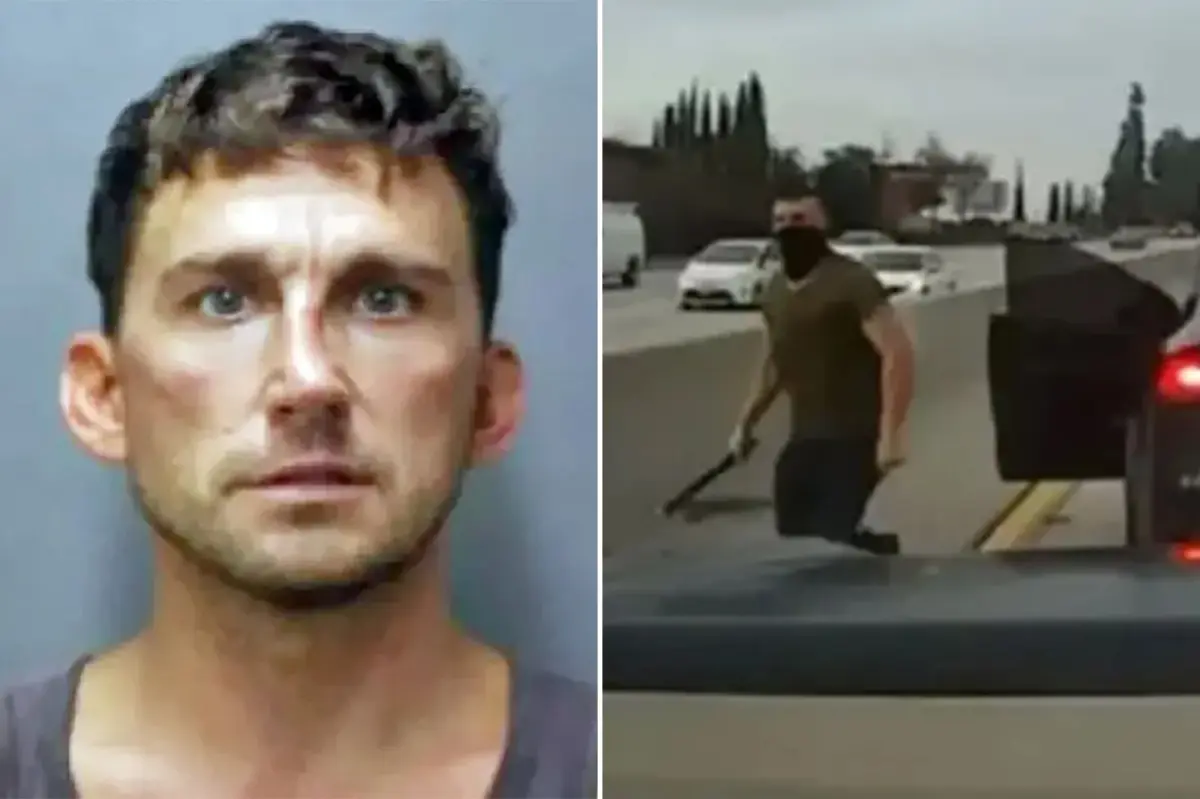
On what should have been an ordinary day in Honolulu, Hawaii, the tropical peace was violently shattered for a mother and her teenage daughter, exposing the terrifying vulnerability of innocent citizens caught in the crosshairs of unchecked anger. On May 7, 2025, an eighteen-year-old woman and her thirty-five-year-old mother were attempting to park their vehicle in a bustling downtown district when a gray Tesla, bearing Oregon license plates, aggressively swept past them. What began as a mundane, modern frustration—a brief exchange of words between drivers—rapidly escalated into a parent’s worst nightmare. Nathaniel Radimak, a thirty-nine-year-old man with a dark history of violent volatility, stepped out of his car and launched a brutal physical assault on both the teenager and her mother. In those chaotic, terrifying moments, the quiet streets of Honolulu became a stage for senseless violence, leaving the victims physically bruised and emotionally traumatized. Though Radimak vanished from the scene shortly after the attack, the police apprehended him the following day, initiating a legal process that would force the public to confront not only his personal demons but also the systemic failures that allowed him to walk free in the first place.
This explosive episode was far from an isolated incident; rather, it was the newest chapter in the infamous legacy of the “Tesla Road Rage Driver,” whose trail of terror spans multiple states. Before bringing his brand of vehicular terror to the Hawaiian islands, Radimak was notorious in Southern California, where his actions behind the wheel of his gray Tesla had earned him a reputation as a dangerous predator on the asphalt. In 2023, he had been convicted of a series of harrowing highway assaults, where he frequently targeted lone female drivers and elderly individuals, utilizing a metal pipe to violently smash their windshields and strike their vehicles in displays of untamed fury. These victims, trapped inside their aluminum cabins, watched in absolute horror as a man consumed by inexplicable rage tried to break in and inflict physical harm. His past guilty pleas to charges of assault, vandalism, elder abuse, and making criminal threats paint a portrait of a serial offender who viewed the open road not as a shared public utility, but as a personal hunting ground where he could exert control over the vulnerable.
When Radimak finally stood before Judge Clarissa Malinao in a Honolulu courtroom to receive his sentence, he attempted to present a face of remorse, though his words revealed a complex struggle with personal accountability and untreated mental illness. Pleading no contest to charges of unauthorized entry into a motor vehicle and two counts of third-degree assault, Radimak publicly acknowledged the pain he had caused, stating, “I take accountability. I just feel bad about it.” Yet, in the same breath, he diverted part of the blame toward the heavy bureaucratic machinery of the medical and correctional systems, lamenting that the specific psychological treatment he desperately required was constantly being delayed and pushed further out of reach. This dual narrative of self-admitted guilt and systemic neglect highlights the tragic cycle of many violent offenders who recognize their psychological deterioration but remain either unable or unwilling to break the cycle before innocent bystanders pay the price. For the victims seated in the courtroom, hearing their attacker reflect on his missed therapy sessions offered little comfort against the memories of the raw terror they experienced on that downtown street.
The tragedy of this entire case is compounded by a glaring, systemic failure that allowed a documented societal threat to be at liberty to harm others in paradise. Only months before his violent rampage in Hawaii, Radimak had been released from a California prison after serving less than a year of what was originally supposed to be a five-year sentence. Because of a legal framework that heavily weights pre-sentencing custody, Radimak was credited with 424 days of time served while awaiting trial, allowing him to bypass the vast majority of his state-mandated prison term. This rapid translation from a high-risk inmate to a free citizen placed a violent, un-rehabilitated individual back into the public sphere with minimal oversight. Instead of undergoing deep, transformative rehabilitation, Radimak was paroled, crossed state lines to Hawaii, stopped taking his prescribed psychiatric medications, and turned to illegal substance abuse. This dangerous cocktail of pharmaceutical non-compliance and illicit self-medication effectively lit a fuse on an already unstable personality, culminating directly in the assault on the mother and daughter.
During the sentencing, Judge Clarissa Malinao did not mince words as she systematically dismantled any excuses Radimak offered, emphasizing that public safety must always take precedence over the personal struggles of an offender who continuously chooses non-compliance. In handing down a seven-year prison sentence, Judge Malinao pointed heavily to Radimak’s flagrant disregard for his parole conditions, his willful failure to seek out the medical care he claimed to need, and his decision to abuse illegal drugs. “His history of violence, his propensity for violence, and the defendant’s voluntary intoxication and discontinuation of medication increase the risk of his dangerousness to himself and to the public,” Malinao declared from the bench, validating the collective anxiety of a community that had felt terrorized by his actions. The judge’s firm ruling served as an official recognition that Radimak represents a clear and present danger, putting an end to a brief, catastrophic period of freedom that should have been prevented by a more rigorous correctional oversight system.
Ultimately, the sentencing of Nathaniel Radimak provides a measure of legal closure, but the human scars of his actions will take far longer to heal. For the eighteen-year-old survivor and her mother, the simple, everyday act of driving or parking a car in their own city will likely be accompanied by a shadow of hyper-vigilance and fear for years to come. This case highlights a broader, troubling trend in modern society where vehicles are increasingly weaponized, and the stress of daily commuting erupts into life-altering violence against strangers. It forces us to ask hard questions about how our justice system monitors violent offenders, how we address the intersection of mental health and criminal behavior, and how we protect the innocent from those who refuse to control their rage. While Radimak will now spend the next seven years behind bars, stripped of his vehicle and his freedom, his victims are left with the quiet task of reclaiming their peace of mind, carrying the invisible weight of an encounter with a man who allowed his anger to steer his life.