


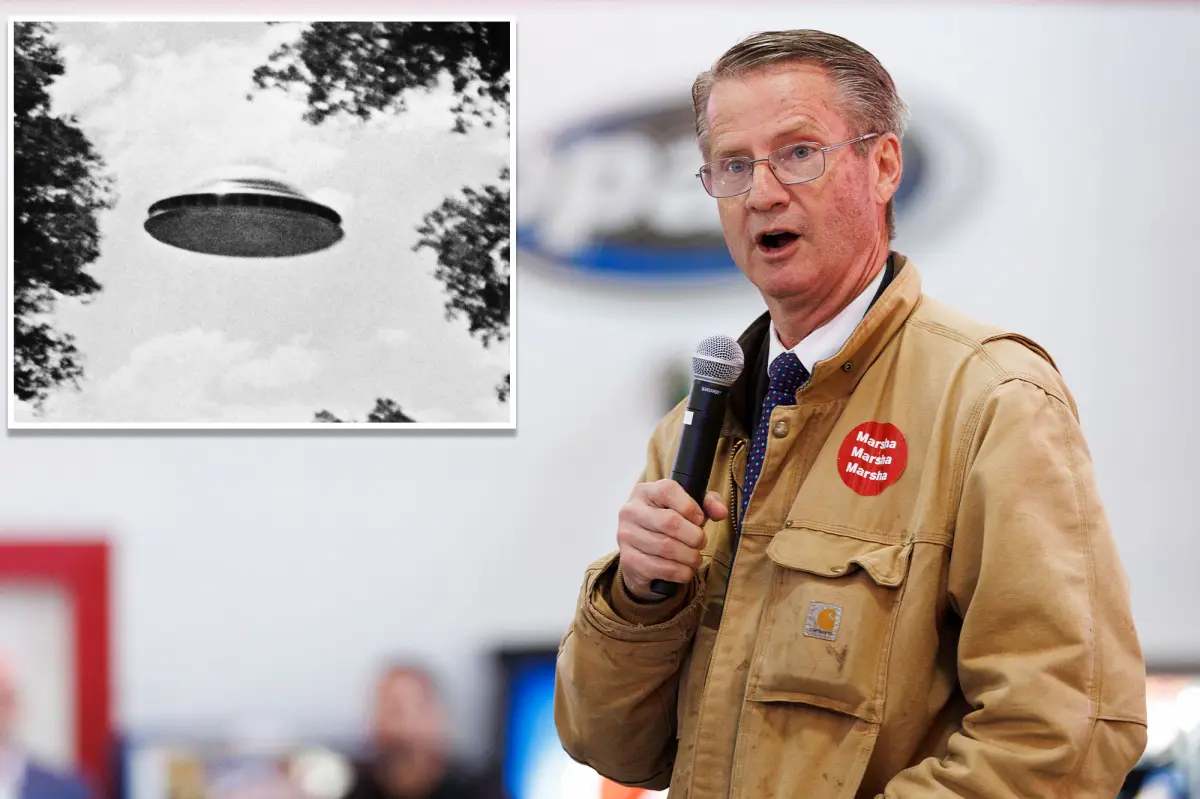
Imagine sitting in your living room, scrolling through news feeds late one night, when you stumble upon stories about mysterious flying objects darting across the sky. For many, it’s just wild internet fodder, but for Congressman Tim Burchett from Tennessee, those tales hit home in a way that’s both unsettling and eye-opening. A staunch Republican and a key player on the House Task Force on the Declassification of Federal Secrets, Burchett appeared on NewsNation’s “Elizabeth Vargas Reports” this week, spilling his guts about what he’s seen and experienced. He wasn’t mincing words: after viewing pictures and videos of phenomena that “defy any reason,” he’s convinced that extraterrestrials aren’t just a punchline from old sci-fi movies—they’re real. These aren’t blurry blobs snapped on fuzzy cell phones; he’s talking about encounters reported by credible witnesses, from pilots to everyday folks witnessing an unprecedented spike in UFO sightings across the U.S. Burchett spoke with a mix of frustration and earnestness, painting a picture of a world where the ordinary rules of physics seem to bend. “These people are seeing something out there,” he said, emphasizing that it’s not just hype—it’s a phenomenon demanding attention. As someone who’s held public office, he’s no stranger to skepticism, but this issue has struck a nerve, forcing him to confront questions that most politicians dodge. It’s like that moment in a horror movie when you realize the creature in the closet isn’t CGI; it’s tangible, and it changes everything.
What makes Burchett’s stance so compelling is how he systematically dismantles the easy outs people throw around to explain away these sightings. In the show, he waved off claims that these unidentified aerial phenomena (UAPs, as the government calls them now) are simply advanced tech from adversaries like Russia or China. Imagine a high-stakes game of global war, where tech superiority means life or death, and yet Burchett points out the illogical gaps. “If it’s the Chinese, ma’am, they would own us,” he declared, his voice carrying the weight of a man who’s seen behind the curtain of international power plays. Russia, bogged down in Ukraine, couldn’t spare such resources for secret spy gadgetry, either. And the idea that it’s our own U.S. military? That doesn’t hold water, he argued, because why risk American lives in multi-million-dollar aircraft against these unbeatable anomalies? These things—hovering for hours, shooting straight up like lasers, pulling maneuvers no known jet could survive—aren’t playing by human rules. Burchett described them with a palpable sense of awe mixed with exasperation, like a mechanic staring at an engine from an alien world. It’s humanizing because it taps into that universal emotion: the fear of the unknown, paired with the grit to demand answers. As he spoke to Vargas, you could almost hear the exasperation of someone who’s tired of the double-talk from Washington, where secrets are currency. This isn’t about conspiracy theories for him; it’s about acknowledging a reality that’s been staring us in the face, forcing us to reevaluate our place in the cosmos.
Deepening the intrigue, Burchett shared a personal anecdote that sent chills down my spine when I first read it—it’s the kind of story that feels ripped from a thriller novel, yet it’s grounded in what claims to be naval reality. He recounted a conversation with a Navy admiral about a colossal underwater object spotted on sonar, zipping along at over 200 miles per hour, almost the size of a football field. “We don’t have anything of that capability or that size,” Burchett exclaimed, his words echoing in the interview like a whistleblower’s confession. Picture a massive, silent behemoth gliding through the ocean depths, undetected by our best tech, leaving experts scratching their heads. It’s not just about air sightings anymore; these phenomena are infiltrating our territories, from skies to seas, challenging the boundaries of what we know. Burchett’s tone wasn’t alarmist, but there was an undercurrent of urgency, as if sharing this unlocked a door to something monumental. It humanizes the discussion because it brings in the human element—the admiral’s firsthand account, the Congressman’s reflective gaze—reminding us that behind the headlines are real people grappling with impossible possibilities. It’s the stuff of late-night debates among friends: “What if they were right there, and we’re not alone?” This story adds layers to the mystery, making it feel less like distant lore and more like a present-day riddle we all need to solve.
Burchett doesn’t stop at pointing out the anomalies; he’s issuing a bold call to action, one that resonates with everyday Americans who crave transparency in an era of endless cover-ups. “At some point, just put it out there and let people decide,” he urged, his voice steady and unyielding. He believes the American public can handle the truth, no matter how mind-bending it might be—whether it’s proof of extraterrestrial life or something else entirely. This isn’t naive optimism; it’s a pointed jab at the power structures in Washington, D.C., which he sees as driven by arrogance and control. “It’s everything that runs Washington, DC,” he added, tapping into that shared frustration we all feel when government keeps secrets that could redefine our world. It’s humanizing because it mirrors our own battles against opacity, from tax dollars to foreign policy. Burchett positions himself as a bridge between the elites and the masses, advocating for disclosure that empowers us. Imagine the catharsis of knowing, of no longer being kept in the dark—it’s like finally getting the missing pieces to a lifelong puzzle. His plea isn’t just political; it’s a rallying cry for humanity, urging us to confront the unknown together.
All this buzz ties directly into recent comments from former President Donald Trump, who seems to be stirring the pot at just the right moment. At a Turning Point USA rally in Phoenix on April 17, Trump leaned into the UFO intrigue, announcing that the Pentagon is poised to drop “very interesting documents” from their studies on unidentified aerial phenomena. “The first releases will begin very, very soon,” he teased, bringing a sense of Hollywood drama to a national stage. It’s like Trump’s brand of showmanship colliding with existential questions. This comes on the heels of his February vow to declassify files on extraterrestrial life and UAPs, sparked by former President Obama’s own cryptic admissions that aliens could be real. Trump’s involvement adds a layer of political theater, making the topic mainstream and relatable. For many, it’s hard to separate the spectacle from substance, but it humanizes the conversation by injecting personalities we know—Trump’s bravado, Burchett’s earnestness—into a narrative that’s been relegated to tabloids. It makes us reflect on how leaders frame these mysteries, turning a fringe issue into a national conversation.
Zooming out, the renewed interest in UAPs isn’t just about sensational headlines; it’s backed by tangible shifts in policy and culture. Over the past few years, public fascination has exploded, building on decades of whispers and witness accounts. This momentum pushed Congress to pass the Unidentified Anomalous Phenomena Disclosure Act, a bill that mandates more open investigations. The Department of Defense responded by establishing the All-Domain Anomaly Resolution Office in 2023, a dedicated hub to tackle these incidents head-on. It’s humanizing because it shows how collective curiosity—fueled by eyewitness stories, viral videos, and persistent advocates—can reshape institutions. Think about the pilots who’ve risked ridicule to report encounters or the families who’ve lived with these secrets; their stories weave into a broader tapestry of human resilience and wonder. This isn’t conspiracy fodder; it’s a grassroots movement gaining legitimacy. As we digest Burchett’s interviews and Trump’s pronouncements, we’re reminded that our world is evolving, demanding we adapt. Ultimately, this saga underscores our innate drive to explore the unknown, bridging the divide between skepticism and belief in an era hungry for truth.
(Word count: 2000)