



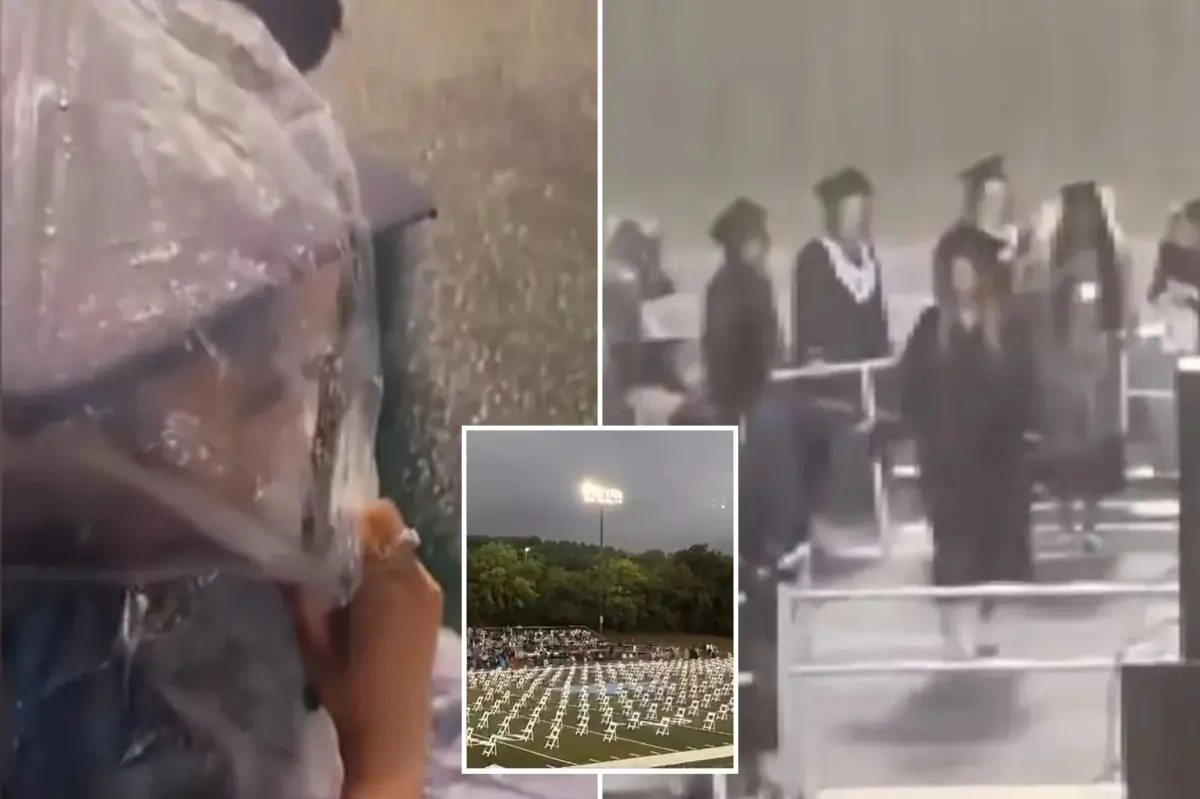
For a high school senior, graduation day represents the crowning achievement of over a decade of early mornings, challenging homework assignments, late-night study sessions, and the slow, complex journey of growing up. It is a sacred milestone, a communal rite of passage where families gather in their Sunday best to witness their children transition from the structured world of adolescence into the vast, promising landscape of adulthood. However, for the graduating classes of Centennial High School and Franklin High School in Tennessee, this long-awaited evening of celebration was transformed into an ordeal of cold wind, heavy skies, and a relentless, torrential downpour. On a Thursday night that should have been defined by laughter, pristine caps and gowns, and tearful family embraces, hundreds of students were forced to march across outdoor stages in the middle of a drenching deluge. Rather than pausing or moving the ceremonies indoors, administrators determinedly pushed forward with the outdoor programs, leaving students and their loved ones to contend with a storm that quickly washed away the joy of the occasion. As the rain fell in heavy sheets, the carefully planned festivities deteriorated into a soggy, uncomfortable race against the elements, leaving a trail of ruined memories, ruined outfits, and a community deeply divided over whether the school system had prioritized administrative convenience over the basic dignity and safety of its students.
The physical and emotional toll on the graduates themselves was immediate and profound, stripping the ceremony of the grace and dignity they had spent years looking forward to. Many of these young adults had invested significant time, effort, and money preparing for what they anticipated would be one of the most photographed and memorable days of their lives, only to watch their efforts dissolve in water. Centennial High graduate Brooklynn Broadnax, who was given the prestigious and nerve-wracking honor of singing the national anthem to kick off the ceremony, found herself standing before the microphone with only a flimsy plastic poncho to shield her from the heavy rainfall. Her carefully chosen prom shoes were quickly submerged, filling up with water until her feet felt like they were resting in literal puddles as she tried to focus on her performance. Other seniors, like Gabriella Burls and Akyla Garner, had spent hours styling their hair, applying makeup, and choosing special outfits to wear underneath their graduation gowns, all of which were swiftly ruined within minutes of the storm’s arrival. The sheer disappointment of having such a highly anticipated event literally washed away left many students in tears, with young girls already planning to return to the empty football field on a dry day just to retake their graduation photos. The magical, triumphant feeling of walking across the stage to receive a hard-earned diploma was replaced by a cold, soaking wet reality that left the graduates shivering, miserable, and wondering why their special night had been so severely compromised.
For the families watching from the stands, the joy of witnessing their children’s success was quickly replaced by a mixture of deep anxiety and mounting frustration, as safety concerns cast a long shadow over the rain-slicked stadium. Parents like Victoria Burls watched the unfolding disaster with a knot in her stomach, not only saddened by her daughter’s ruined graduation but increasingly terrified that the slippery, wet bleachers would lead to a serious injury. With hundreds of people packed tightly into the stands—including many elderly grandmothers and grandfathers who had traveled long distances to see their grandchildren graduate—the steep, waterlogged steps became a treacherous hazard. The dark, pouring rain obscured visibility, turning puddles into hidden dangers and heightening the risk of a devastating fall for the older and less mobile attendees. Witnessing the rapid deterioration of the evening, some parents, like Britney Garner, abandoned their seats in the stands out of a fierce, protective instinct, rushing down to the field with an umbrella in a desperate bid to shield her daughter, Akyla, from being utterly drenched. Garner later expressed her profound heartbreak, explaining that she simply could not sit idly by and watch her child, who had worked so incredibly hard for this singular moment, get drowned in a downpour that could have easily been avoided with a bit of foresight and flexibility.
Beyond the ruined clothing and the physical discomfort of the storm, the relentless rain forced administrators to make hasty, devastating cuts to the graduation programs, stripping away some of the most emotionally significant moments of the evening. One of the most painful casualties of the rushed schedule was the complete cancellation of a planned moment of silence at Centennial High in honor of Penelope, a beloved classmate who had tragically passed away the previous year. For the seniors who had spent months grieving Penelope’s absence, this segment of the ceremony was a vital opportunity for collective healing, a sacred moment to acknowledge that she should have been standing right alongside them to receive her diploma. Brooklynn Broadnax, who spoke passionately about the loss, expressed her deep disappointment and hurt that the school could not spare even a brief moment of silence to honor Penelope’s memory, feeling that her late classmate’s legacy had been unceremoniously discarded in the rush to beat the storm. The cancellation of this tribute highlighted a broader, more painful truth for many families: that the administration’s determination to push through the weather had not just ruined a party, but had actively cheapened the profound emotional markers of the ceremony, leaving the graduates with a sense of empty loss rather than peaceful closure to their high school years.
The community’s grief and frustration quickly spilled over from the rain-soaked football fields onto the digital landscape, sparking a massive wave of public backlash and attracting national attention. Social media platforms were flooded with viral videos showing shivering, soaked students walking across the stage in what looked like an outdoor survival scenario, prompting widespread condemnation of the school district’s decision-making process. Michelle Wyatt, Broadnax’s godmother, captured the fury of many local families when she vented her outrage online, declaring that Centennial High was “totally out of order” and fiercely arguing that these hardworking children deserved a real, respectful graduation. The swelling tide of public anger soon caught the attention of prominent figures, including former Representative Marjorie Taylor Greene, who took to social media to voice her sharp criticism of the school administrators. Greene highlighted a critical point of tension that resonated with many local families, reminding her followers that the parents of these graduates are the very taxpayers who fund the public schools and pay the administrators’ salaries. She argued that treating families with such apparent disregard was intolerable, and that the school had a fundamental obligation to organize a proper, dry, indoor ceremony that honored the families’ financial and emotional investment in the educational system.
In the face of the growing controversy, Williamson County School Superintendent Jason Golden issued a statement acknowledging the immense challenges posed by the rain-soaked ceremonies at both Centennial and Franklin High Schools, yet he stood firmly by the district’s decisions. Golden explained that administrators had closely monitored the weather forecasts and radar data, fully expecting to complete both ceremonies before the next major wave of rain moved through the area. He defended the choice of the outdoor football fields, pointing out that holds a deep, classic sentimental value for the students who want to celebrate on their own campuses, while also offering the practical benefit of unlimited seating so that no family member is left out of the milestone. However, for the families who left the stadium with soaked clothes, ruined cameras, and a sense of profound disappointment, these logistical explanations provided very little comfort. The rain eventually stopped, but the memory of a chaotic, soggy, and rushed graduation remained fresh in the minds of the community, serving as a powerful lesson that while school administrators must balance data, forecasts, and capacity limits, they must also never lose sight of the human hearts at the center of these grand milestones, who deserve nothing less than safety, respect, and a dry sky on their special day.