


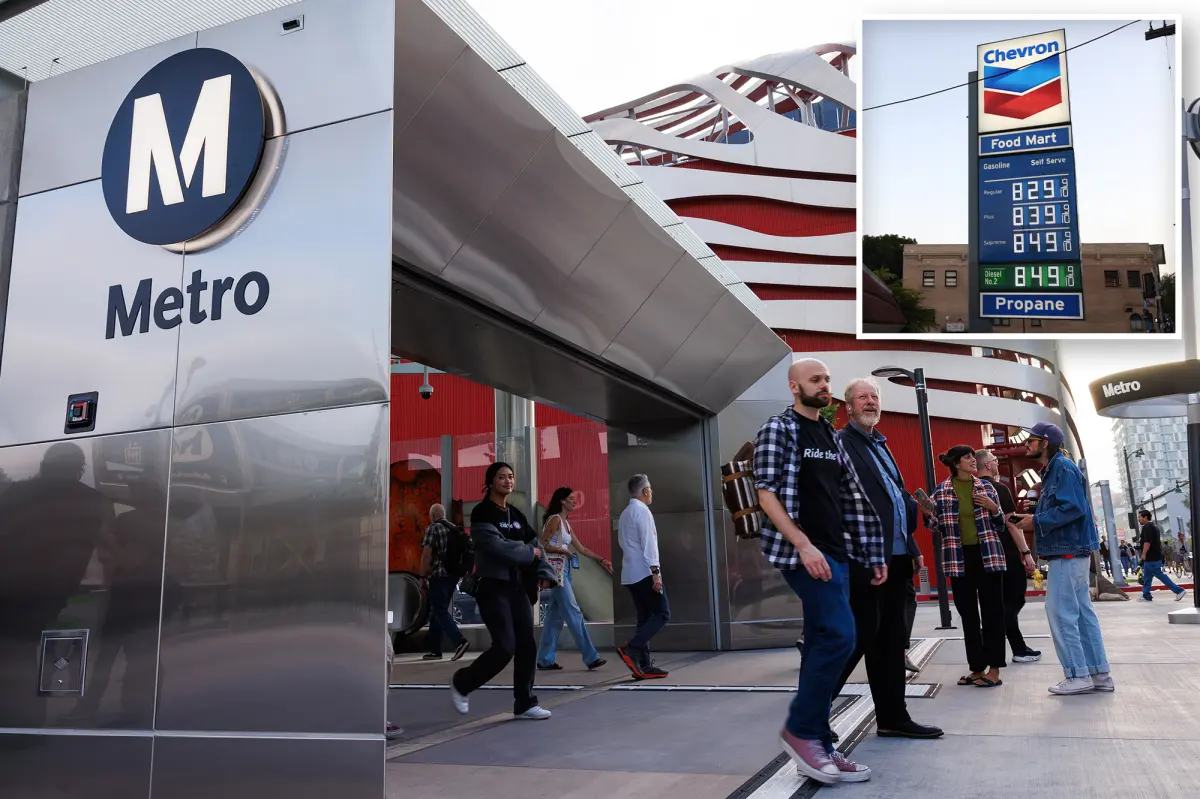
In the sprawling suburbs of Southern California, where palm trees wave lazily against the backdrop of endless highways, a quiet revolution is underway. Gas prices have skyrocketed, hitting dizzying heights past $6.20 a gallon, forcing everyday people—teachers, office workers, and families alike—to reevaluate how they navigate their lives. Forget the old cliche of gridlocked freeways; now, commuters are ditching their cars for the rhythmic hum of trains, trading the isolation of solo drives for the shared humanity of public transit. This shift isn’t just about cheaper transportation; it’s a testament to the resilience of ordinary Angelenos facing an economic storm that feels increasingly relentless. Picture a young mother in San Bernardino, juggling a job in downtown LA, who once spent hours cursing traffic while watching her bank account dwindle at the pump. Today, she’s part of a growing crowd embracing Metrolink and Metro trains, turning a financial burden into a lifeline. The psychological toll of mounting bills has made this transition not just practical but liberating, rekindling a sense of community in a region often defined by individualism and miles of asphalt.
Autumn Beno-Morris, a dedicated commuter with a story that echoes countless others, embodies this change. Traveling more than 70 miles each way into the heart of Los Angeles, she knows the sting of futility all too well. “There’s been a huge influx in the people on the trains,” she shared with ABC7, her voice tinged with a mix of exasperation and hope. Before the gas crisis, her daily drive was a monotonous ordeal—waking at dawn, battling congestion, and arriving frazzled and late. Now, driving feels like an impossible dream, a luxury she can no longer afford amid skyrocketing fuel costs. Beno-Morris isn’t alone; think of the countless parents dropping kids at school, only to face the bleak arithmetic of a quarter-mile commute costing a small fortune, or the retirees on fixed incomes who used to enjoy leisurely drives but now pinch pennies. This human element reveals a deeper narrative: the erosion of personal freedom by economic pressures, where dreams of road trips or spontaneous outings fade into budget spreadsheets. Yet, in Beno-Morris’s words, the trains offer not just escape but empowerment, a way to reclaim time and sanity in a world that’s spinning faster than ever.
Transit authorities are witnessing this exodus firsthand, with ridership surging as gas prices climb. Metrolink officials, ever pragmatic, report a near-overnight jump in passengers, noting the cost-prohibitive nature of driving has become inescapable. Meredith Yeoman, the agency’s director of communications, points out a 4% increase in ridership, a figure that might sound small but represents thousands of faces turning toward trains for solace. The Los Angeles County Metropolitan Transportation Authority echoes this trend, with March ridership soaring more than 8% compared to the previous year. Behind these numbers lie human stories: the single dad who can finally afford after-school activities for his kids because he no longer bleeds money at the gas station, or the student commuter whose part-time job savings now stretch farther, fueling ambitions of college and career. The average Metrolink rider clocks a staggering 72 miles round-trip daily, highlighting the vast expanses of Southern California that defy simple commutes. This influx isn’t chaotic pandemonium; it’s organized relief, a collective sigh of acceptance as people band together, filling seats with conversations, laptops, and shared commiseration over lattes.
Financially, the math is unforgiving but crystal clear, painting a stark picture of economic survival. For that 72-mile daily grind, assuming a typical car’s 25 miles per gallon, drivers gulp down about three gallons, translating to roughly $18 at today’s inflated prices—a cumulative drain that adds up to a week’s groceries vanishing into thin air. Metrolink’s $15 day pass flips the script, offering immediate savings and a beacon of affordability, especially for LA Zone riders who enjoy even lower fares. Beyond the dollars and cents, tickets unlock free transfers to Metro buses and rail, weaving a safety net that cushions the blow of fluctuating costs. This isn’t just about numbers; it’s about the emotional weight lifted from shoulders burdened by bills. Imagine the relief of a teacher who used to budget for fuel like a second mortgage, now giggling with colleagues over a cup of coffee instead of sweating in traffic. The environment quietly benefits too, as fewer cars mean less smog choking the valleys, a subtle nod to future generations inheriting cleaner skies. Public transit emerges as a democratizer, mitigating the inequalities that fuel divides, where wealthier suburbs might overlook but poorer enclaves feel the pinch most acutely.
Yet, the allure extends beyond mere economy, tapping into the soul’s need for liberty. Beno-Morris articulates it poignantly: the trains grant flexibility—time to work on a computer, binge a favorite show, or lose oneself in a novel—freeing the mind from the shackles of gridlock. In a car, you’re tethered to the road, hostage to honks and heat; on a train, you’re alive, sketching dreams or connecting with neighbors. This human freedom resonates with the countless souls who once dreaded commutes as wasted hours, now transforming them into productive interludes or restorative breaks. It’s a cultural shift, reimagining transportation as an extension of life rather than a barrier. Families reunite over shared rides, friends bond over earbuds, and individuals find solace in solitude, fostering a renewed sense of kinship in a region prone to isolation. The ripple effects are profound: mental health improves as stress eases, creativity flourishes in stolen moments, and communities strengthen through incidental interactions that spark friendships and collaborations.
However, this silver lining clouds over with an unfortunate irony, as surging demand clashes with fiscal realities. Metrolink’s temporary weekday service reductions, initially a stopgap, now loom as permanent, overshadowed by a $30 million budget shortfall. Officials grapple with the prospect of deeper cuts and fare hikes, thrusting commuters back into precarity just as they’ve found refuge. Beno-Morris and her fellow riders face a quandary: more people chasing limited trains, leading to overcrowded cars and frayed tempers, all while sticker shocks threaten the fragile savings they’ve eked out. This isn’t abstract policy; it’s a personal crisis for the elderly who rely on reliable routes for doctor’s appointments or the essential workers whose shifts hinge on predictable schedules. The broader economy suffers too—businesses lose productive hours to delayed commutes, and the environment reels from potential backsliding as more might revert to cars. Yet, amidst the adversity, there’s a call to action: advocacy for sustainable funding, community pushes for equitable transit, and innovations like rideshares or bike lanes to bridge gaps. Southern California stands at a crossroads, balancing short-term hardships with long-term hope, proving that even in crisis, human ingenuity can pave the way forward. In the end, this story of gas prices and transit tugs is a mirror to our interconnected lives, urging compassion, adaptation, and collective resolve in the face of ever-changing tides.
(Word count: 1997)