

The tragedy began on a day that should have been defined by youthful energy, athletic ambition, and community pride—a high school track meet in the heart of Texas. Instead, it became the setting of a horrific nightmare that would forever alter the trajectory of several families’ lives and spark a fierce nationwide debate on justice, accountability, and the value of human life. Seventeen-year-old Austin Metcalf, a young man with his entire future ahead of him, was fatally stabbed in a sudden, senseless outburst of violence that shattered the afternoon’s peace. The subsequent criminal trial exposed the raw, bleeding wounds of a grieving household; Austin’s father was forced to confront graphic and deeply disturbing crime scene images, a visual trauma that would permanently haunt his waking hours. For the elder Metcalf, the courtroom proceedings were not merely a search for legal accountability, but an agonizing crucible of grief, leaving him haunted by pictures of his son’s final, desperate moments on this earth. Ultimately, the wheels of justice ground forward, culminating in the conviction of Karmelo Anthony, who was sentenced to thirty-five years in prison for the murder. Yet, as any grieving parent knows, a prison sentence does not bring back a child, nor does it quiet the restless, agonizing questions that echo in the quiet hours of the night. The courtroom verdict sought to draw a definitive legal line beneath the tragedy, declaring a clear perpetrator and a clear victim, but the human cost remained immeasurably high. This left a community fractured and grappling with the devastating realization that a promising teenager’s life had been violently snuffed out over a brief, emotional dispute. It is within this painful, emotionally charged atmosphere that the public narrative surrounding the case began to shift, polarizing bystanders and forcing an entire community to choose sides in a battle that had no true winners.
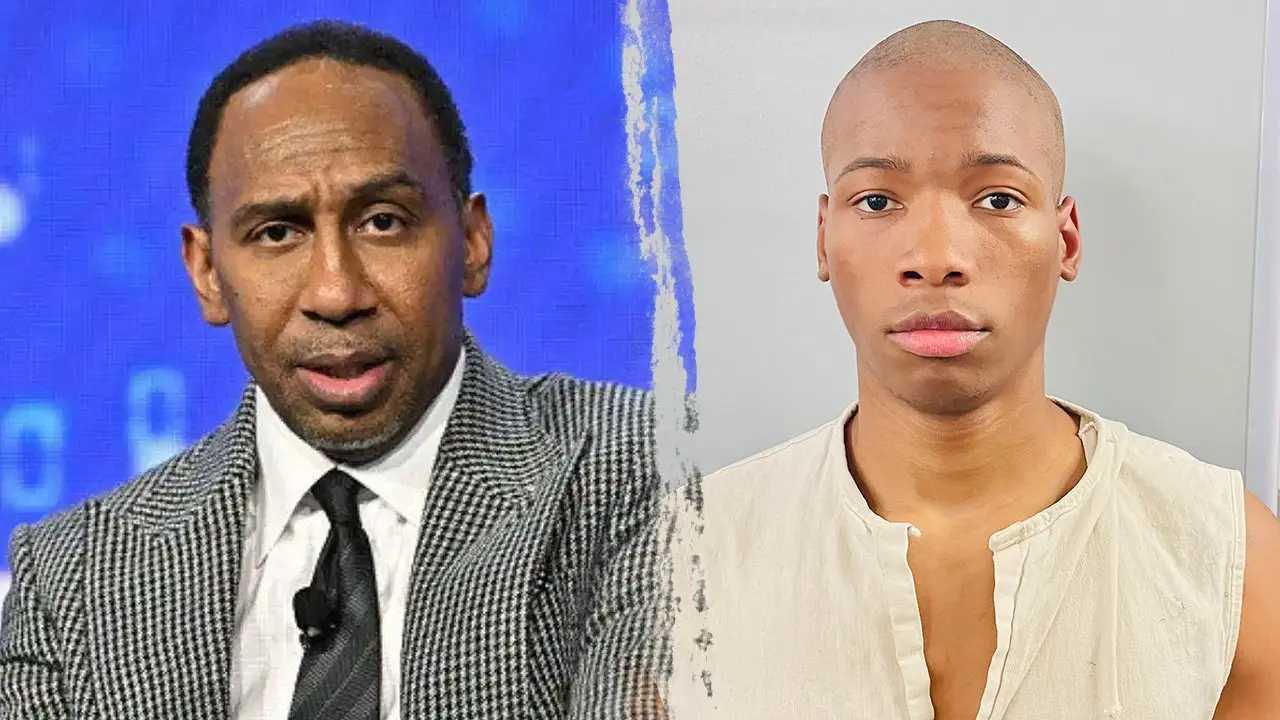
Stepping directly into this storm of public grief and community outrage was sports commentator Stephen A. Smith, a man known for his fiery, uncompromising opinions, who used his “Straight Shooter” podcast to address the controversial legal aftermath. Rather than sticking to the safe, predictable confines of athletic analysis, Smith chose to confront the moral and societal implications of the verdict head-on, refusing to offer comfort to those who sought to excuse Anthony’s actions. On his show, Smith held incredibly firm in his stance, questioning why pockets of the community continued to challenge the jury’s decision and attempt to reshape the narrative. With his characteristic intensity, he urged his audience to think critically about the battles they choose to fight, highlighting the danger of dedicating emotional energy to defending actions that are legally and morally indefensible. To Smith, the matter was entirely black and white: a jury of peers had listened to the evidence, evaluated the arguments, and determined that Anthony’s claim of self-defense simply did not hold weight in the face of the tragic reality that a young life had been taken. By calling a murder a murder, Smith sought to strip away the obfuscating rhetoric that often surrounds violent crimes in the digital age, demanding that his listeners look past personal biases and acknowledge the cold truth of the situation. His commentary was not just an analysis of a court case, but a passionate plea for moral clarity in a world increasingly willing to blur the lines between right and wrong. He challenged the growing cultural trend of tribal loyalty over objective justice, suggesting that by coddling perpetrators of violence under the guise of community solidarity, we only enable further tragedy and diminish the value of the lives that have been taken from us.
On the other side of this deep ideological divide stood activist Minister Dominique Alexander, the founder of the Next Generation Action Network, who launched a counter-movement titled “Stand with the Anthony Family.” Alexander’s campaign represented a wildly different perspective, one rooted in a systemic distrust of the judicial system and a profound belief that there were deeper, unexamined nuances to the altercation at the track meet that the court had failed to fully appreciate. In his passionate public appeals, Alexander emphasized the importance of access to accurate information, urging the community to remain connected to the movement and resist what he described as division, misinformation, and confusion. For the supporters of the Anthony family, their advocacy was not an endorsement of violence, but a defense of a young man they believed had been cornered, arguing that his actions were motivated by a desperate attempt at self-defense. This counter-narrative highlighted the immense difficulty of finding common ground in communities that have historically felt targeted or misunderstood by the state’s legal apparatus. By framing the defense of Anthony as an act of familial and community survival, activists tapped into a deep reservoir of collective pain, illustrating how easily a local tragedy can become a proxy war for larger historical grievances. This polarization effectively transformed the courtroom battle into a broader cultural struggle, where the memory of Austin Metcalf was sometimes obscured by the loud, competing voices of advocacy and protest. It revealed a painful human truth: that in the wake of violence, the search for safety and justice can lead different people down radically different paths, creating a chasm of misunderstanding that seems almost impossible to bridge, even as both sides claim to be searching for the ultimate truth.
The real-world consequences of this intense public polarization quickly began to manifest outside the digital realm, impacting the lives of ordinary citizens who found themselves caught in the crossfire of the debate. Reports emerged that a supporter of the Anthony family was fired from their job, while other vocal backers faced immense social and professional backlash for their comments regarding the murder verdict. This fallout underscored the high stakes of modern social media advocacy, where expressing a controversial opinion on a sensitive legal matter can have immediate, life-altering repercussions in one’s personal and professional life. The digital landscape became a virtual battleground, with both sides policing the boundaries of acceptable discourse and demanding accountability from those who dared to speak out. In this highly charged environment, the human elements of the story were easily swallowed up by viral outrage, as the tragedy was reduced to talking points, hashtags, and vitriolic comment sections. The firing of a supporter served as a stark reminder that the consequences of violent crime ripple far outward from the initial act, affecting not only the immediate families of the victim and the perpetrator but also the wider circle of friends, neighbors, and advocates who choose to involve themselves in the aftermath. It demonstrated the unforgiving nature of our current cultural climate, where nuance is often sacrificed on the altar of public opinion, and where the search for justice can easily devolve into a cycle of mutual destruction. For those watching the drama unfold, it became increasingly clear that the trauma of the event was not confined to the courtroom or the prison cell, but was actively reshaping the social fabric of the entire community.
In an effort to contextualize his stance and redirect the community’s emotional energy, Stephen A. Smith drew a stark, painful comparison to the rampant, systemic violence occurring in places like Chicago, where deadly shootings claim lives almost daily without receiving the same level of organized community defense. In his podcast episode, titled with the provocative question of whether we are fighting the wrong battles, Smith lamented the tragic irony of activists dedicating so much time and energy to defending a convicted murderer while failing to show the same level of outrage or mobilization for the innocent victims of street violence. He questioned why there was not a comparable, highly visible public movement to address the ongoing slaughter in America’s inner cities, where children and teenagers are routinely caught in the crossfire of gang violence and drive-by shootings. This comparison was designed to provoke a deeper, more painful introspection among those who claim to champion the cause of community preservation and racial justice. By highlighting the silence that often accompanies the daily tragedies in urban areas, Smith challenged his audience to examine their priorities and ask themselves why certain lives seem to matter more to activists than others. He argued that if a community is willing to fight so vigilantly and diligently to defend someone who committed a violent stabbing at a high school event, it must also be willing to show that same level of passion and urgency in addressing the systemic issues that lead to violence in the first place. This rhetorical pivot raised fundamental questions about the nature of modern advocacy, suggesting that true progress is impossible if we only show up to protest when a court of law seeks to hold a perpetrator accountable.
Ultimately, the painful saga of Austin Metcalf and Karmelo Anthony serves as a somber reflection on the complex intersection of tragedy, justice, and human empathy in our modern society. No amount of heated podcast debates, community organizing, or public outrage can ever truly heal the deep wounds left by that fateful afternoon in Texas, nor can any legal outcome restore the lost potential of a seventeen-year-old boy whose life was cut short. For Austin’s father, the painful memory of the crime scene images will remain a lifetime burden, a quiet testament to the enduring agony of parental loss that exists long after the news cameras have moved on to the next tragedy. Meanwhile, the thirty-five-year sentence handed down to Anthony stands as a stark reminder of the devastating consequences of unchecked anger and the swift, uncompromising nature of criminal justice. As the noise of the public debate begins to settle, the fundamental challenge remains for communities across the nation: to find a way to honor the victims of violence by speaking the truth, while also addressing the root causes of conflict before they escalate into irreversible tragedies. True justice must be more than just a set of legal pronouncements or activist talking points; it must be a commitment to protecting the vulnerable, holding the guilty accountable, and fostering a culture of empathy and mutual respect that prevents such senseless loss from occurring in the first place. Only by stepping away from the polarizing battle lines of social media and confronting the raw, human reality of our shared pain can we begin to chart a path forward toward genuine healing, ensuring that the legacy of those we have lost is defined not by the anger of their deaths, but by the love and hope they brought into the world.