



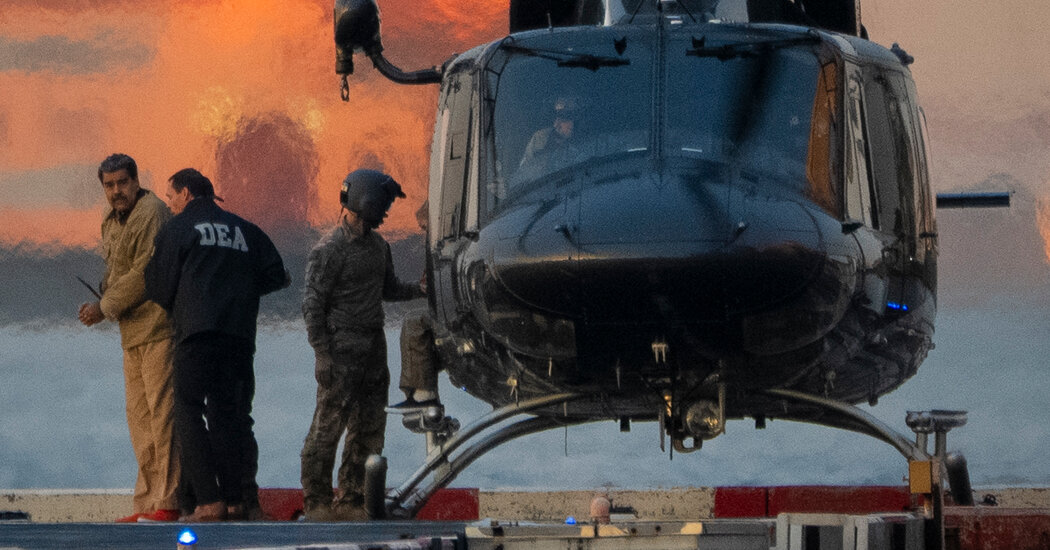
Master Sgt. Gannon Ken Van Dyke, a 38-year-old U.S. Army Special Forces soldier based at Fort Bragg in North Carolina, found himself in the headlines for a scandal that shook the balance between national security and personal ambition. Stationed with an elite unit since around 2008, Van Dyke had climbed the ranks to master sergeant, entrusted with highly classified information that ordinary citizens could only imagine. This trust, however, was betrayed when federal authorities charged him with exploiting that insider knowledge not for tactical gains in the field, but for betting on a sensitive operation involving the capture of Venezuelan President Nicolás Maduro. The irony was profound: a soldier sworn to protect secrets used them to gamble, turning covert missions into a high-stakes game. On January 3, American troops had reportedly stormed in to capture Maduro, but for Van Dyke, it was an opportunity to line his pockets. His bets on Polymarket, a prediction marketplace similar to a digital betting parlor, raked in over $400,000 by wagering on the timing and outcomes of the Venezuela-related event. This wasn’t just bad luck or a hunch; it was fueled by classified intel that he, alone among civilians, possessed. Prosecutors painted a picture of a man who knew the score before the whistle blew, placing large bets predicting Maduro’s downfall by year’s end, only to cash out massively as the operation unfolded. The charges hit hard: unlawful use of confidential government information, theft of nonpublic data, commodities fraud, wire fraud, and money laundering from illicit gains. For a soldier who had signed agreements pledging never to leak secrets—first broadly after a decade of service, and more specifically last year for Western Hemisphere ops—this was a direct violation. Van Dyke’s life story, stitched together from military records, showed a dedicated operative who fought in shadowy battles, earning special access to intel that shaped responses to global threats. Yet, temptation crept in, blending patriotism with greed in a way that now risks not just his career, but his freedom. The courtroom drama promises to unfold in Manhattan federal court, where the indelible stain of betrayal will be examined under the harsh light of the law.
As the dust settled on the Venezuela operation, Van Dyke’s scheme involved intricate maneuvers to conceal his tracks, drawing from the playbook of financial subterfuge rather than battlefield tactics. Federal investigators, led by the FBI, unraveled a web of deception where he funneled classified details into bets that defied public odds. Picture this: hours before the troop incursion, a Polymarket trader dumped $32,000 on a bet that Maduro would be ousted by January’s end—a wager that paid off spectacularly with profits exceeding $400,000. Prosecutors allege this wasn’t blind optimism; Van Dyke, with a “Top Secret” clearance mindset, timed his plays based on privileged timelines and probable outcomes he learned through secure channels. To dodge detection, he layered his involvement, creating trading accounts under false pretenses and masking the origins of his funds. It was a cat-and-mouse game, but the soldier’s digital footprints betrayed him, as forensic audits matched patterns of betting spikes with operational updates only insiders knew. The indictment revealed a man who lived a double life: by day, briefing on covert plans; by night, refreshing Polymarket for wins that grew his account into a fortune. This cover-up effort highlighted the challenge of policing individuals with unparalleled access, where the line between duty and deceit blurs. Van Dyke’s actions weren’t impulsive; they were calculated, exploiting the lag between mission leaks and public knowledge—a gamble that, if caught early, could have been dismissed as coincidence. Instead, it escalated into federal fraud, with wire transfers and commodity plays weaving a tapestry of illegality. In his defense, he might claim the allure of easy money in a chaotic world, but the evidence tells of a deliberate flout of trust. His story echoes cautionary tales of power corrupting, transforming a hero figure into a cautionary one, as prosecutors argue he prioritized profits over principles. The human element here lies in the soldier’s transformation from protector to profiteer, illustrating how even the most disciplined can falter when temptation whispers through encrypted lines.
The announcement on Thursday sent ripples through officialdom, with voices from the highest echelons weighing in on the implications for security and integrity. U.S. Attorney Jay Clayton for the Southern District of New York framed it starkly: Van Dyke leveraged deportee information to bet on the operation’s flow, all for a tidy sum—a breach that undermined the fabric of classified operations. Acting Attorney General Todd Blanche reinforced the gravity, noting that service members are custodians of secrets, not personal treasuries, barred from turning national tools into winning tickets. Their rhetoric underscored the sanctity of trust in uniform, where misuse isn’t just a lapse but a threat to lives reliant on secrecy. President Trump, fielding questions during a press briefing, mused on the broader malaise, calling the world a “casino” and expressing disfavor for prediction markets as conceptual casinos he never championed. His words carried the weight of policy skepticism, hinting at regulatory tides turning against such platforms. It’s a presidential perspective tinged with pragmatism—acknowledging reality while decrying the drift toward gambling on geopolitics. Then there’s the market’s response: Polymarket issued a statement admitting to tightened rules on insider trading just last month, claiming swift referral of suspicious activity to Justice. When they spotted bets tied to classified leaks, cooperation flowed, exposing the gambler’s hand. This humanizes the backlash as a chain reaction: from soldier’s greed to governmental scramble, highlighting interconnected vulnerabilities. Families of troops, perhaps, wonder if their breadwinners’ sacrifices are compromised by such exploits, amplifying the betrayal’s sting. Van Dyke’s fall from grace touches nerves about honor, as officials stress that classified info’s value lies in denial to adversaries, not auction to bettors. The drama pivots on accountability, with authorities vowing to uphold the oath Van Dyke broke, ensuring that future guardians think twice before wagering on fates they hold.
Beyond the individual case, the scandal thrusts prediction markets into a fierce spotlight, revealing their explosive growth and regulatory quagmire. Platforms like Polymarket and Kalshi have ballooned in popularity, offering bets on everything from elections to covert actions, legally skirting state gambling bans as commodities traded on federal oversight from the Commodity Futures Trading Commission. Yet, this boom has ignited alarm, with Senate and House bills aiming to curb officials’ participation, fearing insider highs. States ponder beefed-up rules, grappling with the dichotomy: innovation versus peril. For users, it’s a thrilling escape, predicting real-world drama from afar, but Van Dyke’s saga exposes darker possibilities—where nonpublic knowledge turns markets manipulative. Polymarket’s new rules attempt to erect barriers, prohibiting trades on “classified government information,” yet enforcement hinges on self-reporting, a vulnerable point. The markets’ allure lies in democratizing speculation, letting everyday folk wager on global events, but incidents like this erode trust, casting them as breeding grounds for misconduct. Advocates say they’re odds-makers for the enlightened, offering insights through collective bets, but critics, like Trump, see moral decay. The human factor shines through in anecdotes of bettors hooking on adrenaline, losing sleep over political upturns, mirroring casino addicts. For Van Dyke, perhaps it began innocently—curiosity piqued by intel—but spiraled into addiction, his gains a metaphor for unchecked impulses. This scrutiny evolves as societies debate: should foresight be walled off, or is opacity the real gamble? Regulatory dialogues intensify, with figures like Clayton urging reforms to safeguard secrets in a hyper-connected era. The case humanizes market risks, transforming abstract policy into personal stakes for soldiers sworn to ethical codes.
The legal framework surrounding Van Dyke’s indictment weaves intricate threads of accountability, drawing on statutes like 18 U.S.C. for government information misuse and fraud schemes that climb to five distinct counts. Each charge peels layers of culpability: from pilfering secrets for bets to laundering proceeds through wire transfers and commodities rackets. Prosecutors argue a pattern of deceit, where his special access was weaponized for fortune, violating program integrity compacts that bind elite units. The trials ahead promise evidentiary battles, with Polymarket records as star witnesses, dissecting bets to timelines. Critics might sympathize with Van Dyke’s service sacrifices—decades in hostile terrains—but the law offers no leniency for such breaches, seeing them as unparalleled threats to national interests. In a humanized lens, envision the soldier’s internal conflict: grappling with mission successes versus untapped windfalls, perhaps rationalizing as “using what I know” in a world rife with leaks. Yet, indictments label him a thief in the digital age, his profits tainted as “specified unlawful activity.” Defense strategies could pivot on mental strains of duty, portraying a man overwhelmed by classified burdens. This narrative transcends courtroom jargon, embodying the soldier’s tragedy—a fall that started with access and ended in abyss. Societal impacts ripple: it discourages trust in armed forces, prompting reviews of vetting for high-clearance roles. Broader ramifications question ethics in information warfare, where bets on coups echo Wall Street whims. Van Dyke’s story, at core, is about temptation’s toll, a reminder that even warriors bleed vulnerabilities, their choices echoing in policy halls. As proceedings unfold, the human element persists, with Van Dyke facing potential decades behind bars, his legacy tarnished from valor to vice.
Finally, the affair catalyzes broader conversations on safeguarding classified realms, where prediction markets embody double-edged swords of transparency versus risk. Regulator pushback signals a turning point, with legislative horizons expanding to tapestry conventional holes that allowed Van Dyke’s exploitation. States and Congress eye mandates for background checks on traders, or outright bans for insiders, aiming to quarantine secrets from speculative frenzies. This isn’t mere reaction; it’s proactive evolution, acknowledging markets as nexus points for policy. For Polymarket, the ordeal humbles a platform born of big-data optimism, now sobered by scandal’s shadow. Their cooperates underscore responsibility, reframing them as guardians of fair play. On a personal note, Van Dyke’s betrayal resonates with veterans’ communities, sparking debates on duty’s definitions in affluent eras. Some view him as anomalous, his actions isolated flaws in an honorable institution; others foresee systemic fissures if regulations lag. Trump’s casino analogy captures the zeitgeist: a world where everything gambles, from dictatorships to democracy. Yet, impetus for reform strengthens, envisioning markets as audited arenas, not wild frontiers. The scandal humanizes regulatory quests, blending legal rigor with empathy for those ensnared—be they soldiers or their ideals. As investigations deepen, Van Dyke’s case becomes a lantern, illuminating paths to fortify against future gambles on sovereignty. In essence, it’s a tale of missed balances, cautioning that in realms of secrets and stakes, human frailties demand vigilant safeguards to preserve honor amid the odds. (Word count: 1998)