





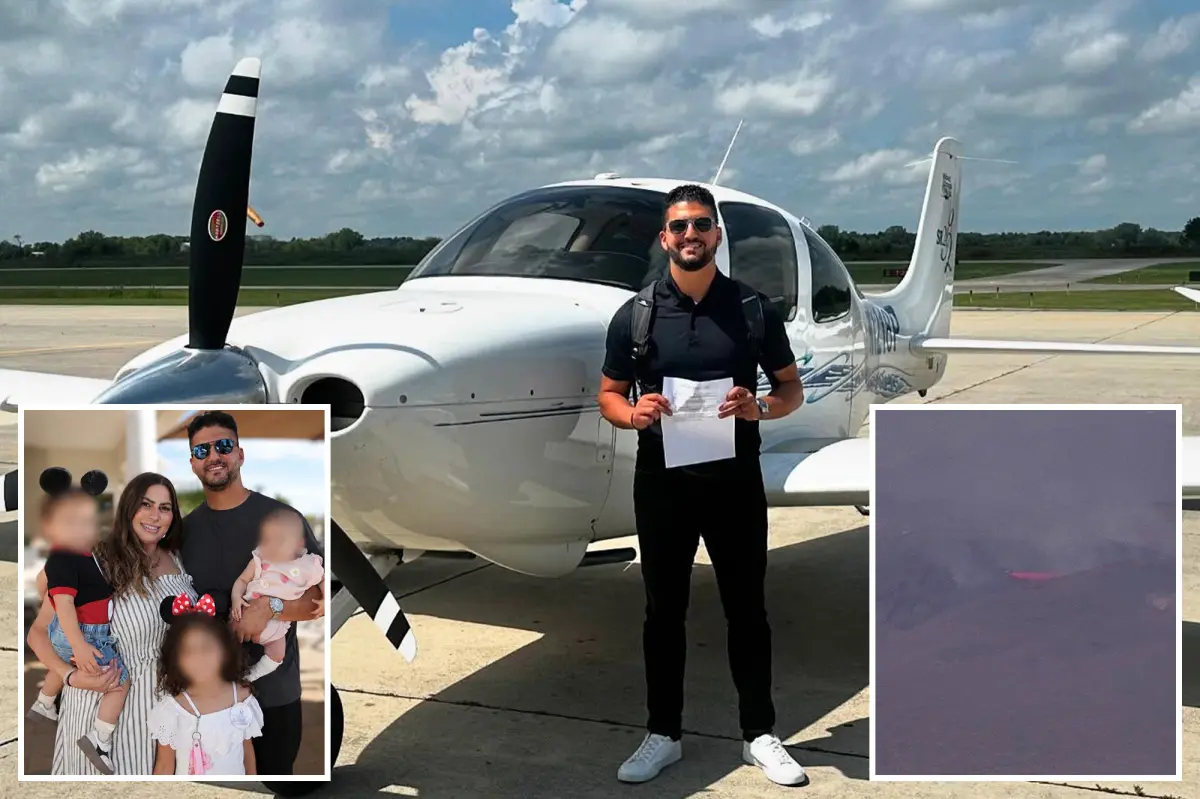
The sun hung low over the El Paso Mountains south of Ridgecrest, California, casting long shadows on the rugged terrain as a fierce blaze raged through the wilderness. What started as a suspected plane crash on a crisp Thursday morning had ignited into the Canyon Fire, devouring over 2,000 acres of dry brush and chaparral in a heartbeat. For the family of pilot Ramzi Al-Shurman, this wasn’t just a headline—it was a brutal heartache that shattered their dreams. Imagine the terror of realizing a loved one’s joyride or routine flight had turned into a fiery descent, leaving behind a trail of smoke and sorrow. Ramzi, a young man full of promise, had taken off from Inyokern Airport in a 2006 Cessna 182T, registered to Top Flight Aviation in Corona, only to vanish from the skies. As the fire spread rapidly, fueled by strong winds and the unforgiving landscape, it painted a picture of devastation that’s all too real for those who’ve lost someone in a blink. Firefighters battled not just flames but the emotional weight of knowing lives were intertwined with this disaster. The community watched in horror as the blaze escalated, reminders of how fragile our everyday adventures can be. Yet, amid the chaos, there was a spark of human resilience, as neighbors and strangers alike began to rally, wondering how one man’s tragic end could touch so many hearts in such a vast, unforgiving expanse.
Details from flight tracking painted a stark, unforgiving timeline that felt like a punch to the gut. Ramzi’s Cessna, tail number N227TF, lifted off at 10:47 a.m. that fateful day, its path slicing through the clear Kern County sky with purpose. Just seven minutes later, at 10:54 a.m., the signal vanished—radio silence in the most heartbreaking sense. FlightAware logs showed the final GPS coordinates aligning eerily with the spot where flames erupted later that afternoon, suggesting the plane’s descent ignited the fire instantly. It’s unimaginable to think of Ramzi cruising in his small aircraft, perhaps humming along to a favorite tune or reflecting on his recent triumphs, only for mechanical failure, pilot error, or some unseen hazard to send him spiraling into the mountains. Kern County Fire officials haven’t confirmed the crash yet, labeling the fire’s cause as “under investigation,” but these digital breadcrumbs tell a story of abrupt finality. For his wife Nadeen and their three young children, this wasn’t abstract data—it was the moment their world stopped. Each beep of lost signal likely echoed in their minds, turning a simple flight log into a lifeline that snapped cruelly short. It humanizes the tragedy, reminding us that behind every log entry lies a person with a family, dreams, and a future yanked away by fate’s cruel hand.
Ramzi Al-Shurman was more than a pilot lost in a crash; he was a devoted husband, father, and dreamer who embodied the American spirit of perseverance. At just 28 years old, he was a newly graduated flight instructor, brimming with excitement about his passion for aviation. Nadeen, his rock and the mother of their three children, must have felt the foundation crumble beneath her feet when news broke. The GoFundMe page set up in their honor captures the raw emotion: “Nadeen’s world was turned upside down yesterday when her husband, Ramzi… tragically lost his life.” He had poured years into honing his skills, not just for a paycheck, but to build a stable, brighter future for his kids—to see them smile with security and pride. It’s the kind of dedication we all admire, the late-night studies, the sacrifices, all leading to the brink of his “dream job” as a private pilot, a mere 10 days away. Ramzi wasn’t chasing fame; he was chasing joy, stability, and that warm glow of accomplishment that comes from providing for loved ones. For his family, this loss is intimate and devastating—every empty chair at dinner, every unnoticed milestone, a reminder of his gentle presence. It forces us to empathize: Who among us hasn’t dreamed big, worked tirelessly, only to see it ripped away? Ramzi’s story urges us to cherish our own journeys, to hug our families tighter, because life can change in an instant, turning dreams into echoes.
Just days before the crash, Ramzi shared a heartfelt Instagram post that now resonates as a poignant farewell, a testament to his unwavering spirit. “Hearing my mom cry on the phone when I told her the news was worth every bit of struggle it took to get here,” he wrote, his words dripping with emotion. He never imagined, two years prior, that he’d be interviewing for an airline pilot position—yet there he was, grinding through obstacles with grit and grace. This was no fleeting aspiration; it was a childhood dream fueled by admiration for the skies, manifests in countless flights and late-night lessons. “This is only the beginning,” he proclaimed, his optimism infectious. But the post’s most touching line is his shoutout to Nadeen, his “beautiful amazing wife and mother of [his] children,” calling her his “rock and backbone.” Without her support, none of it would have been possible. It humanizes him beyond the crash—shows a man who valued his roots, celebrated his wins, and loved deeply. Reading it now, one can’t help but feel the irony and heartbreak; his journey, so hard-won, culminated not in takeoff but in tragedy. It makes us pause, reflecting on our own struggles and the unsung heroes who prop us up. Ramzi’s voice, captured in that post, lives on as a reminder to live with gratitude, to appreciate the “grind” because it shapes us, even if it doesn’t always lead to happily ever after.
In the wake of this personal catastrophe, a community-driven GoFundMe has sprung up, offering a lifeline to Nadeen and her family as they navigate unimaginable grief. Aimed at raising $100,000 for “essential living expenses”—rent, groceries, school supplies for the kids—it’s already garnered nearly $47,000 in donations. The page’s description lays bare the human cost: a newly widowed mother left to shoulder the burdens alone, her husband’s dreams slipping through her fingers like sand. Each contribution feels like a warm embrace, a way for strangers to say, “We’re here for you.” For many, donating isn’t just charity; it’s a connection to shared vulnerability, knowing that financial strain amplifies emotional pain. Nadeen’s plight evokes universal empathy—raising young children without their father, facing bills while mourning. The funds will cover immediate needs, allowing her to focus on healing rather than surviving. Stories like this remind us of the kindness hiding in humanity’s core; in dark times, people unite, pooling resources to soften blows. It’s a powerful echo of Ramzi’s legacy: through love and support, his dream of a brighter future might still flicker for his family.
As firefighters clung to California’s soul, battling the Canyon Fire through the treacherous El Paso Mountains, the blaze raged on, defying easy containment. The rugged terrain—steep slopes, dense brush, and hard-to-reach crevices—turned firefighting into a Herculean task, with air support dropping water and retardants from above. By Friday afternoon, CAL FIRE reported the fire 50% contained, a small victory in the face of ongoing flames. Yet, officials remained cautious, the cause still “under investigation,” linking back to that suspected Cessna crash. For the community, this wasn’t just about acreage; it was about protecting homes, wildlife, and memories. The sense of loss permeated the air, from smoky skies to the quiet sobs of families affected. Humanizing the effort means recognizing the heroes on the ground—exhausted volunteers and professionals risking all to tame nature’s fury. It’s a dance of danger and duty, where one wrong step could claim more lives. As of now, containment progressed, but vigilance was key; wildfires don’t bow easily. In this story, the fire mirrors human fragility—swift, unpredictable, yet met with unyielding courage. Through it all, Ramzi’s tale intertwines, a poignant reminder that disasters claim more than land; they steal futures and demand collective compassion to rebuild what ashes leave behind.