


-
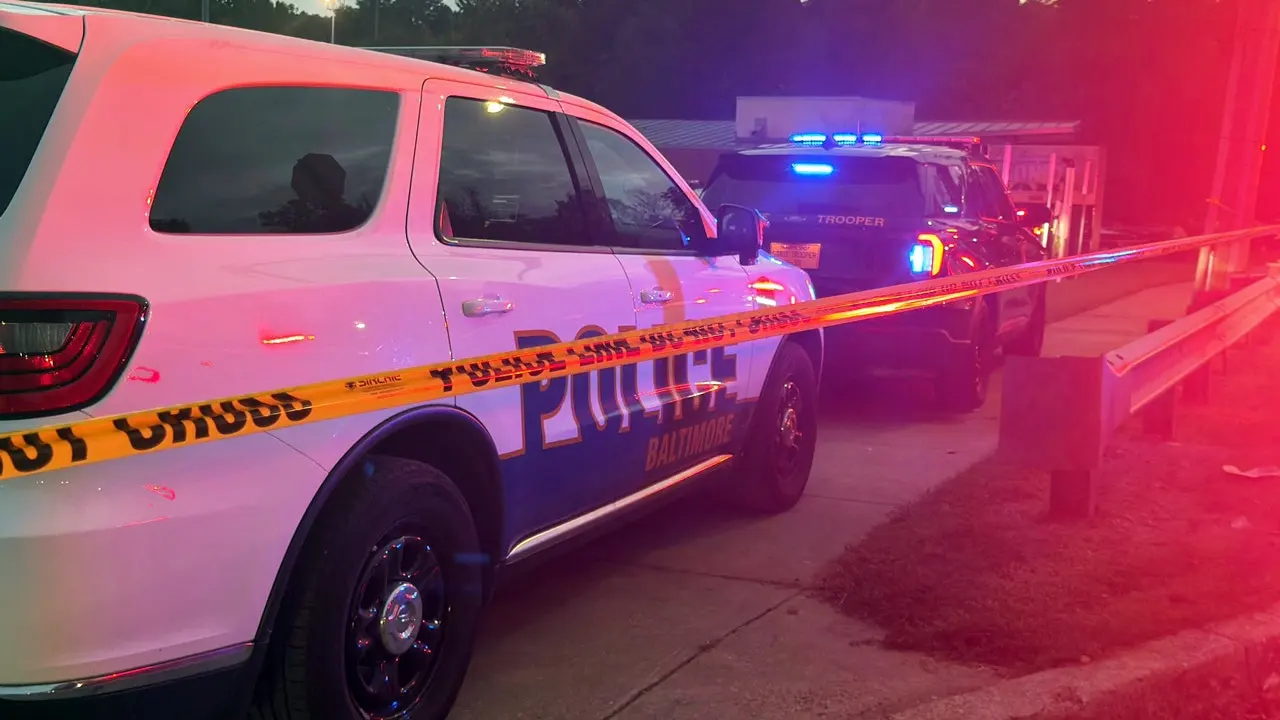
On a Saturday afternoon that should have been filled with the sounds of children laughing, cheerleaders practicing their routines, and parents cheering from the sidelines, a Baltimore community was instead shattered by gunfire. The scene was Leon Day Park, where a youth football league had gathered for its homecoming event—a day meant to celebrate young athletes, teamwork, and neighborhood pride. But what unfolded was a tragedy that has left a family forever changed and a city searching for answers. According to Baltimore Police, a 12-year-old girl was caught in the crossfire of a shootout between two adult men and was later pronounced dead at a hospital. Three adults also suffered gunshot wounds during the chaos, and all were reported in stable condition as of Saturday evening. Police Commissioner Richard Worley told reporters that the violence began as a dispute over a parking space—an argument so small and so avoidable that it seems almost incomprehensible that it would end with a child’s life being taken. The suspects, described as adult men, remained at large late Saturday night, and detectives were actively searching for them as the community reeled from the senseless loss.
-
The details that emerged from the investigation painted a picture of a routine evening suddenly turned violent. Officers were dispatched to the 1200 block of North Franklintown Road at around 6:15 p.m. after multiple calls reporting gunshots. When they arrived, they found a 25-year-old woman with an apparent gunshot wound and the 12-year-old girl nearby. The child was rushed to a hospital, but medical personnel could not save her. Two other victims—a 28-year-old man and a 23-year-old man—arrived at area hospitals on their own, seeking treatment for their injuries. Commissioner Worley explained that the initial evidence suggested an argument between two men, both of whom opened fire on each other. “What we know is that there was some type of argument between two cowards, and of course, they both opened fire on each other,” he said. “In the crossfire, a 12-year-old little girl who was probably down there watching football was shot and killed.” The casual cruelty of that scene—a parking dispute erupting into gunfire at a youth sporting event—left even seasoned law enforcement officers shakenaren’t. It was, as Worley put it, a display of cowardice that turned a playground into a war zone and stole a future from a community that had gathered to give its children something positive to do.
-
As news of the shooting spread, shock and grief rippled through Baltimore’s neighborhoods and beyond. By late Saturday evening, police had not announced any arrests, and investigators were pleading with the public for help in identifying the two gunmen. The investigation was in its early stages, but the broad outlines of the tragedy were already clear: two adults chose to settle a trivial disagreement with guns, and an innocent child paid the ultimate price. The surviving victims—the 25-year-old woman, the 28-year-old man, and the 23-year-old man—were being treated for their wounds and were expected to survive, but their physical recovery would likely be accompanied by deep emotional trauma. For the family of the 12-year-old girl, there was no such relief. She was described as a young girl who was simply present at a community event, likely excited to watch the game and enjoy the day with friends. Instead, she became another statistic in a seemingly endless cycle of gun violence that continues to haunt American cities. Police asked anyone with information to contact homicide detectives or Metro Crime Stoppers, offering anonymous tips as a way to encourage witnesses to come forward without fear of retaliation.
-
Baltimore Mayor Brandon Scott addressed the public with an emotional intensity that reflected the mood of a grieving city. His voice carried the weight of a leader who had seen too many of these moments, who had stood before too many families shattered by bullets. “Two grown men got into an argument and now a 12-year-old is gone,” he said. “What happened out here today is one of the most disgusting things I’ve ever seen in my life.” Scott did not stop at expressing anger; he spoke of the girl’s life, her promise, and the enduring pain that her death would inflict on everyone who knew her. “We’re never gonna see her full potential,” he said. “Her family’s gonna be hurting for this for the rest of their life. Her classmates are going to be hurting, her community’s going to be hurting.” Those words resonated far beyond the podium where they were spoken. They were a reminder that behind every headline about gun violence there is a human being—a child who laughed, dreamed, went to school, and looked forward to growing up. That child will never grow up now. She will never have a first job, a wedding, or a family of her own. Her classmates will return to school without her, and her neighborhood will always bear the scar of a Saturday that turned unimaginably dark.
-
The shooting at Leon Day Park is not an isolated incident, but it carries a particular kind of anguish because of where it happened. Youth football games are supposed to be sanctuaries—places where kids learn discipline, teamwork, and resilience under the guidance of coaches and the watchful eyes of parents. They are held in parks that belong to the community, on fields where children are supposed to be safe from the dangers of the streets. When gunfire erupts in those spaces, it strikes at the very foundation of community trust. Police Commissioner Worley’s description of the shooters as “cowards” spoke to the frustration of law enforcement and residents alike. There is no honor in firing a gun during a dispute over parking. There is no justice in letting a child die because two adults could not walk away. The tragedy also reignites broader conversations about gun violence, conflict resolution, and the urgent need for change—not just in Baltimore, but in every city where arguments too often end in bloodshed. Community leaders, clergy, and activists would undoubtedly call for renewed efforts to address the root causes of such violence, from poverty and lack of opportunity to the easy availability of firearms. But for now, the immediate priority is finding the killers and holding them accountable for tearing apart the lives of a family and a community.
-
In the aftermath of the shooting, the park that had been filled with laughter and the cheers of young athletes fell silent. The victim’s family faces an unimaginable future, one in which every Saturday will remind them of the child they lost. Her school community will grieve alongside them, as will the teammates and friends who saw her as a bright, joyful presence. And Baltimore—a city no stranger to hardship—must find a way to mourn while also demanding justice. The names of the suspects have not been released, and the investigation continues, but the public has a role to play. Anyone with information is urged to call homicide detectives at 410-396-2100 or Metro Crime Stoppers at 1-866-7LOCKUP. Anonymous tips can be submitted through Metro Crime Stoppers of Maryland secret. It is perhaps the smallest gesture anyone can make, but it could be the one that brings closure to a grieving family. Ultimately, the legacy of the 12-year-old girl should not be the violence that took her life, but the reminder that every child deserves the chance to grow up in a world where a parking spot is never worth a life. Her memory will linger in the empty seat at family dinners, in the silence of a classroom, and in the hearts of all who stood witness to a tragedy that should never have happened. Let her death not be in vain—let it move a city, and a country, to choose peace over hatred, and to protect its children at all costs.