


Deadly Delivery: How a Consulate Shooting Exposed the Dark Rise of Hitmen as Gig Workers
A Reckoning on a Quiet Street
The first sound was not a car backfire, much as some residents later tried to convince themselves. It was a sharp, metallic crack that cut through the morning hum of traffic and street vendors, followed by another, and then the unmistakable wail of sirens converging from every direction. A shooting at the U.S. Consulate had turned an otherwise ordinary weekday into a scene of chaos, and within minutes, the block was sealed off by armed security teams and local police. Windows were checked, phones were pulled out, and the neighborhood held its breath. What initially appeared to be an act of political or ideological violence, however, has slowly come into sharper focus, and the story now weaving its way through official channels is far more unsettling, even as it is more commercial.
According to law enforcement officials familiar with the preliminary investigation, the attack was not the work of a coordinated terrorist network or a lone ideologue driven by a manifesto. Instead, the alleged gunman appears to have been a young man with no apparent political ties, no military training, and no history of radicalization. He was, in the most technical but grimly fitting terms, a freelancer. Investigators are now exploring whether the shooting at the U.S. Consulate was, in fact, a paid assignment, part of a growing and deeply troubling trend in which criminal organizations treat violence as a task to be outsourced, priced, and performed by a new generation of hired hands. The words used inside law enforcement circles are still careful, but the pattern emerging is unmistakable: young guns for hire operating as gig workers in the underworld economy, recruited through encrypted apps, paid in digital currency, and discarded as soon as the job is done.
The events of that morning have moved well beyond the immediate security response. It has become a prism through which investigators, criminologists, and ordinary residents are beginning to examine a larger shift in the nature of crime itself. For years, the phrase “gig economy” has described food deliveries, ride-hailing services, and freelance design work. But there is a darker marketplace running beneath the surface, one where a driver is not paid to deliver a package but to conduct surveillance, intimidate a witness, or, in the most extreme cases, take a life. The U.S. Consulate shooting is being cited by some experts as a stark example of this new criminal model, one that is lower-cost, harder to trace, and increasingly populated by teenagers and young adults for whom the ethical barriers have been quietly dismantled by convenience, financial pressure, and the dehumanizing anonymity of the internet.
A Neighborhood Remembering Its Scars
The consulate building itself is a symbol of order and diplomatic permanence, its walls fortified and its entrances guarded with the kind of quiet vigilance that has become standard in the post-9/11 era. But the neighborhood around it carries a different history, one that has only recently begun to shed the weight of a troubled past. Older residents remember when the streets were not safe to walk at night, when gunfire was not an anomaly but an occasional feature of the local soundscape. The area has undergone a visible transformation over the past two decades, with cobblestone lanes now lined by coffee shops, boutique stores, and apartment buildings populated by young professionals and young families. The violence that once defined the district had receded into memory, at least until the morning of the consulate shooting.
When the first reports of gunshots surfaced, the trauma returned with emotional force. Parents scrambled to pick up their children from nearby schools. Shopkeepers pulled down their metal shutters. On social media, residents shared hazy cellphone videos and anxiously debated whether this was an isolated incident or the beginning of a return to something they had hoped was gone. The psychological whiplash was immediate, because the neighborhood had done the hard work of reinventing itself. It had welcomed new investment, new businesses, and a new demographic without erasing the stubborn pride of those who stayed through the rough years. To see it thrust back into the headlines for a shooting at the U.S. Consulate was more than an inconvenience; it was a reopening of old wounds.
Yet the response from the community was telling. Rather than retreating into fear, many residents began asking a different kind of question. They wanted to know who the gunman was, why he was there, and, above all, why he appeared to be so young. The details that began to leak through official statements and off-the-record conversations were unsettling in their mundaneness. The alleged attacker did not seem to be operating out of a grand ideology. He was not part of a sleeper cell. He had no significant criminal record and, by most accounts, came from an ordinary background. What he had, according to what investigators were beginning to piece together, was a connection to a digital underworld where criminal tasks are posted, accepted, and completed with the same transactional logic as a food delivery order placed through a smartphone app.
The Gunman Was Not a Terrorist — He Was a Freelancer
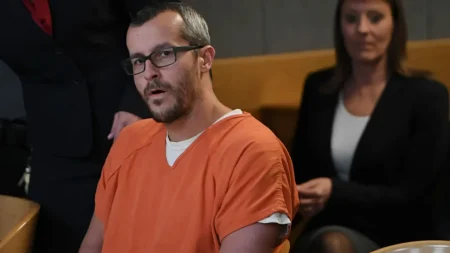
As the investigation deepened, a portrait emerged that defied the standard media template. The alleged gunman was not a veteran of conflict zones or a graduate of extremist networks. He was, by several accounts, barely out of his teens, a young man who had drifted through low-wage jobs and had been looking for a way out of mounting financial obligation. According to sources close to the investigation, he was contacted through an encrypted messaging application by an individual using a pseudonym and a placeholder profile. The message was not emotional or ideological. It was operational. There was a location to observe. There was a time window. And there was a price.
The payment, investigators believe, was to be delivered in a form not easily followed by traditional banking oversight, possibly a transfer of untraceable digital currency. The task, as best as officials can determine, involved a gunshot outside the U.S. Consulate, although whether the intended target was diplomatic personnel, a bystander, or simply the symbolic act of firing at a government building remains unclear. What has become increasingly evident is that the young man was treated, in the chilling language of this new marketplace, as a replaceable service provider. He was not part of a criminal family. He had no loyalties to a syndicate. He was a contractor, contracted for a single job and expected to vanish afterward.
This is what distinguishes the phenomenon from traditional contract killings. While the hired assassin has existed for as long as organized crime itself, the new iteration is fundamentally different in structure and scope. In the old model, a seasoned killer might be recruited after years of proving loyalty, nurtured within a mafia hierarchy, and entrusted with sensitive tasks. In the new model, the barriers to entry have collapsed. A young person with a smartphone and a desperate enough financial situation can be drawn into what some criminologists are calling the “criminal gig economy.” The assignments are broken into smaller pieces, narrowly defined, and distributed across a wide pool of potential workers. This limits what any single individual knows about the broader operation, shields the organizers from exposure, and makes it increasingly difficult for law enforcement to follow a clear chain of command.
Rent-a-Gun: The Criminal Gig Economy Goes Mainstream
The phrase “gig work” was once reserved for flexible, side-income opportunities, the kind that seemed to promise freedom from the nine-to-five grind. Today, it has evolved into a term that encompasses everything from ride-sharing and grocery delivery to graphic design and consulting. But on the dark fringes of the digital economy, the same logic has been adopted by criminal enterprises looking for efficiency, scalability, and risk transfer. Instead of maintaining a permanent crew of enforcers, which costs money and attracts attention, organized crime groups can now post individual tasks, vetted informally through private channels, and filled by anonymous young workers who possess a troubling blend of ambition and vulnerability.
These young guns for hire are not traditional hitmen. They often lack firearms training, have never fired a weapon at another human being, and may not fully comprehend the gravity of the assignment they have accepted until it is too late. They are, in many cases, foot soldiers hired for a single moment of violence, working without benefits, without protection, and without any clear sense of the larger organization they are serving. The irony is that, like legitimate gig workers, they are expected to provide their own tools, accept the terms without negotiation, and absorb all the risk. And, like legitimate gig workers, they are seen by those above them as interchangeable, optional, and ultimately expendable.
The emergence of this phenomenon has been accelerated by several converging factors. The first is financial pressure. Particularly in countries grappling with high youth unemployment, inflation, and a scarcity of decent jobs, the promise of a quick payout can be difficult to resist. A young person may justify their involvement by telling themselves that they are only doing reconnaissance, only carrying a package, only making a threat. The moral distance is intentionally maintained, step by step, until the line is crossed. The second factor is technological. Encrypted messaging apps, anonymous browsers, and digital currencies allow criminal recruiters to identify, groom, and pay their workers without ever meeting them in person. The relationship can begin and end entirely online, leaving no physical trace and creating a daunting challenge for law enforcement.
The third factor, and perhaps the most troubling, is the cultural normalization of gig-style arrangements. Young people have grown up in a world where tasks are dispatched and completed through apps, where a stranger in a car picks them up, where a meal is left at their door by an unknown delivery person. The transactional nature of modern life has, in some way, accustomed them to the idea that almost any task can be outsourced, priced, and completed. Criminal organizations have recognized this and adapted their recruitment strategies accordingly. They do not ask a young person to become a lifelong criminal. They ask only for a few hours, a singular job, and a cryptocurrency wallet. The shooting at the U.S. Consulate, according to investigators, may represent one of the first cases in which this model has brought armed violence directly to the doorstep of a major diplomatic mission.
Police Play Catch-Up in a Digital Underworld
For law enforcement, the implications are profound and unsettling. Traditional investigative techniques, such as wiretaps, informants, and physical surveillance, are still essential, but they are no longer sufficient in a world where a murder can be arranged through a disappearing message and paid for with the click of a button. Detectives working on the U.S. Consulate case have had to coordinate with federal agents, intelligence analysts, and digital forensics experts in an effort to trace the recruitment chain, identify the encrypted platform used, and follow the financial trail left by the payment. It is slow, painstaking work, and every day, the digital breadcrumbs become more difficult to recover.
Several agencies have begun to develop specialized units dedicated to understanding the criminal gig economy. These teams are trained to monitor hidden marketplaces, infiltrate encrypted communication channels, and track the movement of digital assets. But the challenge is immense. The same privacy features that appeal to journalists, political dissidents, and ordinary users also protect criminals. The same decentralized ledger systems that offer financial freedom also make money laundering nearly untraceable. And the same social media platforms that connect friends and families can be used to prey on vulnerable young users, testing their willingness with smaller assignments before moving on to more serious acts of violence.
There is also a broader social dimension to the problem. Police alone cannot prevent a generation from being recruited into the underworld economy if they are drowning in debt, uncertain about their futures, and disconnected from meaningful opportunity. Community programs, better access to education, job training, and mental health services are all part of the response, but they require political will and sustained funding. In the aftermath of the consulate shooting, local leaders have called for a renewed focus on youth intervention. They argue that the young gunman, whatever his guilt may be, is also a victim of a social ecosystem that allowed him to reach the point where firing a weapon in public seemed like a viable solution to his problems. That argument is controversial, but it has opened a necessary conversation about prevention rather than only punishment.
Investigation meetings have reportedly included not just hostage and counterterrorism specialists but also financial crime analysts who recognize that the killing, in this case, was as much a financial transaction as an act of violence. The price tag, the payment method, and the contracted nature of the task all point to a system that treats human life as a line item in an invisible balance sheet. The U.S. Consulate shooting has become a test case for how modern law enforcement understands organized crime. It is no longer enough to ask who pulled the trigger. Investigators must also ask who commissioned the job, how the payment was structured, and what digital infrastructure enabled the transaction. The answer, in many cases, leads to a web of anonymous brokers operating in a space where borders are irrelevant and traditional legal frameworks lag far behind.
A Wake-Up Call That Can’t Be Ignored
The immediate security situation has been resolved, and the consulate has returned to its normal rhythm, though with heightened awareness. The neighborhood, too, has begun to exhale, even as the memory of the gunshots lingers in the minds of those who heard them. But the wider significance of the incident cannot be overstated. The shooting at the U.S. Consulate was not an isolated anomaly. It was a signal, a warning, and, in many ways, a glimpse into the future of crime. The underworld economy is evolving, and it is doing so in parallel with the legitimate economy, adopting its language, its technology, and its efficiency. The gig worker who delivers food and the gig worker who carries out violence may be separated by more than just circumstance, but they share a structural reality: both are hired for a specific task, offered little stability, and expected to bear the full weight of the risk.
What makes this new frontier of crime especially difficult to confront is that it does not rely on the traditional loyalties that once defined organized criminal networks. There are no codes of silence, no family ties, no shared histories that bind these young gunmen to their employers. The relationship is purely commercial and, therefore, dangerously disposable. A young hitman hired as a gig worker is less likely to be protected by the organization that hired him, and that organization, in turn, is less likely to be exposed if he is caught. It is a model built on compartmentalization and distance, and it has proven devastatingly effective.
There are no easy solutions. Better digital security, stronger financial regulations, and more sophisticated law enforcement cooperation across borders will all be necessary. But so too, will be the harder work of addressing the conditions that make young people vulnerable to recruitment. As the neighborhood moves forward, citizens are left with a sobering realization: the threat is not always a shadowy figure in a distant country. Sometimes it is a young person who lives nearby, who came of age in the digital world, and who crossed a line because the money seemed too good and the moral weight of the action seemed too abstract. The gig economy has created a generation of workers who perform tasks, complete assignments, and move on. Now that same generation must confront the uncomfortable truth that some tasks should never be accepted, no matter how swift the payout, and that the underworld economy is not a video game but a place where real lives are lost. The bullet that landed near the consulate did not just shatter glass. It shattered the illusion that the gig economy’s dark side was someone else’s problem.