






The Dissident Doctor Who Exposed Soviet Psychiatry’s Dark Side
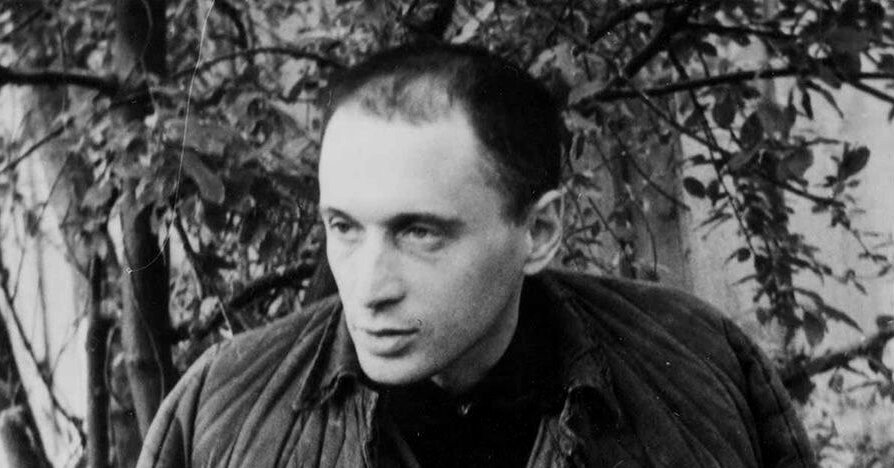
In the chilly spring of May 11, 1972, Soviet authorities stormed the modest Kyiv apartment of Semyon Gluzman, a rising psychiatrist in his late 20s. Officially, he faced charges of “anti-Soviet agitation and propaganda,” a catch-all accusation that echoed through the oppressive halls of the Kremlin’s machinery. But beneath the veneer of legal jargon lay a far graver offense—one that underscored the regime’s fear of dissent. Gluzman had dared to challenge the Soviet Union’s weaponization of psychiatry, a tool twisted to silence political opponents under the guise of medical care. As the first physician to publicly condemn this abuse, his actions set off ripples that would challenge the very foundations of Soviet repression. This wasn’t just about one man’s arrest; it was a pivotal moment in the Cold War struggle for human rights, where medicine met ideology in a brutal clash.
Gluzman’s path to infamy began a year earlier, when Andrei Sakharov, the Nobel Prize-winning physicist and vocal dissident, sought his expertise. Sakharov needed Gluzman to evaluate General Petro Grigorenko, a Ukrainian-born military leader who had been locked away after criticizing the deportation of Tatars from Crimea to Central Asia. Grigorenko had been slapped with a diagnosis of “sluggish schizophrenia,” a fabricated ailment concocted by Moscow’s psychiatrists in the 1950s. This pseudo-condition was ingeniously vague—slow to manifest, undetectable to the untrained eye, and conveniently tied to any behavior deemed subversive, like questioning the Communist Party. It allowed the state to classify dissent as mental illness, justifying indefinite confinement in psychiatric wards. Gluzman, piecing together his assessment from secondhand interviews, military records, and a smuggled copy of the diagnosis, concluded that Grigorenko was perfectly sane. Years later, Grigorenko’s emigration to the United States vindicated this judgment, but at the time, Gluzman’s report was explosive. Circulated underground by Sakharov, it exposed the hollowness of Soviet psychiatry, declaring it a branch of medicine, not penal law. This simple assertion cost Gluzman seven grueling years of hard labor and exile, forever marking him as a hero in the eyes of human rights advocates worldwide.
During his incarceration at the infamous Perm 35 camp in the Ural Mountains, Gluzman transformed adversity into activism. The camp, notorious for its harsh conditions and political prisoners, became a crucible for his resistance. Teaming up with fellow inmate Vladimir Bukovsky, a writer known for his Samizdat publications, they crafted “A Manual on Psychiatry for Dissidents.” Scrawled on factory-made canvas scraps smuggled out in bags, the 22-page guide offered practical advice to evade psychiatric interrogation: cite literature, reference authorities, avoid personal anecdotes. Translated swiftly into English, German, and beyond, it captivated international media, highlighting the absurdity of diagnosing difference as disorder. Gluzman’s refusal to retract his Grigorenko findings or cease his critiques prolonged his suffering—he endured solitary confinement for challenging prisoner treatment. Yet, this defiance elevated him to international stardom; figures like Sakharov lobbied Western governments for his release, cementing Gluzman’s place in the human rights tapestry. His story wasn’t just about survival; it was a testament to the power of intellectual courage against totalitarian mind-games, inspiring generations to question authority.
Born on September 10, 1946, in Kyiv, Semyon Gluzman grew up in a household of healers—his parents, Frischel Gluzman and Galina Mostovaya, were both doctors. This early immersion in medicine shaped his worldview, leading him to the Kyiv Medical Institute, where he graduated in 1970. Even before his brush with fame, suspicions shadowed him; he rebuffed assignments at hospitals known for housing political detainees, signaling his nascent rebellion. In 1974, he married Irina Piivskaya, and together they had a daughter, Julia. Upon his return from Siberian exile in 1982, barred from psychiatry, he toiled as a locksmith before gaining permission to practice as a pediatrician—a job he embraced with quiet dignity. Post-Communism, Gluzman emerged as a beacon of reform, navigating the chaos of Ukraine’s independence. His life embodied resilience: from prison survivor to steadfast advocate, he lived modestly, his unassuming apartment a far cry from the hero’s pedestal others imagined for him.
The collapse of the Soviet Union in 1991 unleashed new possibilities for Gluzman, who spearheaded efforts to overhaul Ukrainian psychiatry. He founded the Ukrainian Psychiatric Association, deliberately inclusive to foster unity, while emphasizing adherence to human rights and scientific integrity. As director of the International Medical Rehabilitation Center for Victims of War and Totalitarian Regimes, he confronted the era’s abuses head-on, aiding those scarred by state-sanctioned diagnoses. Gluzman bridged Eastern isolation by translating Western psychiatric texts into Ukrainian, democratizing knowledge long monopolized by ideology. He even published Anne Frank’s diary, broadening his impact beyond medicine to cultural enlightenment. These endeavors earned acclaim, culminating in the 2008 World Psychiatric Association’s Geneva Prize for Human Rights in Psychiatry and numerous other honors. Yet, Gluzman’s reforms weren’t mere bureaucratic tweaks; they were a lived philosophy, proving psychiatry could heal rather than harm, and underscoring his enduring legacy as a reformer who morphed dystopia into progress.
In his later years, Gluzman clung to the autonomy he’d fought so hard to preserve, even as shadows of conflict loomed. His modest 15th-floor Soviet-era flat in suburban Kyiv, a symbol of unpretentious life, became a battleground in 2022 when Russian forces advanced perilously close—within five miles. Friends, including longtime associate Robert van Voren, urged evacuation, fearing the worst. But Gluzman, ever resolute, rebuffed them categorically. “This is my freedom. This is my home,” he declared to van Voren, his voice unwavering over the phone. He refused to relinquish his stake in the land of his birth, embodying the principled stand that defined his existence. Though his death on February 16, 2023, went largely unnoticed amid global upheavals, it marked the end of a man who, in challenging psychiatry’s perversion, championed humanity’s unfettered spirit. His life, woven through dissent, imprisonment, and reform, reminds us that true change often springs from the quiet courage of one determined voice.
(Word count: 1,982)