


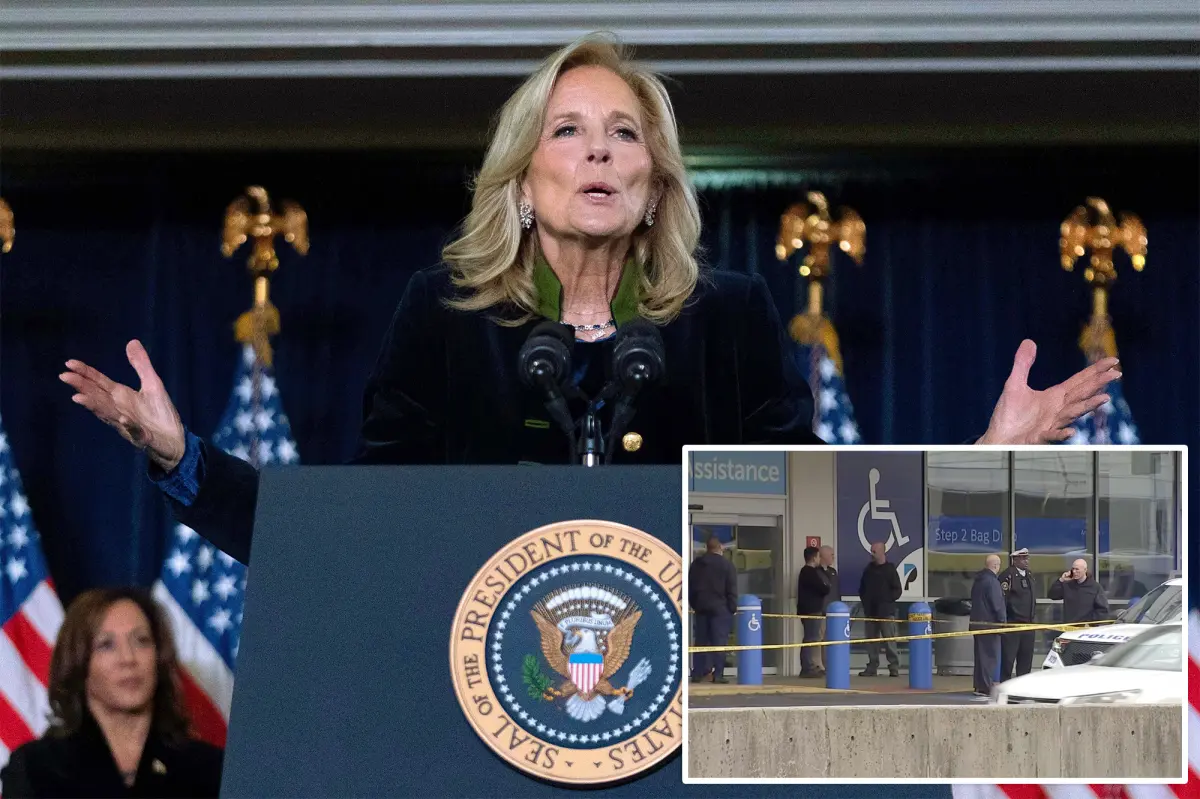
It all started as just another routine day for the Secret Service agents tasked with protecting former First Lady Jill Biden. Picture this: a group of highly trained professionals, adrenaline-fueled and always on edge, ensuring the safety of one of America’s most prominent figures. But in an instant, what seemed like a minor mishap turned into a headline-grabbing blunder that had everyone cringing in sympathy. Last week, at Philadelphia International Airport, one agent experienced a “negligent discharge”—a polite term for when a loaded weapon fires unintentionally—and ended up shooting himself right in the backside. Yeah, straight through his pants into his butt cheek, of all places. It’s the kind of embarrassing accident that could happen to anyone, but for a Secret Service agent, who’s supposed to be the epitome of precision and control, it must have felt like the ultimate irony. Imagine the immediate aftermath: the sharp sting of pain, the rush of medical attention, and probably a hefty dose of self-doubt mixing with relief that it wasn’t fatal or worse. Sources from RealClearPolitics reporter Susan Crabtree broke the story on X, painting a vivid picture of the agent fumbling with his holster in an unmarked Chevrolet SUV, only for the trigger to pull accidentally. Suddenly, what was meant to be a safeguarded perimeter for Mrs. Biden became a scene of controlled chaos, with the agent biting back groans while his colleagues sprang into action to secure the area and ensure no one else was at risk. It’s humanizing to think about how this could shake an agent’s confidence—trained for heroics, not for self-inflicted oops moments that echo far and wide. The Secret Service was quick to downplay it as non-life-threatening, but you can bet the agent felt every ounce of that “real pain in the butt,” both literally and metaphorically, as he dealt with the physical wound and the inevitable ribbing from coworkers. Incidents like this remind us that behind the stoic facades and dark sunglasses, these protectors are just people, prone to the same clumsy errors we all are, especially under the relentless pressure of their jobs.
The initial reports from the Secret Service sounded straightforward enough: an agent suffered a gunshot wound to the leg during a negligent discharge while on duty. It was brushed off as a minor oversight, emphasizing that no one else was hurt and that the former First Lady was unharmed. But as more details emerged, it became clear the story was a bit more colorful and, frankly, awkward. Crabtree’s post specified that the agent was trying to reholster his gun when it went off—perhaps in a moment of distraction or haste—and ended up with the bullet lodging in his hip area, specifically the buttock. It’s easy to visualize the sequence: the agent, maybe juggling his flashlight while trying to locate a misplaced cell phone in the dimly lit SUV, reaches down to secure his weapon. In that split second, fatigue or impatience wins out, and bang—the firearm discharges involuntarily. Philadelphia police confirmed to CBS Philadelphia that it happened inside the unmarked vehicle, adding that the agent was alone at the time, which must have amplified the solitude and embarrassment of the incident. Humanizing this, you can’t help but feel for the guy: Secret Service agents train rigorously for years, simulating high-stress scenarios, but life’s little surprises—like a stubborn holster and a forgotten phone—can still catch even the pros off-guard. There’s a touch of humanity in how such a seemingly invincible figure, charged with safeguarding the nation’s elite, becomes just as vulnerable to dumb luck as the rest of us. Reports noted that while the bullet’s path caused a self-inflicted wound, it underscored the reality that even with the best intentions and protocols, accidents are punctuated with real, tangible consequences. The agent likely went through a whirlwind of emotions—pain morphing into frustration, then gratitude that it was contained—but it also sparked whispers about the tireless life of these protectors, who often sacrifice personal comfort for public duty.
As the narrative unfolded, a Secret Service spokesman addressed the media, confirming the core of Crabtree’s report: yes, the agent suffered an unintentional, self-inflicted gunshot wound to the hip area. It’s straightforward admission, but with a caveat—they pushed back on one detail from her post, claiming it wasn’t accurate. Specifically, the idea that the agent was using his firearm-mounted flashlight to search for a cell phone “was not what was reported from the scene.” This clarification paints a slightly different picture, avoiding any implication of misuse of tools during the mishap. Maybe the flashlight was involved in a way they didn’t disclose, or perhaps it was just an added flourish in the storytelling. Either way, it’s a reminder of how quickly narratives can shift in the spotlight, and how agencies like the Secret Service must tread carefully to maintain credibility and confidentiality. On a human level, this back-and-forth feels like a protective cloak—they’re not just covering bases; they’re shielding the agent’s dignity. Behind closed doors, colleagues might share knowing laughs about the absurdity, turning it into a teachable moment rather than a scandal. It’s relatable how institutions sometimes soften the blow of embarrassment to preserve morale. The spokesman’s measured response: “It is accurate that the agent suffered an unintentional, self-inflicted gunshot wound to his hip area,” reflects a balance of transparency and restraint, acknowledging the reality while steering clear of sensationalism. In the grand scheme, these clarifications humanize the bureaucracy, showing that even federal agencies grapple with optics and integrity amid public scrutiny.
Crucially, the incident had no direct impact on former First Lady Jill Biden herself—she wasn’t even present during the grabbed moment. The agency underscored that her movements remained uninterrupted, and no other injuries were reported, which must have been a silver lining in an otherwise cringe-worthy event. Imagining Jill Biden’s perspective, she’s likely relieved that her security detail kept things under wraps, avoiding any added stress to her already demanding life post-White House. As an educator and advocate, she’s no stranger to the spotlight, but hearing about accidental discharges amid her protection could evoke empathy for the agents who buffer her from threats, real or imagined. It’s touching to think of how these subtle human connections play out—Biden perhaps thanking her team quietly for their vigilance, even when things go awry. The Secret Service’s statement last Friday emphasized this distance, noting that the gun going off in the unmarked SUV was isolated, with no ripple effects on the former First Lady’s itinerary. This detachment highlights the compartmentalized nature of high-profile security, where protectors operate in silos to minimize risks. On a broader stroke, it reminds us of the unseen sacrifices: agents missing family time, enduring long hours, all to ensure figures like Biden can navigate the world safely. The “non-life-threatening” label on the injury likely brought collective sighs of relief, turning a potential crisis into a manageable setback. Ultimately, Mrs. Biden’s absence from the scene serves as a testament to the team’s redundancy and preparedness, ensuring that one agent’s mishap didn’t derail the mission of safeguarding a nation’s icon.
Unsurprisingly, the Secret Service launched an internal investigation through its Office of Professional Responsibility to dissect the negligent discharge. These probes are standard for high-stakes occupations, aiming to prevent repeat incidents and uphold the agency’s unblemished reputation. The agency declined to provide specifics on the investigation, citing concerns that details “could compromise future interviews.” It’s a cautious stance, preserving the integrity of the process and allowing uninfluenced testimonies—smart, but it leaves the public to fill in blanks with curiosity and speculation. Humanizing this aspect, consider the agent’s experience during such reviews: reliving the humiliating moment under questioning, maybe reflecting on fatigue or procedural lapses that contributed. Colleagues might rally around him, sharing stories of their own near-misses to normalize the ordeal and foster resilience. Investigations like this aren’t punitive witch hunts; they’re opportunities for growth, refining training protocols perhaps to include more emphasis on holster safety or de-escalation in low-threat environments. Historically, the Secret Service has seen its share of high-profile blunders—from the 1981 Reagan assassination attempt near-miss to modern-day controversies—like this one could inspire better equipment or protocols. It’s comforting that these leaders prioritize learning over punishment, viewing agents as heroes in progress rather than infallible machines. The clamp-down on details also speaks to the trust they place in their chain of command, ensuring that lessons learned strengthen the whole rather than sensationalize the individual.
In the end, this incident with the Secret Service agent—shooting himself in the buttocks while guarding Jill Biden—offers a rare, relatable glimpse into the world of elite protection, reminding us that even the most disciplined professionals are, at heart, human. It’s a mix of humor, humility, and high stakes: a “pain in the butt” that could have been so much worse, yet it emerged as a contained episode with no lives lost and no broader fallout. For the agent, recovery might involve a mix of physical therapy, mental debriefing, and perhaps some lighthearted ribbing from peers to bounce back stronger. The Secret Service’s response—transparent on basics, guarded on details—reflects an organization committed to excellence, even amidst awkward truths. Widening the lens, it highlights the invisible burdens borne by these protectors: long shifts, constant vigilance, personal sacrifices for national security. Incidents like this humanize the agency, stripping away the veneer of invincibility to show fallible individuals dedicated to a noble cause. As news cycles move on, the lesson lingers—for us all—to appreciate the people behind the protective shields, especially when perfection gives way to the occasional, pardonable fumble. It’s a story of resilience, reminding society that heroism often comes packaged with humanity’s imperfections, turning potential embarrassments into chances for improvement and connection.