





For generations, the human relationship with the ocean has been defined by a mix of profound awe and primal fear, particularly when it comes to the Atlantic’s most formidable forces: devastating hurricanes and apex predators. Every summer, communities stretching from the sun-drenched Outer Banks of North Carolina up to the historic coasts of Massachusetts look to the horizon with a sense of vulnerability, knowing that a single rapidly intensifying storm can reshape lives and landscapes overnight. Traditionally, our defense against these atmospheric giants has relied on cold, sterile technology—satellites orbiting high above the earth, deep-sea buoys anchored in the dark, and expensive computational models that try to guess when and where a storm will strike its hardest blow. Yet, in an extraordinary twist of scientific ingenuity, a team of researchers at the University of Delaware is turning to an unlikely group of allies to bridge the gaps in our meteorological defense systems: sharks. By reframing our relationship with these ancient marine animals, scientists are discovering that the very creatures we have historically feared might hold the key to protecting our coastal homes from the increasingly erratic forces of nature. This ambitious initiative is not just about refining mathematical weather models; it represents a deeply human effort to co-exist with and learn from the natural world, transforming a symbol of terror into a beacon of hope and safety for millions of coastal residents.
At the heart of this groundbreaking endeavor is a mysterious oceanographic phenomenon known as the Mid-Atlantic’s “cold pool.” This massive, hidden reservoir of sub-50-degree Fahrenheit bottom water forms beneath the surface during the warming days of spring and lingers quietly through the summer, only to dissipate when autumn’s cool winds begin to blow. Why does this invisible body of water matter so much to us on land? Because the thin layer of warm water floating directly above this cold pool acts as the primary fuel source for passing hurricanes, directly dictating how quickly a storm can escalate from a manageable gale into a catastrophic category-five monster. Understanding the delicate balance of temperature and salinity in these stratified layers is vital for meteorologists, yet capturing this data in real-time has historically been a logistical nightmare and a financial black hole. Dr. Aaron Carlisle, a dedicated marine scientist at the University of Delaware who holds a doctorate from Stanford University, realized that traditional instruments simply could not provide the continuous, deep-diving observations needed to map this dynamic boundary. Borrowing a page from polar researchers who have long used elephant seals to explore ice-locked seas, Carlisle envisioned a more elegant, biological solution, recognizing that the ocean’s natural inhabitants are far better equipped to navigate these depths than any machine humans could build.
To turn this vision into reality, Carlisle and his passionate team of researchers must step away from their dry laboratories and brave the unpredictable waters of the open ocean aboard the R/V Daiber, the university’s dedicated research vessel. Their missions take them thirty to forty miles offshore into the vast, rolling blue of the Mid-Atlantic, where the horizon stretches infinitely in every direction and the hum of the ship’s engine is the only constant companion. Here, the glamorous perception of scientific discovery gives way to the gritty, patient reality of field research, as the crew spends hours under the hot summer sun setting up baited lines and waiting in quiet anticipation. Sometimes, the ocean demands hours of absolute silence and stillness before a shark finally takes the bait, a period of waiting that tests the team’s resolve but also fosters a deep, contemplative connection to the marine environment. When a line finally tenses, the atmosphere on deck instantly shifts from quiet contemplation to coordinated, high-stakes action, where every movement must be executed with absolute precision to ensure the safety of both the researchers and the majestic predator they have worked so hard to reach.
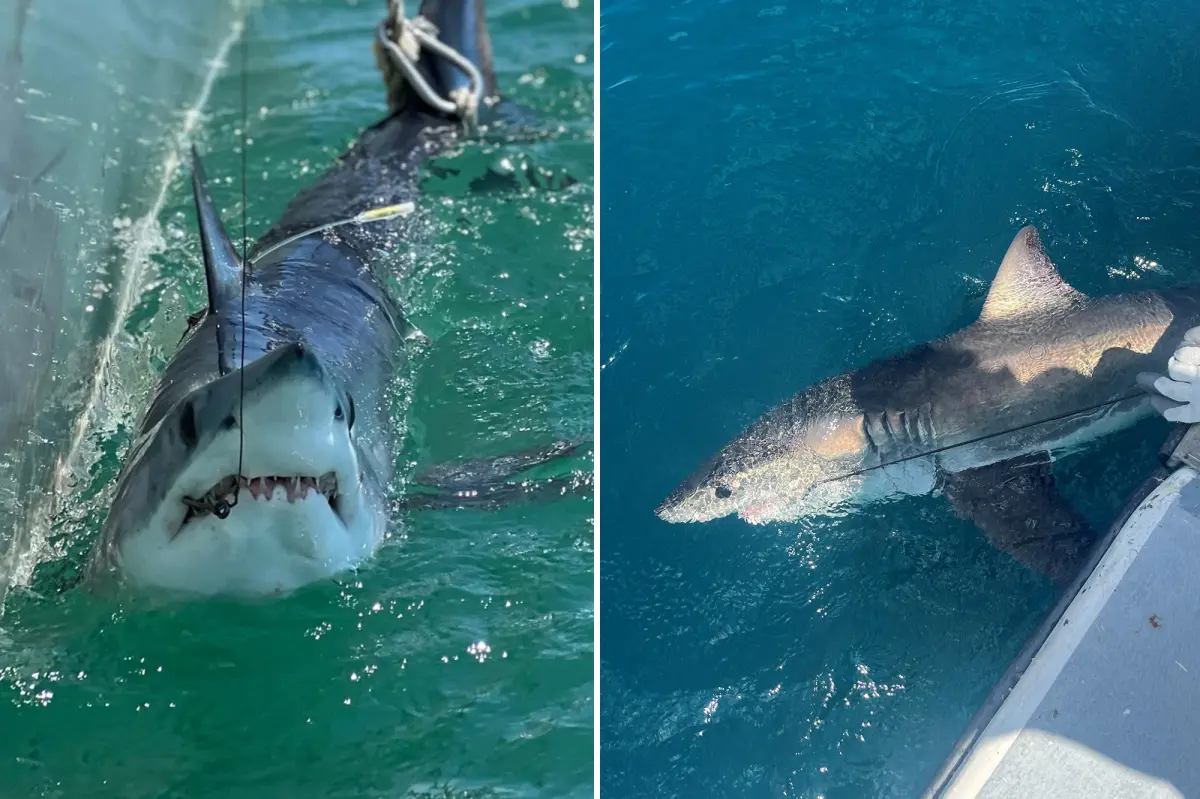
The process of tagging these magnificent creatures is a delicate dance of empathy, science, and physical endurance, designed with the utmost respect for the animal’s well-being. Since launching the active phase of the project in May—coinciding with the natural migration of sharks returning to the coast from their wintering grounds—the team has identified shortfin mako sharks, blue sharks, smooth hammerheads, and juvenile great whites as the ideal candidates for this vital mission. These specific species are chosen not for their fearsome reputations, but for their unique biological behaviors, specifically their tendency to regularly dive deep into the cold pool before returning to the ocean’s surface. Once a shark is gently guided alongside the boat, the team immediately administers a comprehensive physical health exam to monitor stress levels, understanding that a distressed animal would not only suffer needlessly but would also yield inaccurate, compromised data. A small, lightweight electronic sensor is carefully attached to the shark’s dorsal fin using specialized materials engineered to naturally corrode and safely fall off over time, leaving no lasting trace on the animal. Each time the shark breaks the surface of the water, its fin acts as a natural antenna, instantly transmitting crucial temperature and salinity profiles to an orbiting network of satellites, transforming a routine swim into a lifesaving data broadcast.
The wealth of information gathered by these ocean-going sentinels is already beginning to revolutionize how we understand the complex thermodynamics of our changing oceans. By tracking the real-time movements of these tagged sharks as they plunge through the warm upper mixed layer and dive deep into the frigid depths of the cold pool, scientists are gaining an unprecedented, high-resolution view of the sea’s thermal structure. This continuous stream of data provides the missing pieces of a puzzle that meteorologists have struggled to solve for decades, offering a highly accurate picture of the thermal energy available to feed developing storms. For the millions of families living along the vulnerable Eastern Seaboard, from the coastal fishing villages of North Carolina to the densely populated harbors of Massachusetts, this research translates directly into precious time. Improved predictions mean that local governments can issue more precise, timely evacuation orders, emergency services can deploy resources with greater confidence, and families can secure their homes and loved ones long before the first gale-force winds arrive. In a world where climate change is making weather patterns increasingly volatile, this marriage of biology and meteorology offers a proactive shield against disaster, proving that our survival may well depend on the health and cooperation of the natural world.
Beyond the immense meteorological breakthroughs, this project carries a profound cultural mission: to fundamentally dismantle the deep-seated, Hollywood-fueled stereotypes that have vilified sharks for generations. For decades, popular media has painted these ancient creatures as mindless, bloodthirsty monsters of the deep, a narrative that has fueled fear and contributed to devastating declines in global shark populations. Dr. Carlisle and his team hope that by highlighting the shark’s active role in saving human lives, they can foster a new era of ocean stewardship and inspire a collective shift in public perception. These animals are not villains to be feared, but highly evolved, irreplaceable components of our planet’s life-support system that have successfully navigated the world’s oceans for hundreds of millions of years. By showing that protecting sharks is directly linked to protecting our own coastal communities, the University of Delaware’s research creates a beautiful, reciprocal narrative of survival and mutual respect. Ultimately, this inspiring project reminds us that the solutions to some of our most complex scientific challenges do not always lie in inventing more sophisticated technology, but in listening to, respecting, and partnering with the incredible wildlife that already calls this blue planet home.