


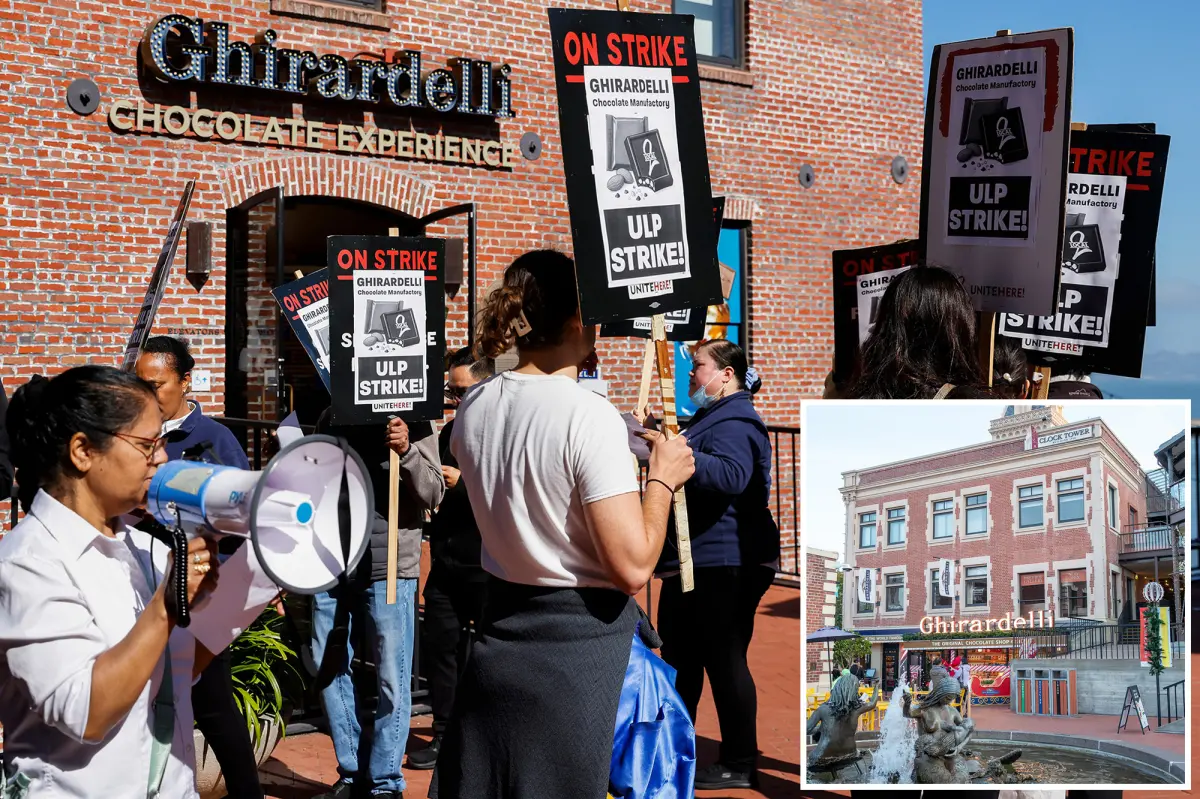
For generations, the salty, mist-laden breeze drifting off San Francisco’s northern waterfront has carried with it a scent as iconic as the Golden Gate Bridge itself—the rich, comforting aroma of roasting cacao and spun sugar wafting from Ghirardelli Square. Since 1852, when the pioneering Italian confectioner Domingo Ghirardelli established his legendary chocolate empire in the heart of the city, this bustling red-brick plaza has served as a sanctuary of pure joy, drawing millions of starry-eyed tourists from every corner of the globe to indulge in towering hot fudge sundae creations. On any typical afternoon, the square is alive with the sounds of laughing children, the gentle clanging of nearby cable cars, and the satisfied sighs of visitors capturing memories against the backdrop of the bay. Yet, on a recent chilly Thursday morning, the thousands of eager travelers marching down North Point Street in search of sweet nostalgia were greeted not by the warm, inviting hum of the flagship Ghirardelli Chocolate & Ice Cream Shop, but by an unsettling, profound silence. The heavy glass doors of the historic destination were firmly shut, adorned with a stark, hand-written “closed” sign that instantly shattered the carefully planned vacation itineraries of countless families. In place of the usual cheerful chatter and clinking ice cream spoons, the pavement outside echoed with the rhythmic, passionate chanting of forty-five dedicated store employees who had chosen to walk off the job, transforming the beloved tourist haven into an active battleground for labor rights, human dignity, and corporate accountability.
At the absolute heart of this dramatic work stoppage are the living, breathing human beings who have spent years translating the Ghirardelli name into an experience of warmth, luxury, and hospitality for the public. These forty-five union workers, proudly represented by the Unite Here Local 2 union, are the friendly faces who scoop the ice cream, wipe down the sticky marble counters, carefully ring up the iconic foil-wrapped chocolate squares, and welcome weary travelers with genuine hospitality. But behind their cheerful service lies a grueling, daily economic reality that has become increasingly impossible to ignore in one of the most expensive cities on Earth. In San Francisco, where astronomical rents, soaring grocery prices, and crushing utility bills make basic survival a constant math equation, these essential service workers earn modest hourly wages ranging between just $19 and $25. For cashiers like Diego Huerta and his hard-working colleagues, every single dollar earned is carefully budgeted to cover the bare necessities of life, leaving absolutely no safety net for emergencies. The decision to embark on a three-day strike, willfully foregoing much-needed paychecks in a city that wait-lists no one, was not made out of anger, but out of sheer necessity and a deep-seated fear that their fragile financial stability is being systematically eroded by the very corporation that profits off their daily labor.
The primary catalyst for this bitter dispute centers on the vital, life-sustaining issue of healthcare coverage, exposing a profound and troubling disconnect between corporate policy and human survival. Currently, the workers benefit from a comprehensive, union-negotiated healthcare plan that provides them with an essential medical safety net, ensuring that an unexpected illness, workplace injury, or family medical emergency does not immediately lead to catastrophic financial ruin. Under their current coverage, a critical visit to the emergency room carries a manageable co-pay of just $50—a crucial lifeline for low-wage earners who live paycheck to paycheck. However, the corporate leadership at Ghirardelli is actively pushing to dismantle this arrangement during their contract negotiations, seeking to transition the employees away from the union’s plan and onto a company-managed healthcare program. Union representative Sonya Karable warned of the terrifying financial consequences of such a shift, noting that under the proposed corporate plan, out-of-pocket costs, deductibles, and co-pays would inevitably skyrocket. She pointed out that a simple emergency room visit, which currently costs a worker a minor fee, could easily balloon into bills worth thousands of dollars, effectively stripping these families of their access to affordable medical treatment and leaving them one accident away from bankruptcy.
Adding fuel to the fire of the workers’ indignation is a glaring lack of transparency regarding a mysterious fee that Ghirardelli charges its customers, a detail that has left many patrons feeling misled. Every time a tourist purchases a decadent treat or a souvenir chocolate box at the shop, a 6% healthcare fee is quietly tacked onto the final bill—a surcharge ostensibly designed to fund the medical coverage of the very staff members serving them. Yet, according to the striking workers and their union representatives, Ghirardelli has consistently and stubbornly refused to disclose exactly how much revenue is generated by this 6% customer fee, or how those funds are actually being allocated within the company’s financial ledgers. Handing out flyers on the picket line that boldly proclaimed “Greedy Ghirardelli breaks the law,” the picketing employees publicly called out the hypocrisy of a corporate entity that collects money from well-meaning, socially conscious tourists under the guise of employee welfare, while simultaneously demanding that those same employees accept inferior, high-cost health insurance. Cashier Diego Huerta voiced the collective frustration of the staff, emphasizing that the company’s refusal to be transparent about the financial mechanics of their healthcare funding is a profound betrayal of trust, leaving workers to wonder why they are being asked to pay more out of pocket while the company sits on undisclosed sums of money collected in their name.
The physical layout of Ghirardelli Square during the strike served as a striking visual metaphor for the deep divisions that characterize modern labor struggles in the service industry. While the historic, unionized flagship store stood dark and empty, its doors locked tight against the afternoon sun, two nearby Ghirardelli outlets within the very same square continued to operate as if nothing were amiss. These sister locations, staffed by non-unionized employees, remained open for business, creating a jarring contrast where some visitors happily carried out chocolate-covered treats while just yards away, striking workers marched in a circle under the gaze of curious onlookers and security guards. This geographic divide forced tourists into an immediate and unexpected moral decision, as striking workers handed out literature imploring the public to boycott the flagship shop and stand in solidarity with those fighting for fair treatment. Many visitors, touched by the earnest appeals of the picketers and shocked by the revelation of the 6% fee discrepancy, chose to turn around and walk away, sacrificing their afternoon dessert to support the working-class families of San Francisco, while others looked on with a mix of confusion and disappointment at the sudden disruption of their holiday plans.
As the three-day strike progressed toward its scheduled conclusion on Saturday night at 10 p.m., the future of the iconic North Point Street location hung in a delicate balance, leaving both the union and the corporate parent at a critical crossroads. In response to the public outcry, Ghirardelli issued a carefully worded statement asserting that they deeply value and respect their employees’ contributions and remain committed to bargaining in good faith to reach an agreement that supports staff while ensuring the long-term viability of the business. Yet, for the forty-five workers standing on the picket line in the cold bay wind, those corporate platitudes ring hollow without concrete actions, transparency, and a genuine commitment to keeping healthcare affordable. The legacy of Domingo Ghirardelli, which began over 170 years ago, was built not just on sugar, milk, and cocoa, but on the tireless efforts of local workers who brought his vision to life and made the brand a household name. This strike serves as a powerful reminder that the true sweetness of San Francisco’s most famous chocolate is ultimately inseparable from the health, dignity, and economic security of the human beings who craft, scoop, and serve it every single day.