

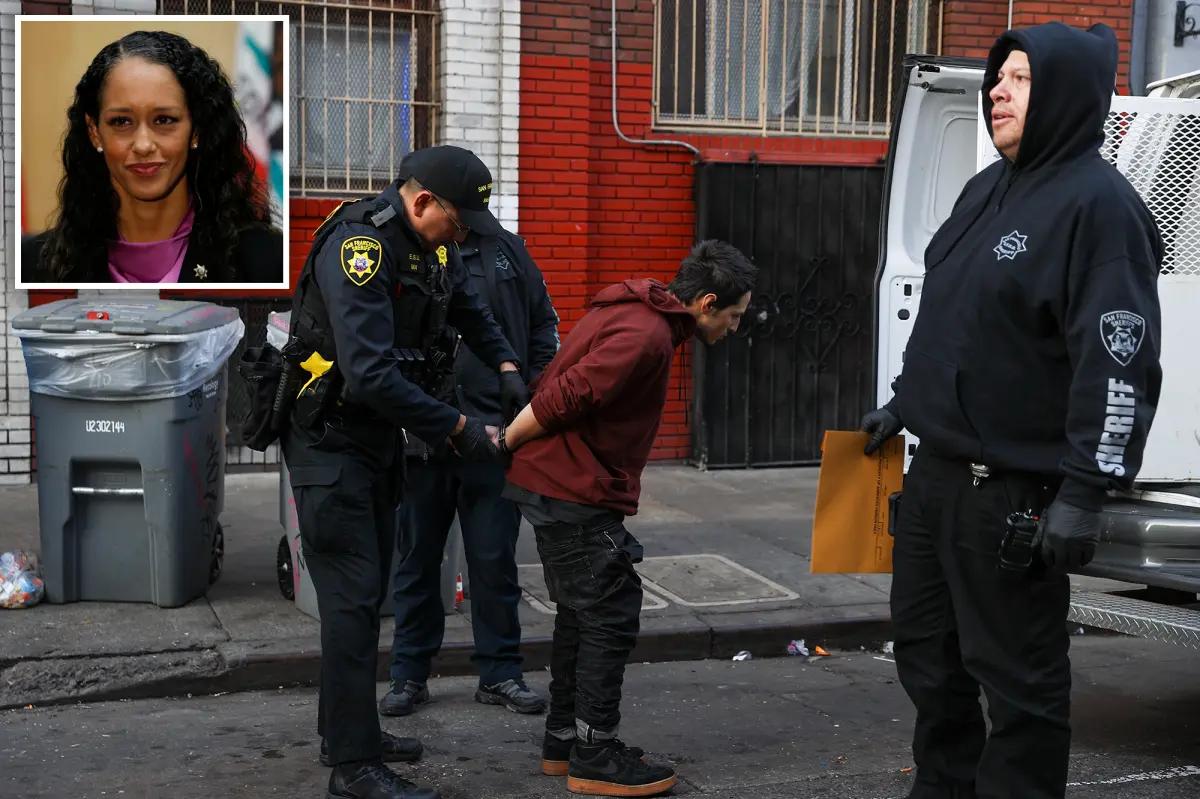
San Francisco, that iconic beacon of progressive ideals and liberal enclaves, has undergone a remarkable transformation under the leadership of District Attorney Brooke Jenkins, turning what was once a symbol of urban decay into a model for effective crime reduction. The city’s notoriously “woke” reputation might have suggested a soft approach to law enforcement, but in 2024 and into 2025, officials proudly announced crime rates at their lowest point in two decades, shattering expectations and proving that tough policies can coexist with progressive values. This wasn’t just a fleeting trend; burglaries plummeted by 26%, robberies dropped 23%, larceny theft saw a 22% decrease, homicides fell 15%, and assaults dipped 13%, while motor vehicle theft experienced the most dramatic decline at 44%, according to data from the San Francisco Police Department. Imagine the relief flooding through the streets as residents and visitors alike started feeling the shift—a return to a city where you could walk without constantly glancing over your shoulder, where the once-rampant thefts and break-ins that marred daily life began to fade into distant memories. Jenkins, who stepped into office in 2023 after a contentious election, has been quick to credit this stunning reversal to her unwavering commitment to enforcing the law, rejecting the lenient tactics of her predecessors that prioritized rehabilitation over accountability. It’s a story of resilience, where a city often mocked in national headlines for its excesses is reclaiming its status as a vibrant hub, proving that progress can include holding criminals responsible.
The contrast with the past couldn’t be starker, particularly when compared to the tenure of Jenkins’ predecessor, Chesa Boudin, who served as district attorney from 2020 to 2022. Back then, San Francisco’s crime scene was a powder keg under Boudin’s soft-on-crime strategies, which deprioritized prosecutions for drug offenses, expanded alternatives to incarceration like drug treatment and restorative justice, and even abolished cash bail, all in the name of criminal justice reform. Boudin, notably backed by influential Democrats including billionaire George Soros, often framed his policies as compassionate and forward-thinking, aimed at addressing root causes like poverty and addiction rather than punishing symptoms. But the results spoke louder than rhetoric: crime soared, with homelessness camps sprawl, brazen thefts in broad daylight, and a pervasive sense of lawlessness that alienated locals and scared away tourists. Now, under Jenkins, the tide has turned dramatically—larceny theft has plunged 68% since Boudin’s reign, car thefts are down 51%, homicides have dropped 38%, and robberies fell 31%, painting a picture of a city reborn through decisive action. It’s not just numbers; it’s the human stories behind them—families no longer fearful of their homes being ransacked, small businesses breathing easier without constant losses to shoplifters, and communities rebuilding trust in their institutions. Boudin’s approach, while ideologically driven, left a legacy of disorder that Jenkins is actively dismantling, showing how ideology without results can erode the very fabric of safety that progressive cities claim to champion.
Delving deeper into Jenkins’ background adds layers to this narrative, revealing a pragmatic path shaped by personal and familial history. Boudin’s parents, Kathy Boudin and David Gilbert, were infamous members of the radical leftist group the Weather Underground, convicted in the 1981 Brink’s robbery and murder for acting as getaway drivers in a fatal armed heist—a crime that underscored themes of extremism and volatility in his upbringing. This lineage might explain why Boudin leaned toward non-traditional justice, but it also highlighted the generational shift Jenkins represents. Elected in 2023 after Boudin was recalled by voters fed up with rising crime, Jenkins brings a no-nonsense ethos to the role, emphasizing that prosecutors must “do their jobs” to protect the public. Her stance is rooted in the belief that accountability isn’t punitive but essential for societal harmony, a far cry from the deflection of responsibility she witnessed under Boudin. In interviews, Jenkins has spoken passionately about the need to prosecute offenders, including repeat criminals who exploit leniency, drawing from her experiences in the legal system where soft policies once allowed the same individuals to cycle through without consequence. This humanizes her approach: she’s not just a politician but someone who sees the faces behind the statistics—the victims, the hardworking citizens, and the rule-abiding residents who deserve better than chaos. It’s a personal crusade, informed by the failures of the past, driving her to ensure San Francisco isn’t just reduced to punitive measures but elevated through effective enforcement that honors both justice and humanity.
On the enforcement front, the San Francisco Police Department has played a pivotal role in this crime-busting saga, leveraging cutting-edge technology that feels straight out of a sci-fi novel but is proving indispensable on the ground. Tools like license plate readers, drones soaring over the cityscape, and innovative “bait cars”—trap vehicles rigged with cameras, trackers, and even remote locking mechanisms—have revolutionized how thieves are caught red-handed, turning proactive detection into an art form. These aren’t distant, impersonal gadgets; they represent real-time vigilance that allows officers to intercept crimes before they escalate, fostering a sense of security without blanket surveillance. Jenkins’ office has amplified this by ramping up prosecutions, boosting the conviction rate from a dismal 37% in 2022 to nearly 43% in 2023, a first in eight years per local reports. From 2023 to 2024, petty theft prosecutions surged 156%, narcotics cases skyrocketed 709%, trespassing jumped 238%, and other thefts rose 138%, signaling a shift from leniency to relentless pursuit. It’s heartening to envision officers using drones to spot suspicious activity or laying bait to outsmart car thieves, each success a victory for the community’s well-being. This human element shines through in the stories of cops and prosecutors collaborating, sharing laughter in break rooms after a big bust, or the quiet gratitude from families whose stolen cars are recovered thanks to these tech marvels. San Francisco’s rebirth isn’t just policy-driven; it’s a testament to ingenuity and determination, where technology empowers rather than replaces the human touch in law enforcement.
The impact of these changes is palpable in the voices of everyday people, from tourists rediscovering the city’s charm to longtime residents feeling the weight lift from their shoulders. Take Mark Fraas, who posted on X about visiting San Francisco after five years: “Huge improvement… streets were relatively clean, we saw few homeless, and never felt unsafe. Tenderloin was the only rough spot.” Others echoed this sentiment, like @unwiredtourist lamenting, “Who would’ve thought? Enforcing laws + prosecuting repeat offenders actually reduces crime.” Even locals like Frank Noto, a 1970s resident and co-founder of Stop Crime SF, rave about the transformation: “Crime has gone down exponentially. We’ve got a new DA in town, and it’s made a world of difference.” Noto credits voter-approved Measure Eight for enabling tech like speed cameras and drones, restoring a sense of normalcy. This narrative resonates beyond the bay, as seen in New York, where Maria Danzilo, who challenged soft-on-crime DA Alvin Bragg in 2021, tweeted with envy: “Well done, San Francisco. Your recall mechanism allowed this because we don’t have it here.” It’s humbling to think how a city’s willingness to hold leaders accountable can inspire national conversations, fostering hope that other places might follow suit. These testimonials humanize the data, transforming cold statistics into stories of renewed joy—families strolling through neighborhoods, tourists snapping photos without worry, and communities rebuilding the social bonds eroded by crime.
As Jenkins gears up for reelection in 2029, she’s far from complacent, acknowledging that “There’s still much more work to be done.” Her vision extends beyond the numbers, aiming to sustain this momentum and tackle lingering issues like deep-rooted inequality and mental health crises that fuel crime. Yet, there’s an undeniable optimism in her tone, a belief that San Francisco’s comeback is replicable and scalable, serving as a blueprint for other cities grappling with similar challenges. It’s empowering to imagine a future where progressive values and public safety aren’t at odds but intertwined, where residents can live freely without fear, and where leaders like Jenkins prioritize results over rhetoric. This chapter in San Francisco’s story isn’t just about crime reduction; it’s about reclaiming the city’s soul, reminding us that with the right mix of compassion, technology, and accountability, even the most troubled places can heal and thrive. As she looks ahead, Jenkins embodies hope—no shortcuts, just steady progress, proving that a “woke” city can lead the way by embracing enforcement that protects everyone.