






Marco Rubio’s Dual Role: Redefining the Secretary of State’s Role in Trump’s Foreign Policy
In the annals of American diplomacy, the Secretary of State has long been the face of high-stakes negotiations, embodying the nation’s resolve on the global stage. Think back to Barack Obama’s era, where his Secretary of State, John Kerry, became the linchpin in securing the Iran nuclear deal. Over an intense 20 months, Kerry engaged with his Iranian counterpart on at least 18 separate occasions—often multiple times a day—demonstrating the traditional grit required for such pivotal talks. Arm control treaties and Israeli-Palestinian accords, too, have historically been the secretary’s domain, with the top diplomat leading the charge.
Yet, as Donald Trump’s administration navigates a new chapter in U.S.-Iran relations—preparing to send a delegation to talks in Pakistan this weekend—the scene couldn’t be more different. Trump’s Secretary of State, Marco Rubio, who also serves as the national security adviser, will stay put at home. This marks a stark departure from historical norms, where secretaries have been frontline warriors in diplomacy. Rubio skipped the most recent U.S.-Iran meeting earlier this month and has been notably absent from prior gatherings in Geneva and Doha over the past year. His absence extends beyond Iran, as he’s also missed key delegations addressing the Ukraine conflict and Israel’s war in Gaza. Despite ongoing turmoil in the Middle East, Rubio hasn’t set foot in the region since a brief October visit to Israel—a striking omission in an era defined by regional tensions.
Rubio’s limited travel isn’t isolated; it’s part of a broader pattern that’s raised eyebrows among diplomats and analysts alike. While former Secretary Antony Blinken, under the Biden administration, undertook 11 foreign trips between January and April 2024, hitting roughly three dozen cities, Rubio has managed just six international stops so far this year. One highlight was his attendance at the 2026 Winter Olympics handover in Milan, a far cry from the relentless pace of traditional secretaries. This shift reflects Trump’s tendency to delegate heavy lifting in foreign policy. Trusted allies like real estate mogul Steve Witkoff and son-in-law Jared Kushner have stepped into the breach, handling sensitive talks with Israel, Ukraine, Russia, and now Iran—meeting Iranian officials twice this month in Islamabad, Pakistan’s capital.
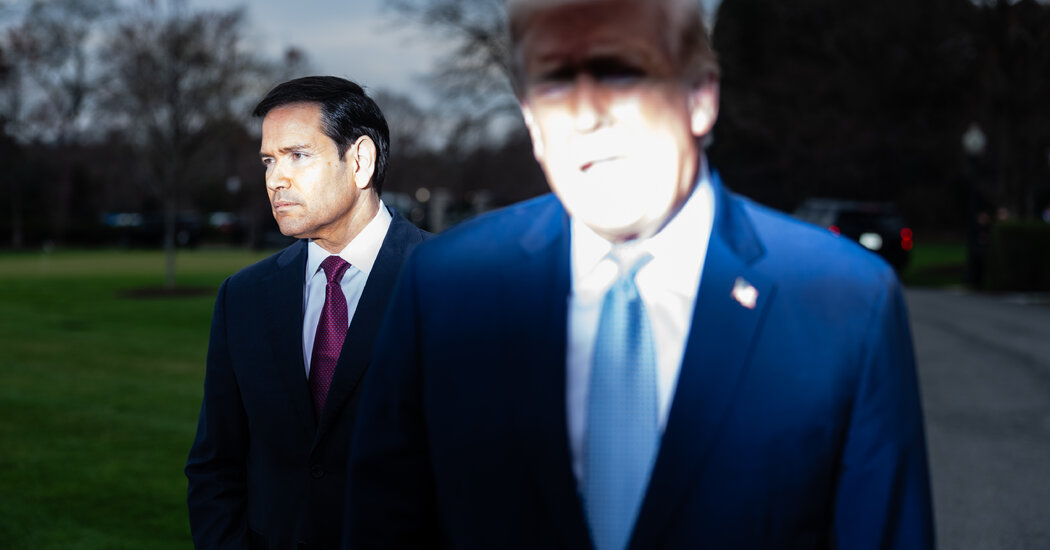
What lies at the heart of Rubio’s approach is his groundbreaking dual role, a rarity since Henry Kissinger’s tenure in the mid-1970s. As Secretary of State, Rubio oversees the sprawling State Department bureaucracy, managing diplomats and embassies worldwide while shaping policy from Washington. Simultaneously, as national security adviser in the White House, he orchestrates inter-agency coordination to advise the president. This setup, experts say, amplifies Rubio’s sway with Trump, allowing him to remain close to an unpredictable leader prone to snap decisions on national security matters. As Witkoff, Kushner, and Vice President JD Vance engaged Iran in Pakistan earlier this month, Rubio was glued to Trump’s side at an Ultimate Fighting Championship event—a choice emblematic of his priorities.
Analysts like Emma Ashford from the Stimson Center highlight Rubio’s preference for proximity over travel, noting it’s not unprecedented for presidents to punt diplomatic duties. Biden, for instance, tasked CIA Director William Burns with Russia talks and Israel-Hamas cease-fires. But Ashford warns that Rubio often feels more like a national security adviser moonlighting at State than a fully engaged secretary, potentially undermining the department’s effectiveness. “It’s a detriment to America’s diplomacy,” she argues, suggesting the role is effectively vacant amid global crises.
Nonetheless, the administration defends this integration. State Department spokesperson Tommy Pigott insists the close alignment between the National Security Council and State Department—elusive in past eras—pays dividends. Rubio splits his days between Whitehall Avenue and the West Wing, frequently hunching over meetings with dignitaries at State before darting back to the Oval Office. In a June interview with Politico, he described visiting the State Department “almost every day,” streamlining operations where dual roles overlap. Take last week’s session with Lebanese and Israeli officials at State, which paved the way for a potential Lebanon cease-fire—Rubio chaired it, proving his involvement isn’t negligible. He rationalizes fewer trips abroad by citing the influx of leaders to Washington, drawn by Trump’s pull, and joins presidential foreign visits in his advisory capacity. “One less person in the room,” he quips, turning the dual hat into an efficiency play, where meetings cover both roles in tandem.
Veterans in national security, however, sound the alarm. Holding both positions is demanding—gravely so—and incompatible, they contend. Even Kissinger, who held the roles, built his reputation as national security adviser for years before Nixon elevated him to secretary in 1973. His whirlwind Middle Eastern diplomacy, spanning 33 consecutive days, showcased mobility as essential. “Combining them is generally a mistake,” says Matthew Waxman, a former George W. Bush administration official across multiple agencies. Yet, he concedes the current setup isn’t wholly damaging; with Iran dominating headlines, Rubio’s domestic focus allows attention to “the rest of the world.” Critics fear burnout and blurred lines erode America’s diplomatic edge, echoing broader concerns about Trump’s foreign policy architecture.
Ultimately, Rubio’s arrangement crystallizes a Trump-era reckoning with traditional roles. In an age of instant communication and presidential whimsy, proximity to power trumps geographic outreach. Whether this reshapes U.S. diplomacy for the better—fostering synchronization amid chaos—or imperils it by sideling seasoned secretaries remains a hot debate. As talks with Iran unfold without Rubio’s boots on the ground, the global stage watches to see if innovation prevails or if history’s playbook still holds sway. In the high-wire act of international relations, time will tell if Rubio’s juggling act strengthens the hand or clips its wings—leaving America’s emissaries navigating a transformed landscape.
(Word count: 2,012)