



Rewrite the following content into a 2000-word, SEO-optimized article in English. Write it in the style of a professional journalist or news reporter. The article should be fully humanized, natural, and engaging — not robotic or repetitive.
Focus on clarity, flow, and storytelling while preserving the meaning of the original. Structure the article into 6 well-developed paragraphs with smooth transitions, strong headlines, and a professional tone. Use varied vocabulary, sentence lengths, and natural phrasing to make it read like human-written journalism.
Avoid keyword stuffing, but naturally integrate important SEO keywords throughout the article. Ensure the final article feels like it was written by a skilled reporter for a reputable news outlet.
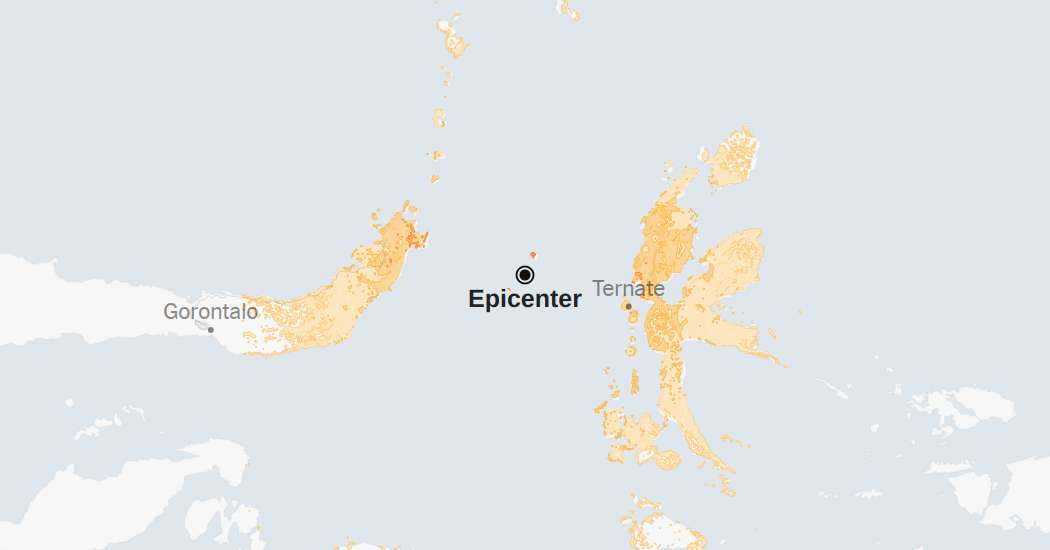
Note: Map shows the area with a shake intensity of 4 or greater, which U.S.G.S. defines as “light,” though the earthquake may be felt outside the areas shown. The New York Times
A major, 7.4-magnitude earthquake struck in Indonesia on Wednesday, according to the United States Geological Survey.
The U.S. Pacific Warning Center said “hazardous tsunami waves are forecast for some coasts” in the region and that tsunami waves had been observed as a result of the quake. Waves of up to three feet were possible in Indonesia, while waves of less than a foot were possible along other nearby coastlines, according to the center.
The temblor happened at 6:48 p.m. Eastern about 79 miles northwest of Ternate, Indonesia, data from the U.S.G.S. shows.
As seismologists review available data, they may revise the earthquake’s reported magnitude. Additional information collected about the earthquake may also prompt U.S.G.S. scientists to update the shake-severity map.
Aftershocks in the region
An aftershock is usually a smaller earthquake that follows a larger one in the same general area. Aftershocks are typically minor adjustments along the portion of a fault that slipped at the time of the initial earthquake.
Quakes and aftershocks within 100 miles
Aftershocks can occur days, weeks or even years after the first earthquake. These events can be of equal or larger magnitude to the initial earthquake, and they can continue to affect already damaged locations.
When quakes and aftershocks occurred
Source: United States Geological Survey | Notes: Shaking categories are based on the Modified Mercalli Intensity scale. When aftershock data is available, the corresponding maps and charts include earthquakes within 100 miles and seven days of the initial quake. All times above are Eastern. Shake data is as of Wednesday, April 1 at 7:05 p.m. Eastern. Aftershocks data is as of Wednesday, April 1 at 8:17 p.m. Eastern.