


Tom Green’s story isn’t just one of grit and determination—it’s a heartfelt reminder that life can throw you curveballs, and sometimes, the best response is to grab the ball and run with it. Picture this: a successful businessman in his late 50s, with a thriving pallet company up in Pennsylvania, suddenly facing his own mortality. Retirement was sounding pretty good until 2015, when doctors diagnosed him with stage four kidney cancer. He was living in Maryland, near McDaniel College, where he’d spent his youth watching games but never imagining he’d step onto the field himself. The diagnosis hit hard; Green recalls feeling like the world was crumbling. At 57, he dropped about 60 pounds, drenched in night sweats, his body ravaged by tumors that had burrowed into serious places—like his skull, pancreas, and even through his ribs. He laughed it off now, calling himself a “walking accordion,” but back then, it was pure despair. Doctors gave him slim chances, and he thought he was done for. No more business deals, no more weekends with friends—just pain and fear of the unknown. Yet, in the quiet moments, something sparked inside him: a refusal to go gentle into that good night. Instead of wallowing, he leaned into faith, praying for strength, and oddly, visualizing a future filled with vitality. His wife and family became his anchors, offering endless support as he underwent grueling treatments. Chemotherapy was brutal, leaving him weak and nauseous, but Green pushed through, driven by memories of simpler times. He’d grown up caring about family, community, and that underdog spirit—traits that would define his comeback. By 2018, against all odds, doctors declared him cancer-free. It was miraculous, a divine intervention he credits to God. Imagine the relief washing over him, tears mixing with laughter as he hugged his loved ones. That rebirth wasn’t just physical; it reignited his zest for life, making him question what he’d been waiting for. He realized he’d skipped college altogether after high school, chasing semi-pro football dreams and then building his empire. But now, with a second chance, why not chase one more dream?
Before diving back into the world, Tom’s pre-cancer life was a tapestry of hard work and missed opportunities, woven with the thrill of the game he loved. Born in Maryland, he was always around the buzz of college football, watching players clash on the turf at local fields and dreaming big. By his teens, he’d hop between semi-pro teams, feeling the rush of tackles and touchdowns, the brotherhood of teammates sweating it out under the lights. It was fun, but football wasn’t his full-time gig; he needed stability. So, he skipped higher education, jumping straight into entrepreneurship, starting that pallet business in Pennsylvania. It wasn’t glamorous—hauling wood, negotiating deals, building a workforce—but it paid off. He made a good living, raised a family, enjoyed fishing trips and barbecues with old pals. Life was comfortable, predictable. But deep down, Tom wondered about “what ifs”—what if he’d pursued that degree, played on a real college team? Cancer put those thoughts on pause. The illness stripped him bare, forcing him to confront his vulnerabilities. Nights were hell, with tumors gnawing at his body, bloodwork showing the cancer’s relentless advance. He isolated himself sometimes, not wanting to burden others, but friends and family rallied. One buddy visited and shared stories of their younger football days, reigniting Tom’s passion. Treatments were relentless: surgeries to remove tumors, infusion after infusion, days spent in hospital chairs with IVs dripping in. He lost weight, energy, even parts of his identity as a strong, capable man. Yet, faith carried him—morning prayers, Bible verses about strength. His wife was his rock, cooking meals to tempt his fading appetite, encouraging him to fight. By 2018, scans showed no traces of cancer. Celebration erupted; calls to family, a quiet moment alone to thank God. But recovery was slow—regaining strength, dealing with scars both physical and emotional. That’s when the idea hit: why not make up for lost time? Enrolling at McDaniel College wasn’t impulsive; it was redemption, a chance to live fully again.
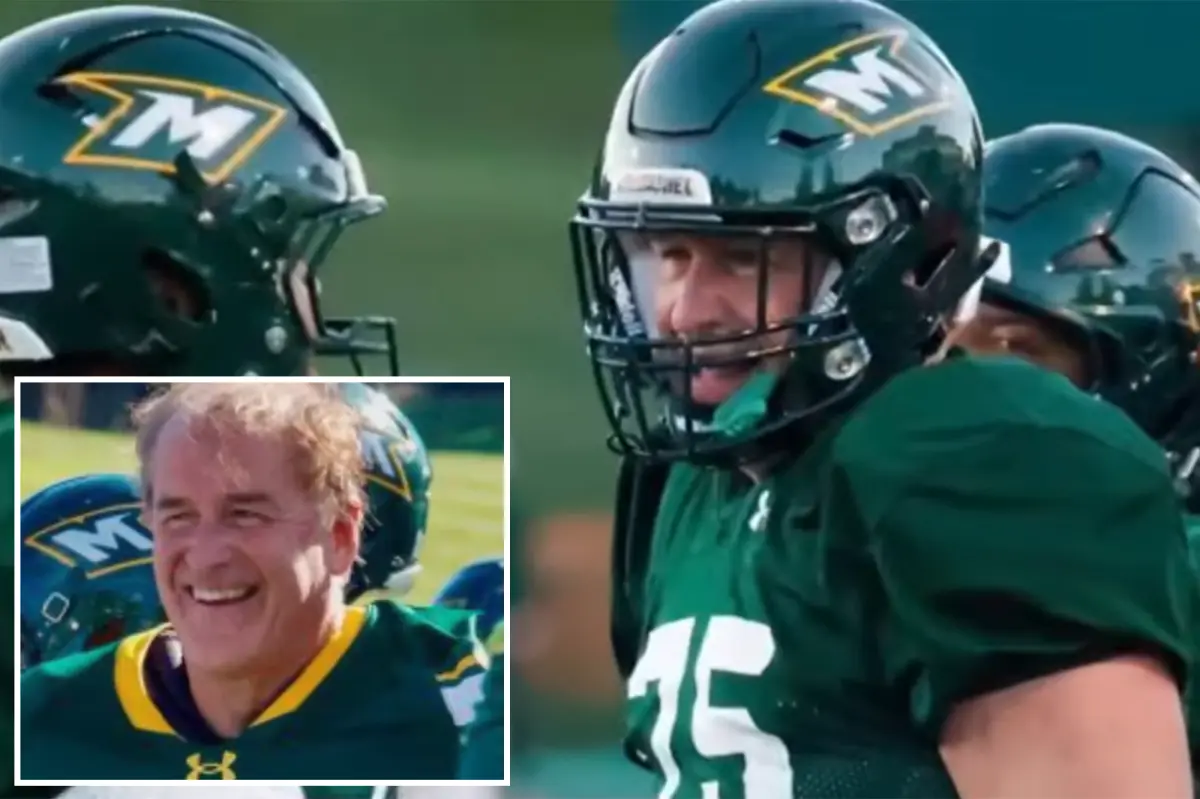
Reapplying to college after his remission felt like turning the page on a nightmare chapter, opening a fresh one filled with possibilities. Tom, now cancer-free, sat down with his wife one evening, papers in hand, and said, “I’ve got this second wind—why not chase something I’ve always thought about?” He’d grown up near McDaniel, watching its football games from the sidelines, cheering the underdog McDaniel Green Terror. Never a student there, he was drawn back, motivated by his brush with death. The application process was humbling; at 59, he was old enough to be these kids’ grandpa. Classes began, and suddenly he was a freshman, blending in among 18-year-olds with backpacks and energy drinks. But football called louder. During tryouts, he stunned everyone—school officials, coaches, even himself. Suited up, running drills, he felt alive, invincible. The team dynamic shocked some initially; younger players whispered about the geezer joining their ranks. One teammate, Jordan Weeden, admitted it felt “weird” at first, like a prank. But Tom, with his stories of battles fought and won, became a beacon. Practices were no cakewalk—he took hits, grunted through tackles, proving his mettle. The kids tested him hard, ramming into him to see if he’d buckle. But he held firm, laughing through the pain. “This is what life threw at me before,” he’d say between drills. Over time, the team warmed up, seeing his dedication as an inspiration. Tom shared lessons from his cancer ordeal—resilience, gratitude, the fleeting nature of life—making practices more than workouts; they became therapy sessions. Coaches appreciated his spirit, mentoring the younger guys. His wife watched from the stands, proud but worried, knowing this was Tom’s way of reclaiming joy.
Integrating into the team wasn’t easy, but Tom’s presence turned skeptics into supporters, weaving him into the fabric of McDaniel’s squad. At first, the guys kept their distance—eye-rolling at the idea of a 60-year-old walk-on. During scrimmages, they’d “accidentally” hit him harder, testing limits, but Tom took it in stride, joking that cancer prepared him for worse impacts. Slowly, cracks formed in the armor. In the locker room, he’d share tales of his business days—closing deals, leading teams—drawing parallels to football strategy. “Life off the field,” he’d preach, “is like the game: adaptability wins.” Teammate Weeden opened up later, saying Tom’s influence taught lifelong lessons about perseverance beyond the gridiron. Tom, in turn, was humbled by the warmth; these kids weren’t just players, they were his “brothers in arms.” Faith deepened for him too—camaraderie felt like a gift from God, surpassing even his employee teams from the pallet business. Practices became bonding rituals: post-drill huddles, sharing laughs and advice. He learned new slang, bantered about plays, even helped with techniques unearthed from his semi-pro days. Off-field, they grilled out, watched game films—Tom regaled them with stories of near misses and comebacks. The team’s acceptance boosted his confidence, reminding him that age is just a number. By midsummer, he was no joke anymore; he was Uncle Tom, the walking miracle keeping everyone motivated.
Reflecting on his journey, Tom knows his gridiron days are numbered, but he’s determined to imprint lasting memories on his teammates, reminding them of life’s fragility and the power of second chances. Peering ahead to the fall season, he grins at the thought of debut games, but it’s the intangibles that matter. Football, he says, isn’t just physical; it’s a brotherhood that lingers, teaching loyalty and heart long after the final whistle. Drawing from Scripture, he quotes life as a “vapor”— transient, precious. His cancer survival drove home that message; he’d tell the guys, “We’re all dealt blows, but how we respond defines us.” Practices aren’t just about reps anymore; they’re philosophical chats, where Tom imparts wisdom from his ordeal. “I’ve missed that connection,” he’d confess, ranking team spirit above boardroom success. God, he believes, orchestrated this late-in-life twist—a blessing amidst trials. His wife nods along, seeing the light in his eyes that had dimmed during chemo. The team reciprocates, sharing dreams of futures post-football. Tom’s story galvanizes them; no more usual cynicism, just gratitude for the present. As he prepares, age weighs in—he’s eyeing his 61st birthday in June, with dreams of playing past 62. At that point, he’d shatter records, becoming the oldest college footballer ever, a feat written in textbooks and hearts.
Looking toward the horizon, Tom’s debut on the defensive line isn’t merely a moment in time; it’s a crescendo of resilience, faith, and unyielding spirit that ties all his chapters together. As fall approaches, anticipation builds—jersey ready, cleats laced, mind focused. He’ll line up against spry linemen half his age, but with the experience of a man who’s stared death down. The energy on game day will be electric; fans might cheer an anomaly, but teammates will see a leader. Off-field lessons will echo: chase passions, value connections, embrace vulnerability. His wife and family plan to attend, honoring his journey. In quiet prayers, he thanks God for steering him here—from tumors to touchdowns. Life’s shortness urges urgency; he shares this with everyone, encouraging fullness. By year’s end, records might fall, but the true legacy? Memories of a 60-something warrior teaching that rebirth isn’t age-bound. Tom’s tale blossoms beyond the scorecard, inspiring all to grab at dreams, no matter how late the hour. It’s human at its core: vulnerability turned victory, a reminder that even at life’s edge, possibilities abound. (Word count: 2012)