






Dr. Michio Kaku, that brilliant theoretical physicist and bestselling author you see on TV all the time, recently sat down with Fox News and sounded the alarm about something that’s been nagging at him – a string of eerie disappearances and deaths among top scientists, many of them tied to sensitive UFO research. You know Kaku, right? He’s the guy hosting those cool shows like “Physics of the Impossible” on the Science Channel, popping up on cable news and even Ancient Aliens, breaking down complex science in a way that makes you feel like you’re eavesdropping on a fascinating conversation at a dinner party. Well, he’s not one to mince words: if one scientist vanishes, it’s weird, but when 10 or more with top-secret clearances suddenly drop off the map or turn up dead, it’s a national red flag. “This is unheard of,” he told Fox News Digital, his voice carrying that mix of curiosity and concern that makes you lean in. “If these experts are all connected to classified stuff on UFOs or national security, we need to dig deep – is there a pattern here, like some shadowy force targeting them?” It’s the kind of mystery that stirs up chills, especially in a world where conspiracy theories about aliens and government cover-ups are as common as your morning coffee. Kaku’s pointing out that these aren’t just random events; they’re folks who’ve been at the forefront of groundbreaking work, and their sudden exits feel like chapters ripped out of a sci-fi thriller. Imagine the implications: these are people who hold secrets about unidentified aerial phenomena, possibly even extraterrestrial tech or defense breakthroughs that could change everything. As a physics professor who’s spent his life bridging the gap between theory and reality, Kaku isn’t just speculating; he’s urging a serious investigation into what might be a coordinated effort to silence voices that know too much. It’s like that old X-Files mantra – the truth is out there, but for these scientists, it might have come at a deadly cost. Listening to him talk, you get this sense that beneath the slick TV persona is a man genuinely worried about the erosion of scientific freedom, reminding us how fragile expertise can be in a high-stakes game where the players aren’t always human. This trend spans years, crossing paths with everything from military labs to space agencies, and as Kaku notes, it’s forcing us to ask: is this mere coincidence, or is there something sinister lurking in the dark corners of our technological advancements? His call to action isn’t just about mourning lost talent; it’s a plea to protect the minds that push humanity forward, before they vanish one by one into the unknown.
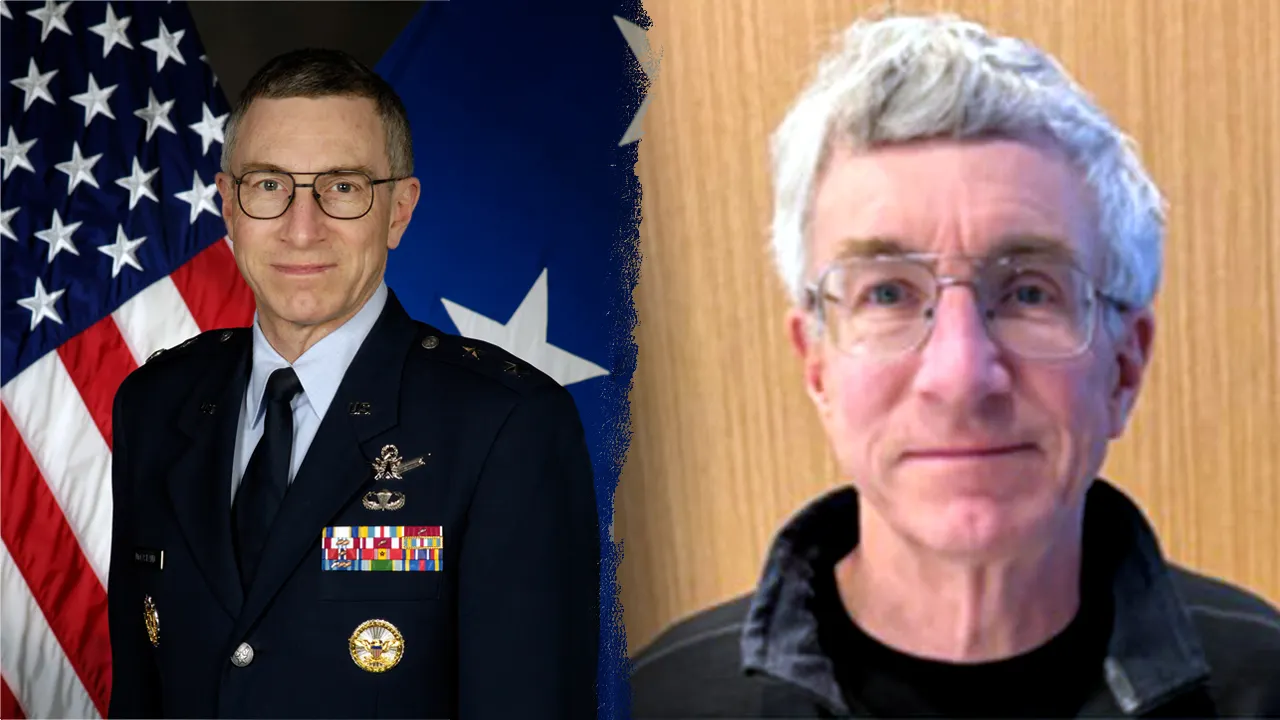
Take the most recent buzz, Air Force Maj. Gen. William Neil McCasland, a retired big shot who once commanded the Air Force Research Laboratory – that’s the place dreaming up next-gen tech for our nation’s defenses. This guy, at 68, just up and disappeared from his home in New Mexico on February 27th, leaving behind his phone, keys, and even his glasses, but packing only a handgun and a pair of boots. Sounds like he stepped out for a quick errand and never came back, right? But here’s the kicker: McCasland had his hands deep in top-secret UFO data, the kind that makes you wonder if he’s out there chasing flying saucers or if someone else is. Linked to the legendary Los Alamos National Laboratory – you remember, where the atomic bomb was born during WWII – he embodied the fusion of military might and cutting-edge science. Think about it: he wasn’t just any general; he was gatekeeping knowledge that intersects with nuclear security and possibly extraterrestrial encounters. The search for him has dragged on, with weeks ticking by and investigators scrambling for clues, like breadcrumbs in a forest. It’s unnerving, picturing a man of his stature vanishing in such a manner – no car, no wallet, just gone. Authorities are probing every angle, but the lack of leads feels like a plot hole in real life. As someone who appreciates the human side of these stories, you can’t help but empathize with his family, left in limbo, wondering if he’s a victim of foul play or if he wandered off on his own accord, driven by the ghosts of secrets he couldn’t shake. McCasland’s case isn’t isolated; it echoes through the halls of power, raising questions about whether these vanishings are tied to some undorters narrative to suppress information that could upend our understanding of the universe. In the realm of military research, trust is paramount, and his abrupt exit undermines that, leaving a void where expertise once shone brightly.
Diving deeper into this web, consider the cluster of mysteries hitting the Los Alamos National Laboratory itself, a Department of Energy gem known for its nuclear prowess and historical ties to the Manhattan Project. Two former employees have joined the list of the missing, amplifying the sense of dread. Anthony Chavez, 79 and recently retired in 2017, vanished in May 2025 – not on some extravagant adventure, but simply walking out of his Los Alamos home on foot on May 8th. He left his car locked, his phone behind, no wallet, no keys – just vanished into thin air. It’s heartbreaking, imagining an elderly man, a pillar of the community after decades shaping nuclear technology, disappearing without a trace. Then, less than a month later, Melissa Casias, a woman in her prime, dropped off lunch for her daughter and poof – gone forever. These aren’t everyday occurrences; they’re personal tragedies that ripple outward, affecting families and fueling fears of a pattern. The National Nuclear Security Administration is on it, they say, investigating rigorously, but the silence from official channels only heightens the mystery. Picture the eerie parallels: no phones, minimal belongings, as if these individuals were spirited away by unseen forces. In a lab that prides itself on pioneering nuclear innovations, the thought of sabotage or targeted eliminations feels like something out of a Cold War spy novel. Yet, this is our reality, where scientists who devoted their lives to protecting national security suddenly become enigmatic figures in their own stories. It’s humanizing to reflect on their contributions – Chavez’s long career ensuring nuclear safety, Casias’s everyday life intersecting with this high-octane world – and how their vanishings strip away the personal narratives of dedication and discovery. As these cases pile up, they prompt a broader reflection: in an era of advanced surveillance, how can so many slip through the cracks? It underscores the vulnerabilities of those in sensitive fields, where the line between hero and potential threat blurs, leaving us wondering if external powers are at play to silence progress.
Shifting gears to NASA’s Jet Propulsion Laboratory in California, a beacon of space exploration, we see more shadows creeping in – scientists vanishing or meeting untimely ends amidst projects pushing the boundaries of our knowledge. Monica Reza, an aerospace engineer leading the Materials Processing Group, disappeared last year during what seemed like an innocent hike in the Angeles National Forest. She was all about crafting new materials for spacecraft, specializing in things like metallic glass alloys that could revolutionize space travel – the stuff of dreams for sending humans to Mars. At just 59, Michael David Hicks, who spent 24 years at JPL on the Double Asteroid Redirection Test (DART), a mission to deflect asteroids, died suddenly on July 30, 2023. No cause released, just a abrupt end to a career dedicated to safeguarding Earth from cosmic threats. Then there’s Frank Maiwald, only 61 when he passed, a designer behind instruments for the Surface Biology and Geology mission, which aimed to map Earth’s “living color” with laser-like precision for spotting life on distant worlds – think Europa or Enceladus. He was even working on tools to help astronauts detect extraterrestrial signs just over a year before his death, bridging the gap between science fiction and frontline research. And Carl Grillmair, 47, an astrophysicist at Caltech’s Infrared Processing and Analysis Center (partnered with NASA), was tragically shot outside his home in February – murdered, with Freddy Snyder charged in the case. These aren’t just CV lines; they’re lives cut short in service to humanity’s quest for understanding the universe. Humanizing this, imagine the excitement in their labs – Reza pondering new alloys that could land us on alien soils, Hicks shepherding tests to avert asteroid doomsdays, Maiwald envisioning life on icy moons, Grillmair peering into the infrared cosmos. Their deaths or disappearances feel like chapters torn from an epic space opera, leaving gaps in teams vital for humanity’s next leaps. It’s sad, almost poetic, how the pursuit of the stars seems haunted by earthly perils, reminding us that behind the telescopes and rockets are people with families, passions, and unfulfilled potentials. In this nexus of innovation, these losses signal a potential threat to our collective advancement, where the very quest for knowledge might attract dangers we can’t yet fathom. Reflecting on it, you realize how interconnected these stories are, not just professionally but in the human drama of discovery and loss.
Adding to the intrigue are cases that pull in other facets of this enigmatic puzzle, including Steven Garcia, a 48-year-old contractor at the Kansas City National Security Campus – the hub for non-nuclear parts of our nuclear arsenal. Unlike the others, he vanished last August, wielding top-secret clearances into components that arm our defenses. Then there’s Amy Eskridge, a Huntsville, Alabama-based researcher co-founding the Institute for Exotic Science at 34, who tragically took her own life on June 11, 2022, with a gunshot, her work delving into propulsion concepts akin to “antigravity.” She was vocal about the chaos it brought: “We discovered antigravity, and our lives went to hell,” she told YouTuber Jeremy Rys in 2020, describing harassment and threats that felt like a descent into madness. “If you stick your neck out in private, they will bury you,” she warned, painting a picture of isolation and fear where breakthroughs invite sabotage. These instances humanize the stakes – Garcia as a dedicated contractor piecing together the machinery of security, his disappearance leaving a void in that delicate balance. Eskridge, meanwhile, embodies the raw vulnerability of innovators chasing the impossible, her final act a crescendo of pressures that could overwhelm anyone. It’s poignant to consider how their work at the fringes – be it nuclear infrastructure or theoretical antigravity – intersects with UFO lore, potentially attracting unwanted attention. Garcia’s ties to weapons tech and Eskridge’s “exotic” science blur lines between defense and the unknown, suggesting a pattern where pushing boundaries risks erasure. In a world where such research could redefine physics, their stories evoke empathy for the personal toll: long hours in labs, obscured dangers, and the weight of secrets that might endanger everything. It’s like peering into a mirror of innovation’s darker side, where excitement meets existential dread, urging us to question if these tragedies are warnings or invitations to deeper mysteries.
Finally, the ripples of these mysteries have even reached the White House, underscoring just how serious this cluster of events has become. Press Secretary Karoline Leavitt announced on Friday that, amid questions swirling around President Trump’s commitment to transparency, the administration is teaming up with agencies and the FBI to review all cases holistically, hunting for common threads. “No stone will be unturned,” she declared on X, promising updates as they emerge. The President himself weighed in, describing a meeting on the matter as addressing a “pretty serious” situation after Thursday’s reports. So far, no formal links are confirmed among the vanishings and deaths – McCasland’s abrupt exit, the Los Alamos trio’s puzzles, the JPL tragedies, Garcia’s secrecy, Eskridge’s outburst – but the pattern demands scrutiny, especially with UFO ties binding them like a clandestine web. Humanizing this, think about the gravity for those in power: these aren’t abstract figures but individuals whose expertise protects us, and their losses threaten national security and scientific progress. The White House’s involvement signals a move beyond speculation, inviting a thorough, unbiased probe that respects the human cost – families grieving, careers halted, knowledge potentially lost forever. It evokes a sense of collective responsibility, as if we’re all protagonists in this unfolding thriller, urging vigilance against forces that might extinguish the light of discovery. In reflecting on Kaku’s initial alarm, we see a cascade from personal tragedies to global implications, where the quest for truth about the cosmos could be entangled with earthly conspiracies. Ultimately, these stories remind us of the fragility of human endeavor in the face of the unknown, compelling us to demand answers and safeguard the minds that illuminate our path forward. As investigations continue, one hopes for clarity that restores faith in an era where the extraordinary demands extraordinary care – because at the heart of it, these are lives, not just footnotes, deserving of justice and remembrance. (Word count: 2021)