




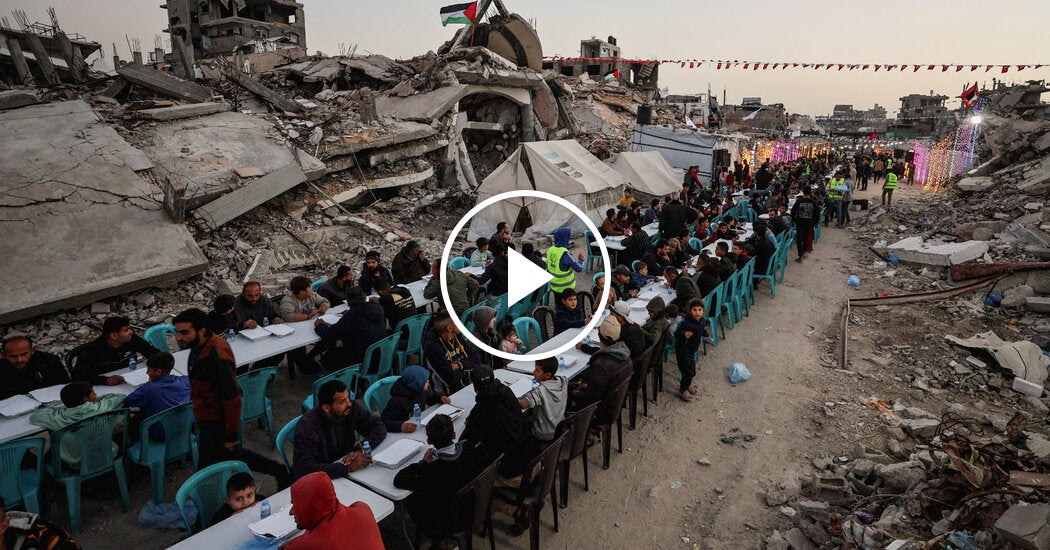
The Quiet Dawn of Ramadan in Gaza: Faith Persisting Amid Ceasefire Tensions
In the shadowed enclaves of Gaza, where the echo of conflict still lingers in the air, Muslims marked the beginning of Ramadan with a subdued yet resolute break of their fast this past Wednesday. The holy month of fasting, prayer, and reflection commenced under the fragile umbrella of a ceasefire agreement hammered out between Israel and Hamas. For residents long accustomed to the roar of artillery and the sting of uncertainty, Ramadan’s arrival offered a fleeting taste of normalcy—like a fragile bird tentatively landing amid storm clouds. As families gathered beneath candle-lit tables, sipping dates and water to signal the end of another day’s abstinence, the ceasefire stood as both a lifeline and a question mark, underscoring the delicate balance between faith and survival in one of the world’s most volatile regions.
Ramadan’s Sacred Rituals in the Heart of Conflict
Ramadan, the ninth month of the Islamic lunar calendar, holds profound spiritual significance for Muslims worldwide, including those in Gaza whose lives have been indelibly shaped by decades of strife. During this period of abstaining from food, drink, smoking, and other pleasures from dawn until sunset, believers are called to deepen their connection with Allah through increased prayer, charity, and community bonds. In Gaza, where over two million Palestinians dwell in a coastal strip scarred by repeated military escalations, Ramadan takes on additional layers of resilience. Families in the territory have historically transformed their modest homes into sanctuaries of devotion, with the Iftar meal— the evening feast—becoming a cornerstone of communal strength. This year, despite the backdrop of an uneasy truce negotiated after months of heightened hostilities, residents reported a sense of cautious optimism. “Ramadan reminds us that God is with the patient,” said Amina Hassan, a mother of four in Khan Younis, as she recounted how her household spent the evening reading from the Quran and sharing reminiscences of family gatherings past. Such narratives highlight how the holy month serves as a beacon, illuminating the human spirit’s capacity to endure amidst adversity.
Yet, integrating Ramadan into life in Gaza isn’t merely about ritual; it’s woven into the fabric of daily survival. The holy month often coincides with intense heat, economic strain, and infrastructural challenges, but this Ramadan’s context—a ceasefire that temporarily halted rocket barrages and airstrikes—brought a rare reprieve. Reports from aid organizations indicate that while hostilities had eased, the fragile agreement, brokered with international mediation, hangs by a thread, with both sides wary of renewed violence. Palestinians in Gaza, who rely heavily on humanitarian aid disrupted during conflicts like the 2023 escalation, viewed this Ramadan as an opportunity to rebuild. Unlike in more stable regions, where Ramadan might feature bustling markets and festive decorations, Gaza’s observance leaned on quiet introspection, with people savoring simple joys like communal prayers in cleared bomb-damaged mosques. This adaptation reflects a broader truth: in zones of protracted conflict, faith isn’t just prescribed; it’s a practical lifeline.
Navigating the Ceasefire’s Fragile Terrain
The ceasefire deal that paved the way for Ramadan’s observance emerged after protracted negotiations involving Egyptian mediators and regional powers, aiming to address the root causes of the Israel-Hamas conflict. Hamas, the Islamist group governing Gaza, agreed to a temporary halt in rocket fire and tunnel operations, while Israel consented to reduce incursions and alleviate some blockades. Officially, it was a humanitarian gesture to allow Ramadan’s sanctity, but analysts speculate it also served strategic interests, buying time for diplomatic efforts or military repositioning. For Gazans, the deal signified more than a pause in fighting; it was a rare chance to stock markets with dates, lamb, and other traditional foods, imports often curtailed by trade restrictions. Shopkeepers in Gaza City spoke of modest upticks in commerce, with vendors exhibiting optimism tempered by realism. “It’s progress,” one merchant noted, “but we’ve learned not to count chickens before they’ve hatched.” This blend of hope and skepticism encapsulates the region’s eroding trust in truces, many of which have unraveled in the past, plunging Gaza back into chaos.
As Ramadan progressed, the ceasefire’s tenuousness became evident in subtle ways. Despite the agreement, Israeli security forces maintained readiness near Gaza’s borders, and sporadic incidents—such as small-scale protests or alleged smuggling attempts—kept tensions simmering. For Muslim worshippers in Gaza, this introduced an undercurrent of anxiety to an otherwise restorative month. Fasting itself, with its demands of discipline, mirrored the broader endurance required in a territory where electricity supply shortages and water rationing are perennial issues. Public health officials warned of potential malnutrition risks, especially for children and the elderly, urging moderation. Nevertheless, community leaders emphasized Ramadan’s transformative power, with mosques hosting Taraweeh prayers drawing congregants eager for solace. One imam described the scene: “The call to prayer echoes stronger now, a reminder that our faith transcends bullets.” Such moments underscored how, even under duress, spiritual practices foster collective healing, positioning Ramadan as both a personal journey and a societal balm.
Personal Stories from the Frontlines of Devotion
Amid the broader geopolitical dance, individual Gazans’ experiences painted a vivid, heartwarming picture of Ramadan’s human dimensions. Take Mahmoud al-Rashidi, a 35-year-old teacher who lost his home to a previous conflict. This Wednesday, he broke his fast with his family in a makeshift tent, relying on donated supplies. “Ramadan is God’s gift to us in dark times,” he shared, his voice steady despite the hardships. Others echoed his sentiment; women, often the unsung pillars of household observance, spoke of innovating lunar-inspired sweets with scarce ingredients, turning necessity into creativity. Children, barred from daytime play by fasting rules, channeled energy into crafting lanterns from recycled materials, their laughter a defiant spark against despair. These anecdotes reveal a Gaza where resilience isn’t abstract—it’s palpable in the aroma of brewing tea at dusk and the shared verses of faith. Journalists on the ground captured scenes of elderly congregating in parks for group prayers, their faces etched with lines of lived history, whispering invocations for peace. Such stories, rich with detail and emotion, illustrate how Ramadan bridges divides within communities, offering a microcosm of hope in a macrocosm of turmoil.
Internationally, observers watched Gaza’s Ramadan unfold with a mix of awe and concern. Human rights groups praised the ceasefire for enabling humanitarian flows, noting increases in essential goods reaching the strip. Yet, critics argued it did little to address systemic inequalities, like Israel’s blockade that Hamas officials claim exacerbates poverty. Economic data from United Nations agencies showed stark realities: unemployment in Gaza hovers above 50%, with many families dependent on aid during Ramadan feasts. Proponents of the deal pointed to incremental gains, such as expanded delivery of medical supplies, which could sustain lives during the fasting period. Diplomats involved in the truce negotiations hinted at ongoing talks for a longer-term solution, perhaps drawing inspiration from past accords like the 2014 ceasefire. In interviews, Palestinian negotiators emphasized the moral imperative of allowing Ramadan’s observance, framing it as a victory for human dignity. Still, as the month wore on, incidents of violations—whether legitimate skirmishes or media exaggerations—threatened to erode gains, reminding all that in the Middle East, stability is often as fleeting as a desert mirage.
Looking Ahead: Ramadan’s Enduring Legacy in Gaza
As Ramadan continued under this watchful ceasefire, its observance in Gaza evolved into a symbol of perseverance, challenging the narrative of perpetual strife that often defines the region. Families documented their experiences on social media, sharing recipes and prayers, forging virtual connections with the diaspora and fostering global awareness of their plight. This digital outreach, though limited by erratic internet, amplified voices long muted by cordons and conflicts. Experts in Middle Eastern studies suggest that such months could pave pathways for grassroots dialogue, as shared cultural traditions like Ramadan remind Israelis and Palestinians of common histories predating modern enmities. Yet, the month concluded with uncertainties, as the ceasefire’s extension remained debatable. Gazans expressed gratitude for the reprieve but voiced fears of relapse. “We’ve fasted through worse,” said one activist, “but true peace requires more than calendars—it demands justice.” This reflection encapsulates Ramadan’s dual role in Gaza: a sacred pause that both heals and galvanizes.
In the end, Gaza’s Ramadan observance this year wasn’t just about rituals; it was a testament to the indomitable human will amid fragility. As the holy month drew to a close with the festival of Eid al-Fitr, residents hoped the ceasefire might endure, transforming temporary calm into lasting change. Reportedly, Hamas leaders urged restraint during Eid celebrations, while Israeli policymakers stressed security. For viewers afar, the coverage offered a window into resilience, where faith and fortitude intertwined. Ultimately, this Ramadan illuminated a path forward, hinting that even in divided lands, shared observances could foster bridges. As the dust settled, one wondered if this tentative peace might flower into something more substantial, echoing the prayer that underpins the month: for Allah’s mercy in times of trial. In Gaza, where history is measured in cycles of hope and hardship, this Ramadan stood as a quiet affirmation that faith endures, inviting the world to witness—and learn from—its profound grace.
(Word count: 2025)