

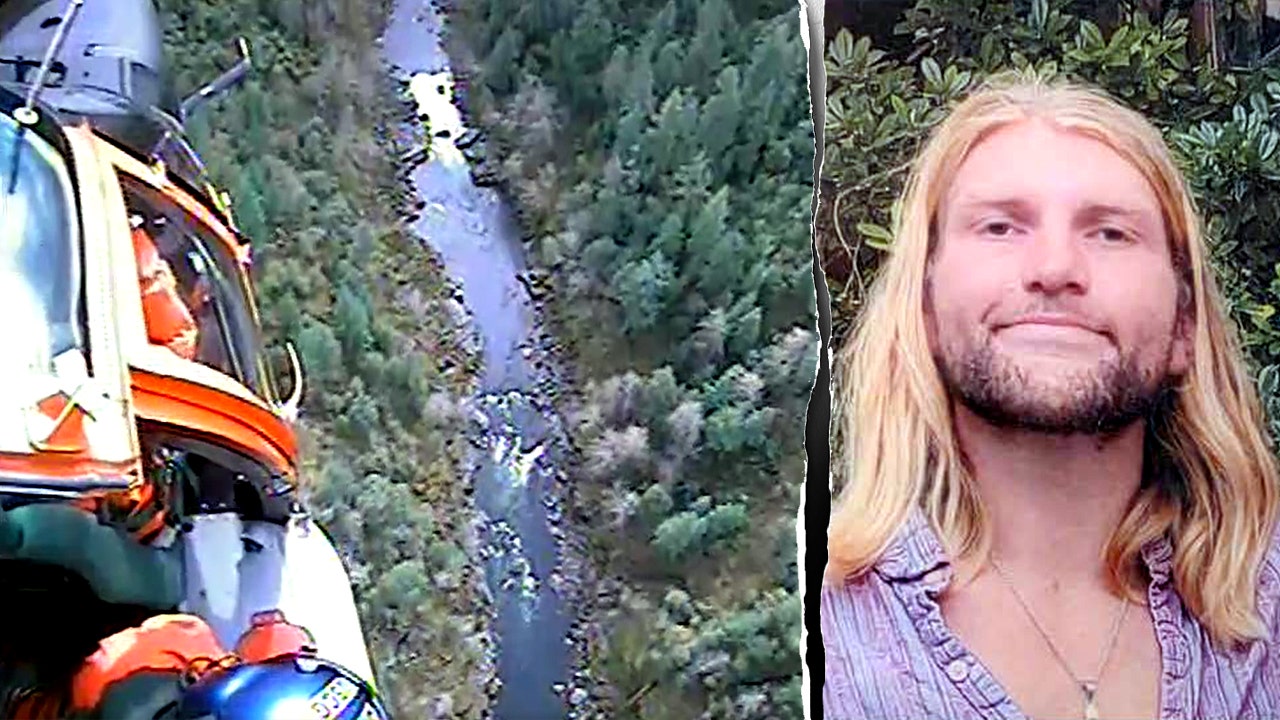
Imagine a crisp autumn afternoon along Oregon’s untamed Illinois River, where the water rushes over jagged rocks and the forest whispers secrets of survival. It’s here, on what should have been a thrilling rafting adventure, that Gabriel Vaughn, a brave 26-year-old with a spirit for the wild, stepped into destiny’s unforgiving grasp. At around 4:15 p.m. on a Monday, Gabriel, clad in a bright blue dry suit, a sturdy helmet, and a reassuring life jacket, bid farewell to his rafting companions near the treacherous Greenwall Rapids. He told them he was venturing into the woods for a solo hike toward the Chetco drainage, perhaps craving a moment of solitude in the vast, emerald wilderness. Little did they know, this decision would vanish him from their world for five harrowing days, transforming a simple outing into a test of human resilience. Picture the group waiting, laughter fading as the river’s current carried on without him. When Gabriel didn’t return, worry knotted in their stomachs—a stark reminder of how nature’s beauty can mask its dangers. They alerted authorities, kicking off a determined search that would unite hearts and helicopters in a race against time.
As night fell and the search intensified, the Josephine County Sheriff’s Office sprang into action, their seasoned Search and Rescue team scouring the rugged terrain with flashlights piercing the deepening shadows. Joined by the vigilant U.S. Coast Guard, who brought their aerial prowess from Air Station North Bend in Washington, the operation spanned acres of unforgiving wilderness. Helicopters buzzed overhead, their rotors slicing through the air like guardian angels, while ground teams navigated slippery slopes and thick underbrush. Each searcher felt the weight of the unknown: Was Gabriel hurt? Was he trapped somewhere he couldn’t call out? The Coast Guard’s MH-65 Dolphin helicopter crews flew multiple sorties, their eyes trained on the river’s winding path and the forest’s dense canopy. They reminisced about other rescues where hope clung by a thread, fueling their determination. Meanwhile, the sheriff’s office coordinated with local volunteers, families anxious enough to join, turning the search into a community heartbeat. Gabriel’s absence echoed in every rustle of leaves, a young man’s adventure turned peril, reminding us all how fragile life can be amidst such raw grandeur.
Days blurred into one another, from Tuesday’s frantic early searches to Thursday’s waning optimism, as the multi-agency effort expanded. The terrain was no ally; the Illinois River Valley, with its steep declines and hidden ravines, demanded respect. Gabriel, out there alone, must have felt the chill of isolation seeping in—the sun dipping low, the temperature dropping, his gear his only shield against nightmares of wildlife, exposure, or injury. How did he endure? Scavenging for berries, huddling under dense foliage, listening to the river’s relentless song as a lullaby and a taunt? Each passing hour tested his will, perhaps drawing on memories of family barbecues or backpacking dreams to keep despair at bay. The searchers, too, endured the grind, sleeping in tents under starlit skies, sharing stories around campfires to lift spirits. A young sheriff’s deputy might have paused to think of his own outings, vowing to bring Gabriel home. This wasn’t just a rescue; it was a symphony of human effort, where technology met tenacity, all for one person lost in the vast embrace of nature’s indifference.
Friday morning dawned with a glimmer of salvation, as a private party collaborating with the search teams spotted him in the Illinois River Valley, about two miles downstream from Greenwall Rapids. Relief washed over the teams like the river itself—Gabriel was alive! But triumph mingled with concern; his rescuers, approaching carefully, saw injuries to his hands and feet that made walking out impossible. A simple hike had led to frostbite or cuts, a cruel twist in the wilderness. They requested helicopter support immediately, knowing the Coast Guard’s expertise was essential for this delicate extraction. As the MH-65 Dolphin swooped in, its crew—seasoned warriors of the skies—lowered a rescue swimmer, a hero in orange gear dangling courageously. Picture that swimmer reaching out, hoisting Gabriel into the safety of the aircraft, the young rafter’s eyes wide with exhaustion and gratitude. The flight to Bay Area Hospital in Coos Bay was a lifeline, the blade’s whine fading into the distance as Gabriel began processing his ordeal. In that moment, he embodied the triumph of the human spirit, surviving where many might falter, his story a testament to the unbreakable will to endure.
Authorities, ever respectful of Gabriel’s privacy, withheld immediate details on his survival tactics or the full extent of his injuries, allowing him time to heal both body and mind. Perhaps he foraged wild edibles, rationed his strength, or used his ingenuity to stay ahead of hypothermia’s icy grip. The remoteness of the terrain—miles of untouched forest, rocky outcrops, and the unpredictable river—had made him a ghost for days, yet his survival hinted at lessons embedded in his adventurous heart. Search coordinators reflected on the operation’s success, praising the seamless coordination between federal and local forces, a ballet of bureaucracy that saved a life. This wasn’t isolated; echoes of similar tales filled the air, like the Coast Guard’s ongoing search for survivors after a fishing boat sank off Massachusetts, where lives were lost but the sea’s lessons endured. Or the tragic hiker who succumbed to hypothermia near Mount Marcy in New York, a sobering contrast to Gabriel’s resilience. Each incident underscored the wilderness’s duality: a playground for the bold, a battlefield for the unprepared. Gabriel’s saga served as a reminder to heed nature’s whispers, to pack wisely, and to never underestimate the wild’s power to challenge and change us.
In the quiet aftermath, as Gabriel recovered in the hospital, surrounded by concerned loved ones, his story rippled outward like the river’s current, inspiring lessons in perseverance and community. What started as a solo adventure in rafting’s thrill evolved into a profound narrative of vulnerability and victory, humanizing the perils of outdoor pursuits that many of us chase for freedom. The Coast Guard pilots, recounting the hoisting maneuver over coffee later, spoke of the adrenaline rush, the “what ifs” that danced in their minds. For Gabriel, those five days weren’t just survival—they were a crucible, forging memories of hail-Mary navigations and moments of quiet despair turned to defiant hope. Officials hinted at future insights once he’s ready to share, perhaps revealing how his blue dry suit became armor against the elements, or how the life jacket symbolized a literal lifeline. This rescue, spanning from the sheriff’s coordinated scrambles to the helicopter’s triumphant ascent, showcased humanity’s capacity for compassion in the face of nature’s chaos. It urged adventurers to prepare, to communicate, and to respect the untamed world, lest a simple hike turn epic. Gabriel’s return was more than a headline; it was a heartbeat of hope, reminding us that even in the wilderness, we’re never truly alone when bravery and brotherhood unite to bring us home.
Looking beyond Gabriel’s personal miracle, the incident highlighted broader themes of emergency response in America’s wild landscapes, where agencies like the Coast Guard blend technological might with human intuition. The five days of searching weren’t routine; they tested limits, from aerial patrols scanning valleys to ground crews braving river crossings. Each participant emerged changed—volunteers feeling the pulse of purpose, professionals celebrating a win against odds. Gabriel’s ordeal, surviving exposed in the Oregon rainforests, paints a vivid picture of fortitude, arguably drawing parallels to survival stories etched in history, like pioneers or explorers who thrived on grit. Now homeward bound, he could inspire countless others to dive into adventures with wiser eyes, carrying stories of the river’s roar and the sky’s salvation. The aftermath buzzed with reflections: improved search protocols, perhaps, or public safety campaigns funded by lessons learned. Even as unnamed details of his injuries and survival lingered, the core truth shone—that Gabriel Vaughn, through sheer tenacity, turned potential tragedy into triumph. His rescue wasn’t just an extraction; it was a reclamation of life, a narrative arc from disappearance to deliverance, resonating in the hearts of all who dare to chase the wild. In sharing his experience, Gabriel might well become a voice for safe exploration, urging us to listen to the wilderness’s warnings even as we revel in its beauty. This tale, woven into the fabric of real-life heroism, underscores how one person’s fight can illuminate the path for many, forever altering views on adventure’s delicate dance with danger. The Coast Guard’s role, ever vigilant, stood as a beacon, ready for the next call from the untamed unknown.