




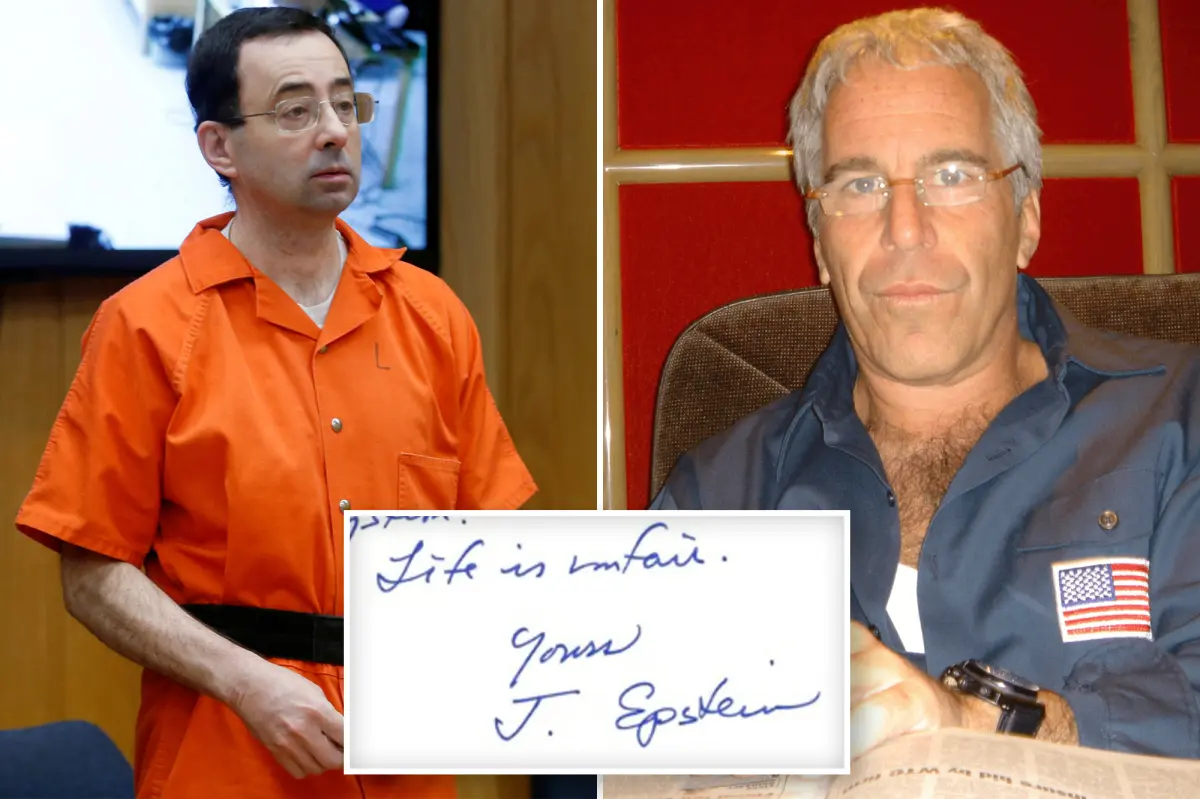
DOJ Confirms Fake Epstein Letter Referencing Trump
In a swift response to growing speculation, the Justice Department has officially confirmed that a provocative letter supposedly written by Jeffrey Epstein, which made explicit references to former President Trump, is fraudulent. The announcement came Tuesday via social media, just hours after the department acknowledged it was investigating the document’s authenticity.
The alleged correspondence, purportedly sent from Epstein to convicted sex offender Larry Nassar, contained inflammatory claims about shared predatory behaviors and explicitly mentioned the former president’s supposed inappropriate conduct toward young women. The fake letter included crude language allegedly quoting Trump about his approach to women, creating a false connection between the former president and the convicted sex offenders. This fabricated communication quickly gained attention across various platforms, prompting an immediate investigation by authorities.
Upon examination, the Justice Department identified several obvious inconsistencies that exposed the letter as counterfeit. The handwriting analysis revealed significant discrepancies when compared to Epstein’s known handwriting patterns. Additionally, the return address on the envelope lacked Epstein’s required inmate identification number—a standard protocol for all prison correspondence. Perhaps most tellingly, the postmark originated from northern Virginia and was dated three days after Epstein had already died at New York’s Metropolitan Correctional Center, making it chronologically impossible for him to have authored and sent the letter.
In their public statement addressing the forgery, the DOJ emphasized an important reminder about context and verification: “This fake letter serves as a reminder that just because a document is released by the Department of Justice does not make the allegations or claims within the document factual. Nevertheless, the DOJ will continue to release all material required by law.” This acknowledgment highlights the important distinction between documents that may enter official records through legal processes and the actual veracity of their contents—a crucial distinction in an era where information spreads rapidly across digital platforms.
The fabricated letter attempted to create a salacious connection between Epstein, Nassar, and former President Trump through crude language and inflammatory accusations. Nassar, the disgraced former USA Gymnastics doctor, is currently serving multiple prison sentences totaling hundreds of years for his systematic abuse of numerous young athletes under his care. By falsely linking these convicted sex offenders with the former president, the letter appeared designed to implicate Trump in similar misconduct through association and fabricated quotes about inappropriate behavior toward women.
The Justice Department’s rapid investigation and public clarification demonstrate the challenges authorities face in managing information in the digital age, where even obviously fraudulent documents can gain traction and require official responses. The department noted that its investigation into the letter remains ongoing, with further updates expected as additional information becomes available. This incident serves as a reminder of the importance of verification and critical assessment of sensational claims, particularly those involving public figures and sensitive legal matters.