


Tensions Escalate in Minneapolis Following Second ICE-Involved Shooting
The city of Minneapolis has become a flashpoint of national tensions as protests erupted following a second shooting involving Immigration and Customs Enforcement (ICE) agents within a week. On Wednesday, an ICE agent shot an alleged undocumented immigrant in the leg during an arrest attempt, with the Department of Homeland Security claiming the agent fired because he feared for his safety after being “violently assaulted” by the individual who resisted arrest. While the suspect is reportedly in stable condition and now in custody, the ICE agent has been hospitalized. This incident follows the more serious case from last week when ICE agent Jonathan Ross fatally shot U.S. citizen Renee Nicole Good, firing into her car’s windshield and window from the side before reportedly exclaiming an expletive as her vehicle crashed. The political response has split along partisan lines, with Democrats condemning the shooting as murder and Republicans defending it as justified.
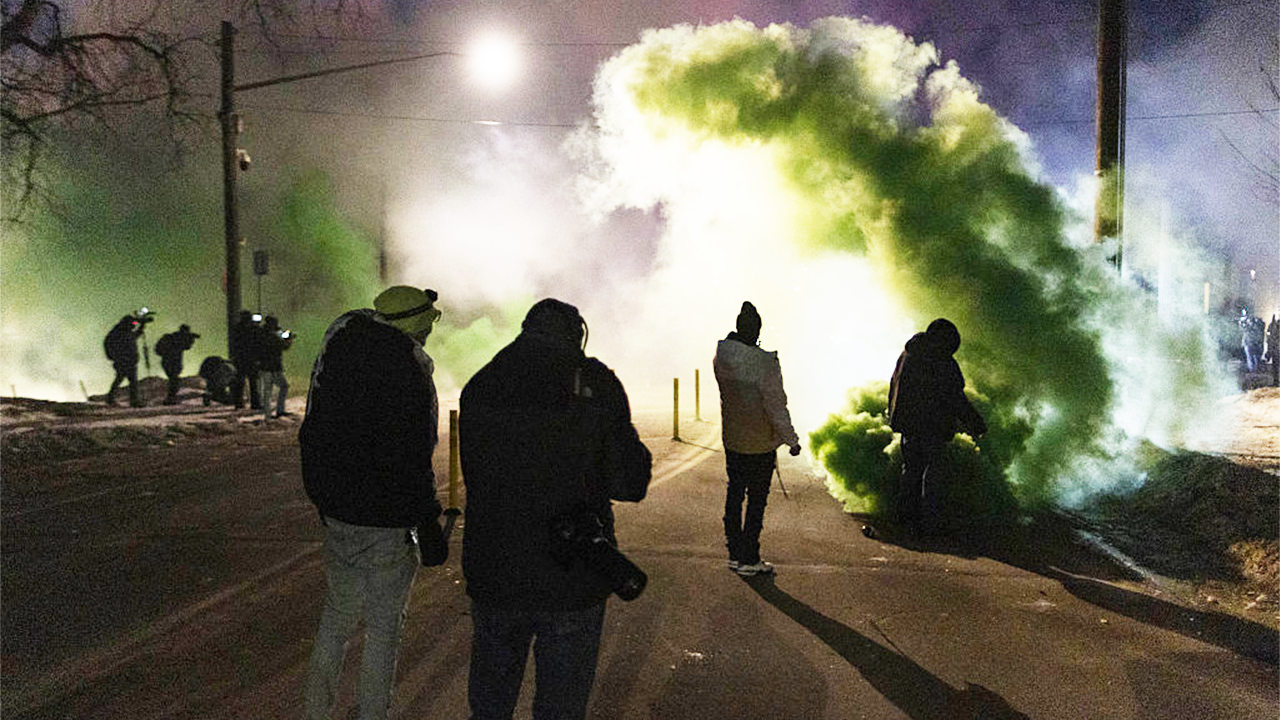
The latest shooting triggered immediate protests throughout Minneapolis, as demonstrators gathered to express outrage over ICE’s presence and tactics in the city. At least a hundred protesters assembled, using horns and whistles while holding signs with anti-ICE messages and demanding the agency leave Minneapolis. The situation quickly escalated as demonstrators reportedly threw items and fireworks at officers, who responded with tear gas, pepper balls, and flash bangs. Minneapolis Police Chief Brian O’Hara characterized the crowd’s actions as “unlawful” and urged people to disperse, expressing concern that the “already very tense situation” might escalate further. The confrontations between protesters and law enforcement highlight the deepening division over immigration enforcement tactics under the Trump administration’s policies.
Minnesota Governor Tim Walz attempted to strike a balance between acknowledging public outrage and calling for peaceful demonstrations. “I know you’re angry. I’m angry,” he wrote on social media, while warning that violence would only serve political purposes. “What Donald Trump wants is violence in the streets. But Minnesota will remain an island of decency, of justice, of community, and of peace. Don’t give him what he wants.” Walz has been consistent in his calls for ICE to withdraw from Minnesota, positioning himself as a voice for state sovereignty against federal immigration enforcement that he characterizes as excessive and disruptive. The governor’s response reflects the challenging position of state officials caught between federal authority and local community concerns during a politically charged moment.
Minneapolis Mayor Jacob Frey has been particularly outspoken in his opposition to ICE operations, repeatedly demanding that the agency leave the city. “This is an impossible situation that our city is presently being put in,” he stated at a news conference, criticizing the deployment of approximately 3,000 ICE agents in Minneapolis and throughout Minnesota as “creating chaos” rather than safety. Frey pointed to the troubling statistic that ICE agents have been responsible for “a huge percentage of the shootings” in Minneapolis this year, describing their conduct as “disgusting and intolerable.” His comments reflect growing frustration among local officials who feel federal immigration enforcement is undermining community trust and public safety rather than enhancing it.
The mayor’s concerns extended beyond the immediate violence to the methods of ICE operations and their impact on civil liberties. “American citizens are getting picked up off the street by people in masks,” Frey asserted, arguing that such tactics are fundamentally un-American. “That’s not the way things should be conducted in any city in America. That’s not who we are.” While acknowledging and praising peaceful protesters, Frey cautioned against responding to federal actions with further disruption, stating, “We cannot counter Donald Trump’s chaos with our own brand of chaos.” The mayor’s remarks highlight the tension between legitimate protest and maintaining public order during a period of heightened emotions and political polarization over immigration policy.
These events in Minneapolis reflect broader national tensions over immigration enforcement under the Trump administration. Minnesota has already taken legal action, suing the federal government over what it characterizes as “sweeping immigration raids” in the Twin Cities area. The situation exemplifies the growing conflict between federal immigration priorities and local governance, with city and state officials increasingly pushing back against what they see as excessive and counterproductive enforcement tactics. As protests continue and political leaders stake out their positions, Minneapolis has become a microcosm of America’s deeply divided immigration debate—one where questions of public safety, civil liberties, law enforcement tactics, and the proper balance between federal and local authority all converge in a volatile mixture of policy disagreements and human consequences.