





The quiet, elegant facade of the Socialist Party headquarters in Madrid became the unlikely stage for a dramatic, twelve-hour police operation that threw Spain’s political establishment into complete disarray and pushed Prime Minister Pedro Sánchez into the most precarious position of his political career. Under the direct authority of Judge Santiago Pedraz of the National Court, law enforcement officers painstakingly searched the building, hunting for digital trails and physical documents that might prove the party had surreptitiously funded a vicious, systematic mudslinging campaign designed to discredit the very judges and prosecutors investigating corruption cases against the government and Sánchez’s family. The language emerging from the court documents was remarkably severe, with Judge Pedraz accusing the governing party of effectively maintaining a de facto criminal organization on its payroll, a charge that struck at the core of the administration’s legitimacy. Sánchez, a political survivor known for his tactical agility, was forced onto the defensive, publicly pleading his innocence and promising absolute, unrestricted transparency while emphasizing that the core actors of the conspiracy had been cast out of the party more than a year ago. In a bid to reassure a deeply shaken public, he asserted his unwavering commitment to the rule of law, declaring his intention to cooperate fully with the judicial officials who had just authorized a raid on his own political home. Despite these assurances, the sight of police vans parked outside the party’s headquarters for half a day created an indelible image of a government under siege, magnifying suspicions that the state apparatus was being weaponized for partisan preservation. This high-stakes drama has deeply unsettled the Spanish public, raising profound questions about the integrity of their democratic institutions and the future viability of Sánchez’s leadership as he struggles to maintain control over a narrative that is rapidly slipping from his grasp in the face of relentless judicial scrutiny. With opposition parties smelling blood in the water, the Prime Minister finds his options dwindling by the hour as the nation demands urgent answers.
To understand the depth of Pedro Sánchez’s current predicament, one must observe the striking, almost surreal contrast between his diminishing moral authority at home and his carefully cultivated stature as a premier statesman on the international stage. For months, as domestic corruption investigations have slowly encircled his inner circle, Sánchez has increasingly sought refuge in global diplomacy, positioning himself as a passionate champion of progressive Western values and a vocal defender of international law. His bold, high-profile critiques of the devastating military campaigns in Iran and his sharp, articulate opposition to the political philosophy of the Trump administration have earned him enthusiastic praise from liberal commentators and leaders across Europe and the Americas. By projecting himself as an indispensable global voice, he has sought to construct an impenetrable shield of international prestige that might deflect the increasingly toxic allegations brewing within his own borders. He has traveled extensively, seeking out high-profile alliances and attempting to align his administration with globally recognized moral figures, most notably through his recent efforts to build common ground with Pope Leo XIV ahead of the sovereign pontiff’s highly anticipated pastoral visit to Spain. Yet, this grand strategy of distraction is rapidly failing, as the sheer gravity of local scandals continues to drag him back to the harsh reality of Spanish domestic politics, where his carefully curated image of enlightened progressivism faces daily erosion. For ordinary Spanish citizens who are struggling with economic anxieties and growing disillusionment with their political class, Sánchez’s global sermonizing is beginning to look less like authentic leadership and more like a desperate, cynical attempt to escape accountability. The stark divergence between the admired international diplomat and the embattled domestic politician has created a profound credibility gap, leaving many to wonder how long he can continue to perform on the world stage while his domestic base crumbles beneath his feet. Ultimately, the gap between foreign triumph and local tribulation is becoming too wide for even his formidable political talents to successfully bridge in the long term.
The political crisis enveloping the Prime Minister is not merely a matter of institutional malpractice; it has assumed a deeply painful personal dimension that directly involves his closest family members and his most trusted political allies, making it impossible for him to dismiss as mere partisan hostility. The judicial dragnet expanded significantly last week when his close political ally and predecessor, former Prime Minister José Luis Rodríguez Zapatero, was placed under formal investigation for influence peddling, a development that shocked the nation and tarnished the legacy of the modern Spanish left. Simultaneously, the scandal hit even closer to home on Thursday as Sánchez’s own brother began standing trial on serious allegations that he had accepted a lucrative, taxpayer-funded patronage job through corrupt political connections, providing a grim, live-broadcast backdrop of familial impropriety to the wider government crisis. Adding to this catalog of legal troubles is the indictment of Santos Cerdán, a former top-ranking Socialist Party official who stands accused of directly masterminding the vicious smear campaigns against the judiciary that triggered the police raid in the first place. The trial of his brother, combined with the investigations into Zapatero and Cerdán, paints a devastating picture of a political dynasty and party machine that has allegedly treated the state as a private fiefdom for personal enrichment and political survival. For any leader, the emotional and psychological toll of watching family members and close mentors face criminal prosecution while trying to govern a divided country is immense, but for Sánchez, these trials represent a direct threat to his political survival. Each court appearance and leaked document serves as a fresh reminder to the Spanish electorate that the network of alleged corruption is not on the periphery of his administration, but is instead intricately woven into the very fabric of his private life and political origin story. Consequently, his efforts to separate his personal conduct from the systemic corruption of his colleagues are met with profound skepticism by a Spanish public that sees no meaningful distinction.
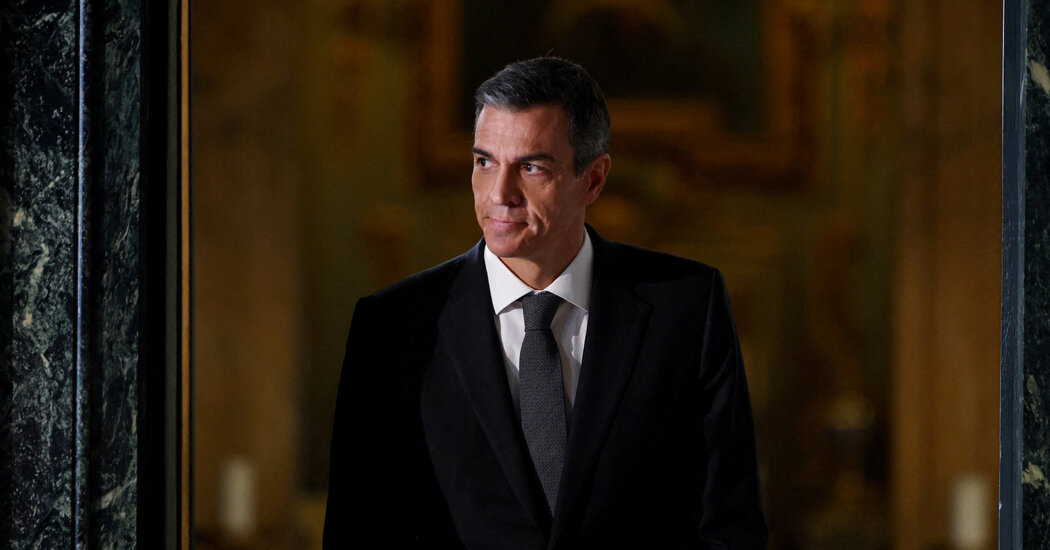
Perhaps the most vivid illustration of this bizarre dual reality occurred on Wednesday, when Prime Minister Sánchez traveled to the Vatican for a highly publicized audience with Pope Leo XIV, a meeting that was intended to be the crown jewel of his pre-election international public relations campaign. Walking through the quiet, majestic halls of the Apostolic Palace, Sánchez warmly praised the supreme pontiff as a vital “moral compass in the fight against injustice,” seeking to bask in the reflected glow of the Pope’s immense moral authority and global popularity. Yet, at that precise moment, back in the sun-drenched streets of Madrid, the Spanish judicial system was leveling devastating charges of systemic corruption against his own political party, highlighting a jarring mismatch between his sanctimonious rhetoric and the grim reality of his administration. The visual contrast was striking and politically damaging: while Sánchez was discussing global human rights and social justice with the head of the Catholic Church, Spanish police officers were packing boxes of seized documents and hard drives from his party’s central offices. Although Sánchez himself has not been formally implicated in these crimes and his office continues to issue vociferous denials of any personal wrongdoing, the public perception of this split-screen reality has proven deeply damaging. The attempt to wrap his embattled administration in the pristine, sacred vestments of the papacy was quickly exposed as a transparent political maneuver, one that did little to distract a domestic audience that watched the split screen of Vatican splendor and police raids with growing cynicism. Instead of providing the moral shield Sánchez so desperately sought, the meeting with Pope Leo XIV served to underscore his apparent detachment from the crisis unfolding at home, emphasizing a profound moral paradox that his political opponents were quick to exploit to devastating effect. This stark contrast between domestic humiliation and international prestige has only served to fuel the fire of public outrage, leaving the embattled prime minister increasingly isolated inside the very house he once ruled so completely.
The domestic reaction to the police raid and the Vatican meeting was swift, fierce, and remarkably unified across Spain’s influential conservative media landscape, which seized the opportunity to launch a devastating, coordinated assault on the Prime Minister’s remaining political legitimacy. Leading conservative editorial boards led the charge, with the widely read daily El Mundo publishing a fiery editorial declaring that the calling of immediate, early general elections had become a “genuine democratic imperative,” arguing that the current government had lost all moral and political authority to lead the nation. Front pages across the country reflected this intense indignation, exemplified by the conservative newspaper ABC, which splashed the uncompromising headline “All of the Corruption Is Sánchez’s” across its front page, directly linking the Prime Minister to every misdeed of his family and party. Meanwhile, Alberto Núñez Feijóo, the combative leader of the chief opposition Popular Party, utilized the imagery of the Vatican visit to deliver a scathing, highly effective rhetorical attack that resonated deeply with the country’s Catholic heritage. Mocking Sánchez’s attempts to purify his public image by associating with the popular Pope, Feijóo dryly reminded the Prime Minister that if he wanted to get closer to the Pope, he should remember the seventh commandment, “Thou shalt not steal,” and the eighth commandment, “Thou shalt not lie.” This devastating critique successfully transformed Sánchez’s diplomatic triumph into a symbol of hypocrisy, reinforcing the opposition’s narrative that the administration was fundamentally built on deceit and self-preservation. The ferocious media broadsides and the opposition’s highly coordinated attacks have effectively isolated Sánchez, making it increasingly difficult for him to find allies willing to defend a government whose moral foundation has been so thoroughly compromised in the court of public opinion. In a media climate where even once-supportive pundits are beginning to distance themselves, the unrelenting nature of these headlines has created a suffocating daily environment for the Prime Minister, stripping him of the political capital necessary to govern and leaving him with very few viable paths toward political survival.
The growing fury within the halls of parliament and the editorial suites of Madrid’s newspapers has also spilled over onto the streets, where a deeply polarized and angry Spanish public is increasingly demanding a reckoning that Sánchez may no longer be able to postpone. Over the weekend, tens of thousands of conservative Spaniards flooded the grand avenues of Madrid in a massive, impassioned protest, waving national flags and chanting slogans that demanded the immediate resignation of the Prime Minister and the dissolution of parliament. This outpouring of public anger, combined with the tireless investigative reporting of journalists like Carlos Barragán, has created an atmosphere of permanent crisis, making it nearly impossible for the government to enact legislation or project any sense of stability. The pressure on Sánchez to call early elections is reaching a fever pitch, as even some moderate voices within the country begin to question whether Spain can endure a prolonged period of political paralysis while its executive branch is consumed by criminal defense. For Sánchez, who has built his entire career on a remarkable ability to survive seemingly impossible political bottlenecks, the current crisis represents his ultimate test, forcing him to choose between a desperate struggle to remain in power or a highly risky gamble on an early national vote. The human cost of this struggle is evident in the exhausted faces of his cabinet members and the profound, palpable sense of cynicism that has settled over a weary public that has grown tired of constant scandal. As the investigations continue to deepen and the shadow of the courtroom hangs over his family and party, the question is no longer whether Sánchez can escape clean, but whether the fragile democratic institutions of Spain can withstand the immense pressure of his fight for political survival. In the end, his destiny is no longer dictated by international alliances or papal audiences, but by the quiet, demanding choices of a Spanish electorate that is standing ready to reshape the future of the entire nation.