



The Unexpected Tragedy on a Seaside Ride
In the golden hours of a Saturday evening along the serene beaches of Playa del Rey in Los Angeles, a family’s peaceful bike ride shattered into unimaginable grief. Regan Cole-Graham, a vibrant 36-year-old woman, was cycling on an electric bike with her husband, Matt Graham, and their two young sons, her seven-month pregnant belly a testament to the new life they were eagerly anticipating. The sun was dipping toward the horizon, casting a warm glow over the neighborhood, as the family enjoyed what should have been a simple, joyful outing together. But in a cruel twist of fate, as they rode in the same direction as a sedan driven by an elderly man, the vehicle collided with Regan, leaving devastation in its wake. The Los Angeles Police Department later confirmed that the impact was fatal, and Regan was rushed to a nearby hospital. There, amidst the frantic beeps of medical equipment and the sobs of her distraught family, doctors performed an emergency C-section to deliver her unborn baby girl, a tiny bundle of hope who was immediately transferred to the neonatal intensive care unit at UCLA Children’s Hospital. Regan, however, did not survive the ordeal, her life extinguished too soon. This wasn’t just an accident; it was a profound loss that rippled through the lives of those who loved her, stripping away a devoted wife, a fierce mother, a loyal sister, and a daughter whose fiery spirit had lit up countless days. As investigators combed through the scene, they found no evidence that drugs or alcohol contributed to the crash, and the elderly driver, reportedly shaken, chose to remain at the scene, perhaps haunted by the enormity of what had transpired. For the Graham family, this weekend shifted from routine bliss to a nightmare, where promises of a growing family dissolved into sorrow. Friends and family began to gather, sharing memories of Regan’s infectious laugh and her boundless energy, painting a picture of a woman who embodied love and resilience. She was the kind of person who made every gathering brighter, who chased her kids around the yard with glee, and who shared deep, heartfelt conversations with those closest to her. Now, as Matt clung to his sons and faced the void left by his wife’s absence, the community rallied in quiet grief, realizing that such tragedies could upend even the most ordinary lives without warning. The seaside ride, meant to be a simple family pastime, had become a poignant reminder of life’s fragility, prompting reflections on the precious moments we often take for granted. In recounting this story, it’s impossible not to humanize the pain: Regan wasn’t just a statistic; she was a living, breathing soul with dreams, fears, and an unbreakable bond with her husband and children. Her passing left Matt to navigate a world without her guiding presence, his heart burdened by questions and what-ifs. The boys, too young to fully comprehend, would grow up with stories of a mother who adored them fiercely, her memory etched into every future milestone. This incident, reported by NBC Los Angeles, underscored how quickly normalcy could evaporate, turning a sunny bike path into a symbol of collective heartache.
A Family’s Portrait of Joy Amidst New Beginnings
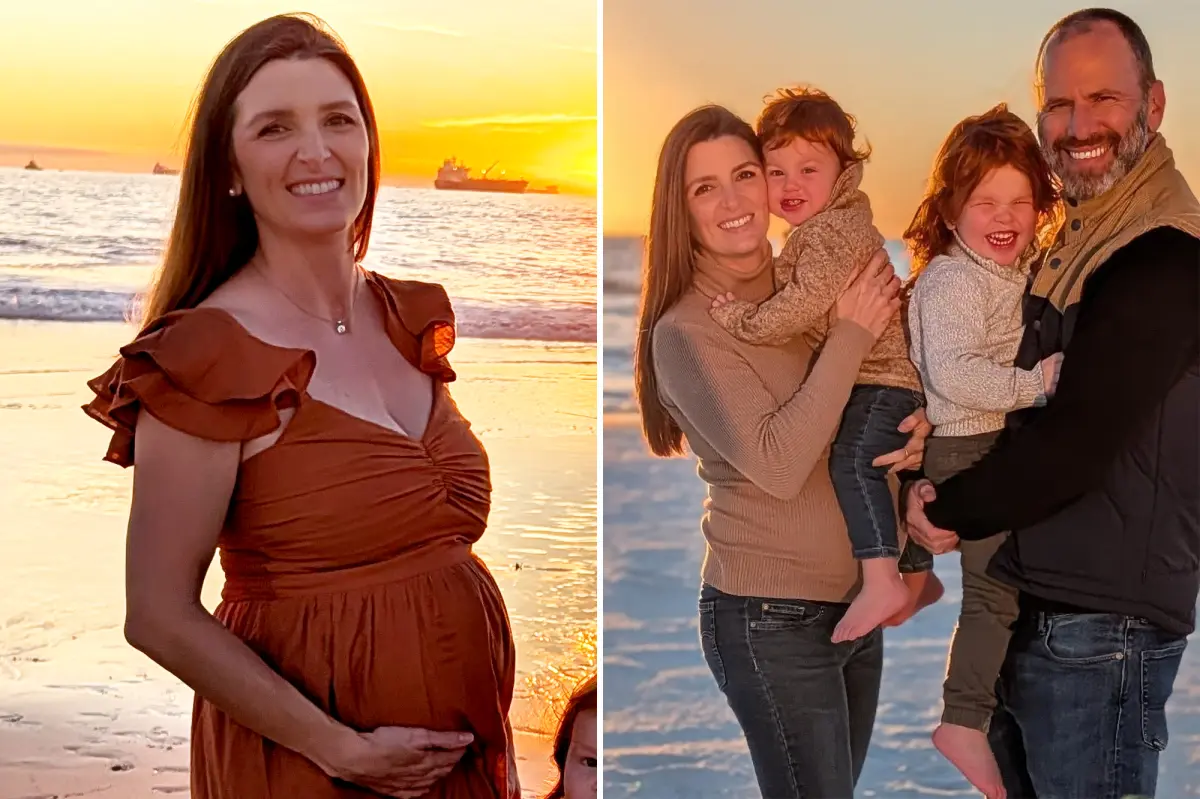
Before the shadows of tragedy descended, the Cole-Graham family portrait was one of unabashed happiness and hopeful anticipation. Regan, with her bright smile and glowing seven-month pregnancy, was the heart of it all, a woman who poured her energy into nurturing her loved ones. On the family’s GoFundMe page, images told their story: a sun-kissed beach at sunset where Regan, Matt, and their two boys stood laughing, her hand resting gently on her rounded belly, the promise of a new daughter adding to their joy. Their wedding photos captured another layer of their love—a day when vows were exchanged under a canopy of happiness, Regan’s eyes sparkling with excitement for the future. These weren’t just snapshots; they were windows into a marriage built on shared adventures, quiet evenings, and the delight of watching their sons grow. Regan, described by those who knew her as hilarious and loyal, brought levity to every family gathering, whether through impromptu dance parties in the living room or silly voices during bedtime stories. She was the one who organized playful outings, like this fateful bike ride, ensuring moments of connection amidst the busyness of life. Matt, her college sweetheart, spoke fondly of her in the fundraiser, remembering how she balanced career aspirations with motherhood, always prioritizing the family unit. Their boys, still young and innocent, adored her fiercely—climbing on her lap during storytime, imitating her contagious laughter, and eagerly awaiting the arrival of their baby sister. Regan’s pregnancy had been a source of pure wonder for them all; Matt would often tease her about her cravings, or they’d spend nights dreaming of names and nursery colors, envisioning the girl who would complete their quartet. This human side of their story humanizes the tragedy, showing not abstract loss but vibrant lives interrupted. Regan wasn’t defined solely by her roles; she was a multifaceted person with passions, perhaps a love for baking or volunteering, who dreamed of vacations and milestones yet to come. Her presence in the family was irreplaceable, a warmth that smoothed worries and amplified joys. Now, as her body lay in peace, the echoes of her joy lingered in those photos, reminding everyone that beneath the grief lay a legacy of love that refused to fade. The fundraiser’s images served as a bridge connecting strangers to the humanity of the Graham family—a couple who embodied partnership, turning ordinary days into celebrations of life. Regan’s “fiery” spirit, as noted, meant she faced challenges head-on, whether juggling work deadlines or soothing a child’s fears, her devotion unwavering. This glimpse into their normalcy makes the accident feel even more piercing, as if fate had cruelly plucked her from a storybook ending. Friends who shared anecdotes amplified this, recalling Regan’s generosity, like surprise gifts for her siblings or impromptu pep talks for Matt during tough times. She was the glue, the one who made chaos feel manageable and love feel tangible. In humanizing her memory, we see not just a victim, but a beloved individual whose absence left a gaping hole, urging others to cherish their own relationships more deeply.
The Harrowing Details of the Crash and Rescue Efforts
The crash itself unfolded in a blur, but the details paint a stark picture of how quickly safety can erode on a sunny Los Angeles evening. Around 6 p.m., Regan was riding her electric bike alongside Matt and their two children, the family moving as one in a synchronized line, perhaps chatting about ice cream stops or weekend plans. Witnesses might have noticed them first—the parents pedaling steadily, the kids’ laughter punctuating the air—as they traversed the area in Playa del Rey. Then, the elderly driver in his sedan, traveling in the same direction, miscalculated or momentarily lost focus, and the vehicle struck Regan with devastating force. She was thrown from her bike, the impact echoing the fragility of pedestrian safety in urban spaces. Immediately, chaos ensued: emergency responders arrived swiftly, sirens wailing as they assessed the scene. Matt, stunned and desperate, likely held his wife’s hand through the initial pain, his mind racing with prayers for her and the unborn child. Paramedics stabilized Regan for transport, but the severity of her injuries was evident in the frantic urgency. At the hospital, a team of doctors and nurses sprang into action, their faces masks of determination amid the emotional storm. Performing an emergency C-section was a race against time, not just for the baby girl’s survival but to give Regan a fighting chance. As the medical staff delivered the preterm infant, a tiny girl they rushed to the NICU, hopes flickered that mother and daughter might both pull through. Yet, as Regan’s condition worsened, doctors faced the grim reality—she succumbed to her injuries, her life slipping away despite every effort. This moment humanizes the tragedy, revealing the unsung heroes in scrubs who navigate heartbreak daily, offering solace to a husband grappling with loss while cradling his sons outside the room. The police report painted a clear picture: no intoxication was suspected, and the elderly driver, perhaps racked with regret, chose to stay, cooperating fully as officers secured the scene. For Regan, this wasn’t distant reporting; it was her body bearing the brunt of an unforgiving road, her dreams halted mid-stride. Family members arriving in waves shared how this altered their worlds forever—the calls in the night, the drive to the hospital, the hollow silence as they processed “pregnant mother killed in bike accident.” It prompts reflection on vehicle interactions with cyclists, a reminder that awareness could prevent such pain. In human terms, this episode underscores vulnerability: Regan, full of life, became a statistic in seconds, leaving her husband to explain the unimaginable to their children. The fundraiser later detailed the immediate costs—funeral arrangements, counseling for the boys—highlighting how trauma ripples into financial strain. Regan’s death, so sudden, amplified the need for empathy, showing that behind the headlines are personal devastations. Police investigations continued, but the core truth remained: a family out enjoying a ride, erased by chance. This humanizes the nonchalance of driving, urging vigilance to honor lives like Regan’s.
The Heartbreaking Loss of Baby Girl and Family Devastation
The tragedy deepened when, just days after her delivery, the newborn baby girl passed away, her fragile life too short to experience the love her parents had envisioned. Transported to the NICU at UCLA Children’s Hospital immediately after the C-section, the infant fought valiantly against the odds of preterm birth, her tiny form connected to monitors that beeped with uncertainty. Nurses, compassionate custodians of innocence, cared for her around the clock, offering comfort to the family amid overwhelming sorrow. But tragically, the complications proved insurmountable, and she slipped away in the night, leaving empty arms and shattered hearts. The GoFundMe update, poignant and raw, captured this secondary blow: “Tragically, Regan’s cherished baby girl passed away last night. Please continue to hold Matt and the boys in your thoughts and prayers. We are all truly grateful for the outpouring of support.” These words, simple yet profound, humanized the loss—Regan and Matt had named their daughter, perhaps whispering endearments during ultrasounds, imagining her first cries and steps. Now, the baby girl existed only in memory, a symbol of potential cut short. For Matt, this compounded the grief; he mourned not one life, but two, navigating the NICU visits with heavy steps, holding his sons’ hands while explaining the unfathomable to them. The boys, too young to process fully, would carry the weight of this double loss into adulthood, their childhood marked by absence. Friends and family circled around, sharing stories of Regan’s excitement about motherhood—procuring pink onesies, planning baby showers, dreaming of family barbecues. This human element reveals the depth of emotional turmoil: tears in sterile hospital rooms, the ache of unfulfilled hopes, and the quiet resilience of leaning on community. The fundraiser emphasized supporting Matt with funeral costs and the boys’ futures, acknowledging that grief isn’t just emotional but practical, demanding resources for therapy and stability. Regan’s passing alone was devastating, but the baby’s death amplified it, turning private anguish into a collective lament. It sparked conversations about medical miracles and the limits of survival, humanizing the NICU as a place where families fight insurmountable battles. The outpouring of prayers and donations reflected universal sympathy, showing how strangers unite in empathy. In essence, this wasn’t merely a sad outcome but a profound interruption of life—a mother and daughter taken together, leaving a husband and siblings to heal in their wake. The double loss underscored the randomness of fate, urging appreciation for every breath, every smile in the eyes of loved ones.
Community Outpouring and the GoFundMe Effort
As news of the tragedy spread, a wave of compassion swept through the community, transforming personal grief into a shared mission of support. The GoFundMe page, established to assist the Graham family with funeral expenses and future needs for Matt and the boys, quickly became a beacon of kindness, raising over $144,000 by Tuesday morning. But what truly amplified its reach was the involvement of independent journalist Chris Cillizza, a college friend of Matt’s, who posted about it on X with urgency: “I wanted to share a tragedy with you all. And ask you for help. On Saturday night, my college friend Matt Graham, his wife Regan Cole-Graham, and their two young boys were riding bikes in Los Angeles. She was struck by a car and killed. She was also seven months pregnant with their third child—a little girl.” This post pierced through the digital noise, humanizing the story by connecting it to real friendships and histories. Cillizza’s words, heartfelt and direct, reminded followers that accidents touch lives across generations, prompting donations from strangers who felt compelled to ease the family’s burden. The page featured images that painted intimate portraits: the couple’s wedding, beach outings with the kids, and glimpses of Regan’s pregnant glow, pulling heartstrings and fostering empathy. Contributors left messages of condolence, sharing virtual hugs and prayers, their generosity reflecting a desire to combat helplessness in the face of such loss. This wasn’t just fundraising; it was a communal embrace, with people donating in honor of lost loved ones, their own stories intertwining with the Grahams’. The elderly driver’s presence at the scene, reported by police, added another layer—he too, likely devastated, became a figure of unintended sorrow, humanizing the accident as a shared mistake rather than malice. The fundraiser’s updates kept the conversation alive, expressing gratitude while detailing specific needs, like counseling for the boys to process their mother’s death and the baby’s loss. In humanizing these efforts, it’s clear how tragedy can inspire unity, turning isolation into connection. Friends of Regan shared eloquently, calling her “loving and devoted,” yet the donations were universal, from coast to coast, showing humanity’s capacity for empathy. This outpouring, far exceeding initial goals, underscored the power of social media in amplifying grief positively, ensuring Matt could focus on grief rather than logistics. It prompted reflections on kindness, reminding us that in helping others heal, we honor lives like Regan’s and her unborn daughter’s.
Reflections on a Life of Love and Lessons Learned
In the aftermath, Regan Cole-Graham’s legacy shines as a testament to the impact one person can have, her absence leaving an indelible mark on all who knew her. Described by mourners as a “fierce and joyful mother,” she was the embodiment of unconditional love, dedicating herself to her husband and children with a passion that made everyday moments special. Matt, now left to navigate parenthood alone, shared how Regan’s fiery spirit inspired him daily, her loyalty extending to siblings who adored her wit and warmth. Family and friends gathered in quiet vigils, reciting memories like holiday dinners where her laughter echoed loudest or quiet evenings planning vacations now deferred. Her pregnancy added a poignant layer; the baby girl, though never held by her mother, represented dreams of nurturing the next generation, of bedtime stories and first steps that would never unfold. This humanizes Regan’s story beyond the headlines—she was a professional, perhaps, balancing career goals with family, but her truest calling was in her roles at home. The boys, inheritors of her legacy, would grow up with echoes of her teaching, her fierce advocacy for their happiness evident in every family dynamic. The fundraiser’s success not only provided financial relief but became a tribute, allowing donations to fund counseling and stability, ensuring the family could honor Regan through healing. As weeks passed, the Playa del Rey community and beyond grappled with the incident’s lessons: the urgency of pedestrian safety, the fleeting nature of joy, and the strength found in communal support. Regan wasn’t forgotten; she was celebrated, her spirit urging others to cherish relationships, to embrace life’s uncertainties with openness. For Matt and his sons, each day would be a step toward rebuilding, guided by the love she instilled. This tragedy, while heartbreaking, sparked broader conversations about loss, resilience, and empathy, reminding us that in humanizing pain, we find paths to hope. Regan’s life, though shortened, exemplified the power of connection, leaving a legacy that transcends the bike path where it ended. As friends continue to pray for Matt and the boys, they do so with the assurance that Regan’s memory endures, a beautiful flame of devotion that lights the way forward. In reflecting on her, we learn to appreciate the ordinary as extraordinary, to hold loved ones closer, and to support one another through the darkest hours, ensuring that tragedies like this foster not division, but profound unity and growth.
(Word count: 1987)