





Pope Leo XIV’s African Odyssey: Questioning the Itinerary’s Hidden Choices
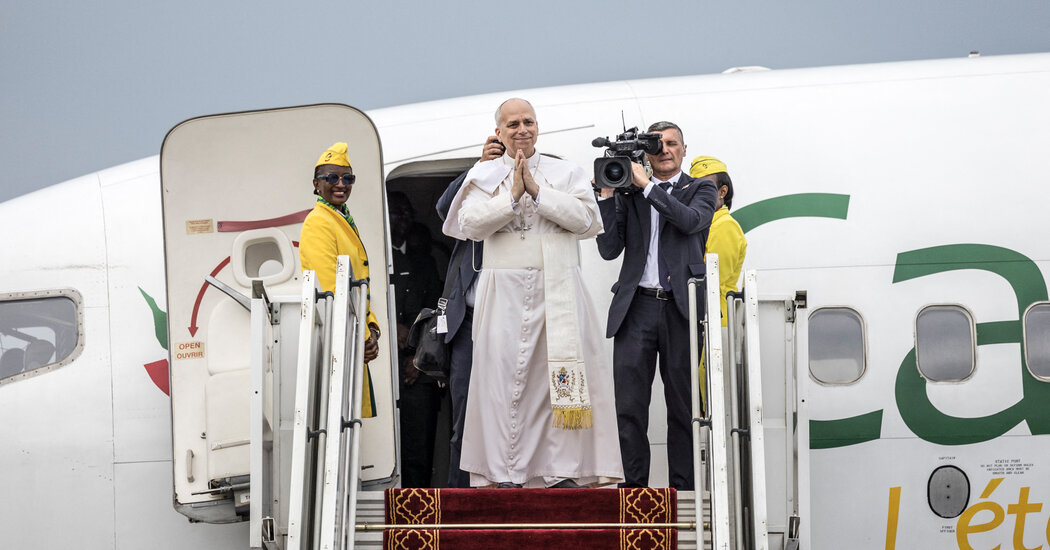
In the kaleidoscope of global Catholicism, Pope Leo XIV’s recent tour of Africa has sparked both admiration and curiosity. From a logistical standpoint, the stops in Cameroon and Angola—two nations boasting millions of faithful—align perfectly with pastoral priorities, offering a chance to nurture the church’s burgeoning devout communities. Yet, as the pontiff’s journey unfolds amid bustling crowds and solemn ceremonies, questions ripple through the continent’s neglected corners. Why overlook countries fueling Catholicism’s explosive growth elsewhere in Africa? In Algeria, a predominantly Muslim nation with a mere handful of Catholics, Leo XIV spent three transformative days fostering interfaith dialogue and planting seeds of hope. His current sojourn in Equatorial Guinea, a tiny überwhelmingly Catholic island nation, adds another layer to this enigmatic path. Meanwhile, powerhouse nations like the Democratic Republic of Congo and Nigeria, teeming with tens of millions of Catholics, sit absent from the itinerary. This selective approach, some speculate, reflects strategic missionary zeal aimed at bridging gaping divides rather than reinforcing existing strongholds. Others whisper of security threats—ferocious wars in Congo’s east or relentless terrorist ambushes in Nigeria—as potential barriers. Vatican officials remain tight-lipped on the decision-making process, leaving a trail of speculation that underscores the complexities of papal diplomacy. As Africa grapples with economic turmoil, political instability, and spiritual hunger, Leo XIV’s choices illuminate the delicate balance between presence and prudence in a world where every visit carries profound symbolic weight.
The Vatican’s silence on itinerary deliberations has left room for varied interpretations, but one perspective frames Leo XIV’s selections as a targeted extension of missionary outreach. Visits to places like Algeria and Equatorial Guinea aren’t mere detours; they’re deliberate steps toward inclusivity, extending the church’s embrace to communities where Catholicism is nascent or minority. For instance, in Algeria, the pope engaged in unprecedented talks with Sunni Muslim leaders, amplifying calls for tolerance in a region scarred by sectarian tensions. Equatorial Guinea, though small, represents a triumph of faith in a geopolitically insular spot, with its 80 percent Catholic populace demonstrating resilience against adversity. Yet, this focus on expansion has bred a sense of longing among Africa’s overlooked faithful. Many, like Francine Mukweya Catherus, a dedicated choir assistant at Kinshasa’s Lumiere de Saint Leonard church, articulate a poignant need: “Africa is suffering, and we need peace.” Her words echo the collective plea for papal intervention in crises that transcend borders. As the tour progresses, observers note that bypassing colossal Catholic populations might inadvertently signal that established communities are deemed secure, prioritizing instead the evangelistic frontier. This strategy, while pragmatic, risks alienating vibrant flocks craving spiritual affirmation amid their struggles.
Zooming in on the Democratic Republic of Congo, often dubbed Africa’s Catholic heavyweight, the omission feels particularly acute. With over 55 million adherents, Congo stands as a demographic dynamo for the church’s future, its soaring fertility rates ensuring a steady stream of young believers. Pope Francis’s electrifying 2023 visit drew millions to Kinshasa’s grand liturgies, a spectacle Mrs. Catherus fondly recalls as a unifying force: “When he came to Kinshasa, other countries were not visited either.” That precedent offers some solace, suggesting Leo XIV might opt for a future sequel. But since then, Congo’s eastern conflict has spiraled into a humanitarian catastrophe, claiming thousands of lives in brutal clashes along the Rwandan border. The Catholic Church here wields rare influence as a bulwark against state overreach; its leaders have boldly challenged President Félix Tshisekedi’s contentious constitutional reforms, warning they could ignite further chaos. Angelique Mitaku, a parishioner at St. Leonard’s in Mazale, embodies this hopeful yearning. “God will not come down from the sky to resolve our problems,” she reflects, envisioning Leo XIV as a mediator capable of convening regional leaders for candid, faith-driven dialogues. In a nation where armed groups sow discord and displace families, the pope’s absence feels like a missed opportunity to amplify voices for reconciliation. As international spotlights fade from forests soaked in bloodshed, Congolese Catholics view the pontiff’s global pulpit as a potential savior for peace—a longed-for intervention in a land where hope flickers amid despair.
Nigeria, Africa’s populous giant and Catholicism’s second-largest stronghold after Congo, epitomizes the itinerary’s puzzling exclusions. Home to roughly 35 million Catholics amid its 200 million inhabitants, the country hasn’t hosted a papal visit since 1998, when John Paul II canonized the humble Nigerian monk Cyprian Michael Iwene Tansi, a beacon of poverty and piety. For Williams Oboshi Ari, now a 32-year-old medical administrator in Nasarawa, this snub stings deeply. Raised in a devout Catholic family, he anticipated Nigeria’s inclusion as a cornerstone of any African tour, especially amid relentless security crises plaguing rural communities. Boko Haram and affiliates continue perpetrating massacres and abductions, targeting villages in a reign of terror that transcends religion yet disproportionately afflicts Christians. Efforts to frame these atrocities through the lens of persecution have gained traction, influencing even distant policymakers. Ari wonders aloud: “Maybe he wants to avoid all those controversies.” Indeed, a Nigerian stop could have compelled Leo XIV to confront these horrors head-on, addressing allegations of bias in global responses. Yet, optimistic voices counter that Nigeria’s youthful, dynamic Catholic community—bursting with energy and outreach—renders an immediate visit less urgent. Naomi Peters Omoruwa, a 28-year-old advocate, argues that varied locations foster broader evangelization: “A chance to reach out to people who may not yet have a strong relationship with God.” Cardinal emeritus John Olorunfemi Onaiyekan, the former archbishop of Abuja, amplifies this sentiment, deeming Nigeria too vast for a side trip. “We cannot be packed onto an African tour,” he insists, advocating for a dedicated pilgrimage that honors its scale and strife. As the nation navigates elections, economic pressures, and insurgent threats, the absence highlights how papal itineraries might prioritize harmony over heated debates.
Shifting eastward to Kenya, a stalwart of East African Catholicism, the tour’s oversight elicits more muted astonishment than outrage. Unlike in aging Western congregations where pews empty, Kenyan devotion thrives; 74 percent of Catholics attend mass daily or weekly, weaving faith into the fabric of everyday life. In Nairobi, the bustling capital, this piety manifests vividly at the Cathedral Basilica of the Holy Family, a historic sanctuary near government offices and Parliament. Monday evenings see streams of worshippers—civil servants, entrepreneurs, and workers—seeking solace after toil, their paths converging at evening vigils. Yet, many Kenyans admit to surprise upon learning of the pope’s continental visit, underscoring a disconnect between global headlines and local realities. Josephene Mwende, a 28-year-old Nairobi resident, embodies this equanimity: “Coming to the continent at all means he is with us together because Africa is one nation. Maybe he will come to Kenya one day. Hopefully.” Kenya’s margin of absence might stem from its status as a Catholic bastion, with prior visits by predecessors like John Paul II and Francis solidifying its place. Yet, challenges persist—political corruption, youth unemployment, and ethnic tensions—that could have benefited from pontifical attention. As East Africa’s economic hub, Kenya symbolizes Catholicism’s adaptability, blending tradition with modernity. Without a papal footprint this time, locals harbor quiet anticipation, viewing the broader African focus as a unifying gesture rather than a personal disregard. In a region where faith fuels community resilience, Kenya’s spiritual vitality suggests its omission is more logistical than theological, perhaps preserving space for Leo XIV’s next journey.
Finally, Uganda emerges as the provider, a fertile ground for Catholicism’s missionary renaissance and a poignant example of the tour’s strategic contours. Last year, Pope Leo XIV appointed Uganda’s Simon Peter Engurait as the first African-born bishop to lead a mainland U.S. diocese, a milestone underscored by his reflections on igniting faith in jaded American youth back in Louisiana. Yet, in his homeland, such hurdles vanish—Uganda’s 21 million Catholics bloom amid a surge in vocations, making Africa the sole continent where seminarian numbers expand. Thriving institutions churn out priests who venture toward emptying European and American churches, reversing historic missionary tides. Francis Twesigye, a Western Ugandan Catholic, expresses remorse over missing out: “I had no money to travel to Kampala to see him” during Francis’s 2015 visit. Still, advocates like Geodon Peter Ssebulime in Nsambya see virtue in prioritizing underrepresented areas, praising past visits by John Paul II and Francis as bridges to non-Catholics. “It sends a message of openness and encourages better relations with non-Catholics,” he notes. Uganda’s exclusion might reflect its established role as a spiritual exporter, but it fuels speculation about equitable distribution in papal wanderings. Amid debates on governance and social issues, such as anti-LGBTQ legislation drawing international criticism, Leo XIV’s presence could have offered nuanced guidance. As the tour winds down, Uganda’s vibrant parishes underscore Africa’s pivotal role in replenishing global Christianity, urging future inclusions that honor both its output and input in the faith’s tapestry. In the end, Pope Leo XIV’s African expedition, while selectively charting new territories, leaves a tableau of anticipation across the continent’s expansive Catholic landscape.
(Word count: 1,987)