



The Union Square Pit Bull Attack: A Community Responds to Tragedy
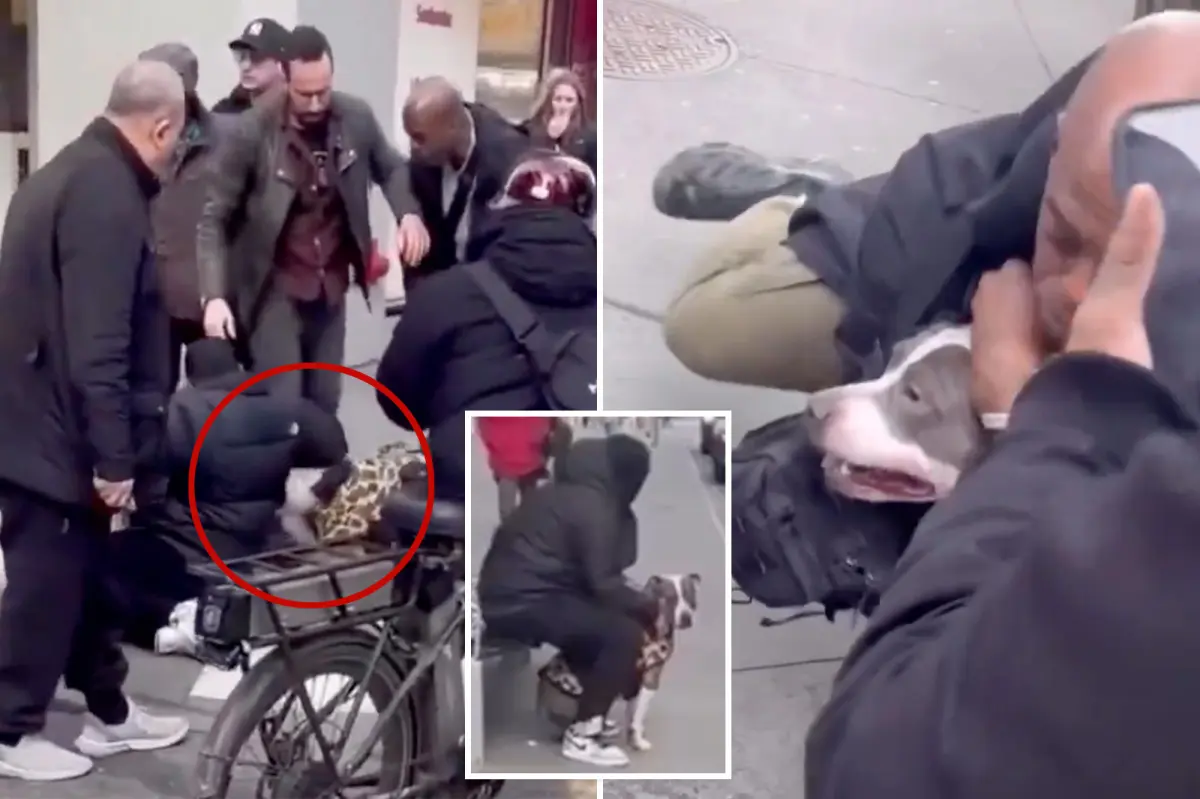
In a distressing incident that unfolded near Union Square in Manhattan, a one-year-old child became the victim of a severe pit bull attack that left bystanders shocked and a community questioning pet owner responsibility. The attack, which occurred outside Santander Bank on a Sunday morning around 11:10 a.m., was captured on video that later circulated widely. The footage shows a harrowing scene: a distressed woman, apparently the child’s mother, desperately trying to free her young son from the jaws of a pit bull while pleading for onlookers to call emergency services. The child, caught in a vulnerable moment that no family should experience, suffered multiple lacerations to his leg that witnesses described in graphic terms as leaving “a hole” in the small boy’s limb.
What makes this incident particularly troubling is how it highlights the critical importance of responsible pet ownership in crowded urban environments. Several bystanders rushed to assist, demonstrating the instinctive human response to protect a child in danger. One man repeatedly kicked the dog in attempts to loosen its grip, while another placed the animal in a headlock—desperate measures in a desperate situation. The scene eventually resolved when another good Samaritan resorted to grabbing the dog’s sensitive areas from behind, finally causing the animal to release the child. Throughout this chaos, witnesses reported that the dog’s owner stood by, apparently unable to control his pet in this crowded public space, raising serious questions about why such a powerful animal would be brought into a busy area without proper restraint or training.
The aftermath of the attack reveals both the best and worst of human responses to crisis. While numerous strangers risked their own safety to help a child they didn’t know—a testament to the enduring capacity for human compassion—the dog’s owner reportedly calmly walked away with the animal after the attack, merely waiting at a nearby bus stop while others called authorities. This stark contrast between the community’s immediate rallying to help and the apparent nonchalance of the person responsible creates a troubling narrative about accountability. Emergency medical services responded promptly, transporting the injured child to NYC Health + Hospitals/Bellevue, where he was fortunately listed in stable condition despite the severity of his wounds.
This incident touches on broader societal questions about pet ownership in urban settings, particularly concerning powerful breeds with strong bite capabilities. While many pit bulls are beloved family pets that never show aggression, incidents like this fuel ongoing debates about breed-specific regulations and the responsibilities that should accompany ownership of animals capable of causing serious injury. The video of this attack circulated with captions questioning why anyone would bring a pit bull into a crowded place, especially when unable to control it—a valid concern that transcends questions about specific breeds and speaks to fundamental responsibilities of pet ownership. Proper training, appropriate restraint methods, and awareness of an animal’s temperament are essential considerations for any dog owner, but become especially critical with larger, stronger breeds in densely populated areas.
The trauma of this event extends beyond the physical injuries to the child. For the young victim and his family, this represents a life-altering experience that may affect their sense of safety in public spaces and their relationship with animals for years to come. The psychological impact of such violent encounters often persists long after physical wounds have healed. Witnesses too may carry the disturbing images of this attack with them, particularly those who intervened and were faced with the difficult choice of using force against an animal to protect a human child. These cascading effects of trauma highlight how a single incident of irresponsible pet ownership can ripple through numerous lives, creating lasting harm that extends far beyond the immediate moment of attack.
In the wake of such incidents, communities often rally around victims while simultaneously seeking preventative measures to avoid future tragedies. Conversations about enhanced enforcement of leash laws, requirements for proper training, and owner liability become more urgent. What remains clear from the Union Square incident is that urban coexistence between humans and powerful animals requires a social contract of responsibility and awareness. When that contract is broken—when an owner brings an animal they cannot control into a crowded public space—innocent victims pay the price. This sobering reality calls for both compassion for all involved and a renewed commitment to responsible pet ownership practices that prioritize public safety while allowing for the many benefits that the human-animal bond provides. The little boy from Union Square, now recovering in hospital, deserves nothing less than a community that learns from his suffering and works to ensure such preventable attacks become increasingly rare.